Mercenaries Gathered from Southeast Asia and Latin America
Concerns Grow Over Economic Hardship in North Korea, Sri Lanka, and Others
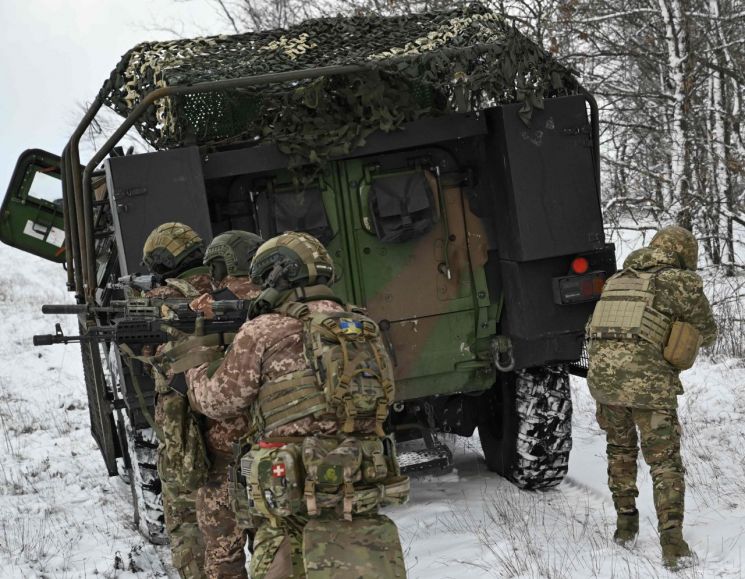 On the 16th (local time), Ukrainian soldiers operating in the Donetsk region of eastern Ukraine. Photo by AFP and Yonhap News
As peace negotiations for the Ukraine war gain momentum, mercenaries who were deployed to both Ukrainian and Russian forces to make money during the war are facing mass layoffs. Extremely poor countries such as Colombia and Sri Lanka, where mercenaries massively participated in the external war, as well as North Korea, which officially dispatched troops to Russia, are now in a position to worry about economic difficulties after the war ends.
20,000 Mercenaries Participated in Ukraine... Gathered from Southeast Asia and Latin America
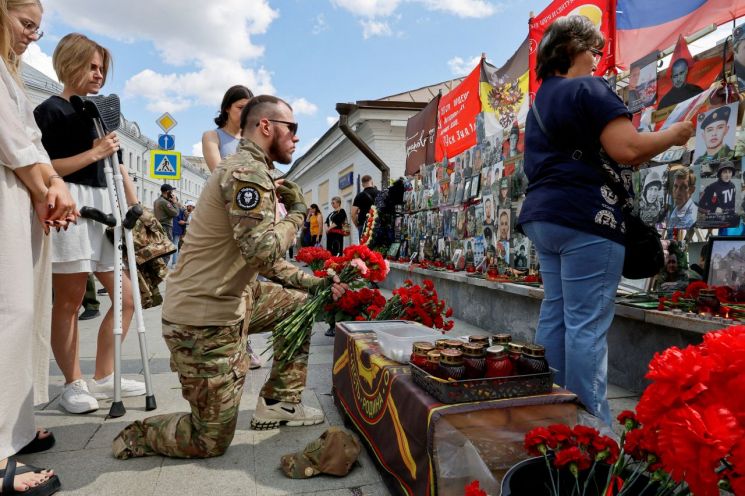 Last August, Moscow citizens commemorating the mercenaries of the Russian mercenary company Wagner Group. Photo by Reuters and Yonhap News Agency
According to the Wall Street Journal (WSJ), since the outbreak of the Ukraine war, about 20,000 soldiers have been active in the 'International Legion,' a mercenary unit integrated into the Ukrainian army. They were dispatched from approximately 52 countries, mostly composed of mercenaries from extremely poor countries in Southeast Asia, Latin America, and Africa. WSJ reported that these individuals had previously fought against armed groups like ISIS or engaged in small-scale skirmishes with drug organizations in their home countries.
Russia is also estimated to have mobilized tens of thousands of mercenaries during the war. CNN reported early last year that the Russian military recruited about 15,000 mercenaries from South Asian countries such as Nepal and Sri Lanka. With over 12,000 North Korean troops deployed to the front lines under a mutual military assistance treaty with Russia, the Russian military's dependence on mercenaries from Asia has significantly increased.
Mercenaries are paid an average monthly wage of $2,000 to $2,500 (approximately 2.88 million to 3.6 million KRW) by both armies to participate in combat. For mercenaries mostly from extremely poor countries, this is a considerably high income. A mercenary from Colombia told WSJ, "An officer's salary in Colombia is only about $500 per month. Although the government tries to prevent soldiers from participating in Ukraine as mercenaries, many soldiers enter Ukraine through indirect routes."
Concerns Over Economic Hardship and Social Turmoil in North Korea, Sri Lanka, Colombia, etc.
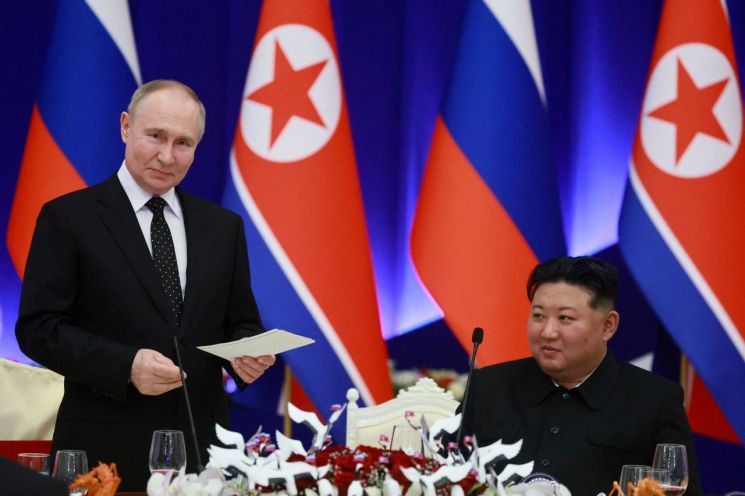 Last June, Russian President Vladimir Putin, who visited Pyongyang, signed a comprehensive strategic partnership treaty with North Korean Supreme Leader Kim Jong-un. Under this treaty, North Korea, which promised mutual military assistance with Russia, subsequently dispatched a 12,000-strong unit to Russia. Photo by Reuters and Yonhap News Agency
As the Ukraine war, which was a major source of foreign currency earnings for mercenaries, moves toward a ceasefire, extremely poor countries that deployed mercenaries now face concerns about economic and social instability. The cessation of foreign currency income through mercenaries and the return of large numbers of mercenaries to their home countries will increase unemployment rates, putting pressure on already struggling economies.
According to the American diplomatic magazine The Diplomat, Sri Lanka reduced its regular army from 300,000 in 2009 after the end of its civil war to 150,000 last year. As a result, many retired soldiers sought jobs abroad, including going to Ukraine. The average monthly wage for Sri Lankan workers is around $30 to $40, so retired soldiers began taking mercenary jobs that pay at least $2,000. Last year, at least 16 Sri Lankan mercenaries were reported killed in the Ukraine war, 37 were injured, and about 10 were captured as prisoners of war.
Although the Sri Lankan government officially prohibits retired soldiers from participating in the Ukraine war, it does not fully crack down on their departure. The Diplomat assessed, "The increase in fees and revenue from private mercenary brokerage companies and the departure of retired soldiers, who were a source of social unrest, help stabilize Sri Lanka."
North Korea, which dispatched large-scale troops, is also expected to face worsening economic difficulties once the Ukraine war ends. According to the United Nations (UN), North Korea's per capita annual Gross Domestic Product (GDP) in 2023 is only $640, placing it among the poorest countries alongside Somalia, Nepal, and Myanmar.
© The Asia Business Daily(www.asiae.co.kr). All rights reserved.



















