Special Acts on High-Level Radioactive Waste, Offshore Wind Power, and Power Grid Pass Patent Subcommittee
Ruling and Opposition Parties Agree to Address Resident Concerns and Strengthen Public Interest
Semiconductor Act Faces Difficulties Due to Disagreements Over '52-Hour Workweek' Clause
The Energy 3 Acts, necessary for expanding energy in advanced industries, have passed the first hurdle in the National Assembly, the standing committee subcommittee.
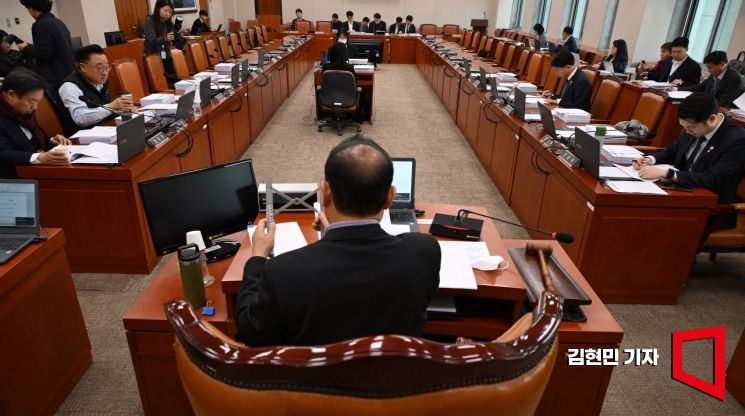
On the 17th, the National Assembly's Industry, Trade, Energy, Small and Medium Venture Businesses Committee held the 1st Industrial, Trade, Energy, and Patent Subcommittee and passed the Energy 3 Acts (High-Level Radioactive Waste Special Act, Offshore Wind Power Special Act, National Backbone Power Grid Expansion Special Act).
The first bill to pass was the National Backbone Power Grid Expansion Special Act. This bill aims to establish a government support system and management framework for national power grid construction projects to expand large-scale power grids amid worsening power supply-demand imbalances.
The subcommittee included a discretionary clause to prioritize the use of electricity where it is produced from the perspective of national balanced development. Kim Won-i, the subcommittee chair and a member of the Democratic Party of Korea, said, "Generally, electricity produced in local areas was used in the metropolitan area, which was problematic from the perspective of national balanced development," adding, "We included a clause to encourage companies requiring RE100 (100% renewable energy procurement) to move to places where renewable energy is produced." The bill also includes a provision requiring local government heads to collect and respond to residents' opinions within 60 days when establishing the national backbone power grid implementation plan.
The High-Level Radioactive Waste Special Act also passed the subcommittee. This bill regulates the procedures and responsibilities for safely managing and disposing of spent nuclear fuel generated after the operation of nuclear power plants. It also includes provisions to establish a High-Level Radioactive Waste Management Committee under the Prime Minister to conduct site surveys and selection for management facilities.
Initially, a contentious clause allowed the committee to change storage capacity through deliberation and resolution if conditions changed, but it was agreed to delete this clause. Representative Kim said, "By deciding not to change the storage capacity later, we resolved the concerns of residents." Additionally, the bill includes mandatory consultation with the Nuclear Safety and Security Commission before applying for site selection permits for management facilities and provisions to ensure that cash compensation related to damage compensation goes directly to local residents.
The last bill to pass, the Offshore Wind Power Special Act, aims to increase the poor distribution performance of wind power facilities by having the government lead the site planning stage to discover suitable locations and secure acceptance from stakeholders such as residents and fishermen. Through discussions, it was clarified that the purpose of the bill is to "strengthen public interest." Furthermore, a preliminary feasibility study exemption clause was included, allowing the Minister of Strategy and Finance to apply for exemption from the feasibility study if deemed necessary to expedite offshore wind power projects.
Meanwhile, the Semiconductor Special Act is expected to face difficulties as disagreements between the ruling and opposition parties remain unresolved regarding the "white-collar exemption (R&D workers exempt from the 52-hour workweek)." The Democratic Party proposes passing the agreed parts first, such as talent development, government tax support, power grid, and water supply support, excluding the clause, while the People Power Party insists that without this clause, there is nothing left in the special act and insists on passing it together.
© The Asia Business Daily(www.asiae.co.kr). All rights reserved.

















