Participation in the Establishment of the WHO Traditional Medicine Strategy (2025-2034)
The National Institute for Korean Medicine Development has been redesignated as a WHO Collaborating Center for Traditional, Complementary, and Integrative Medicine under the headquarters of the World Health Organization (WHO).
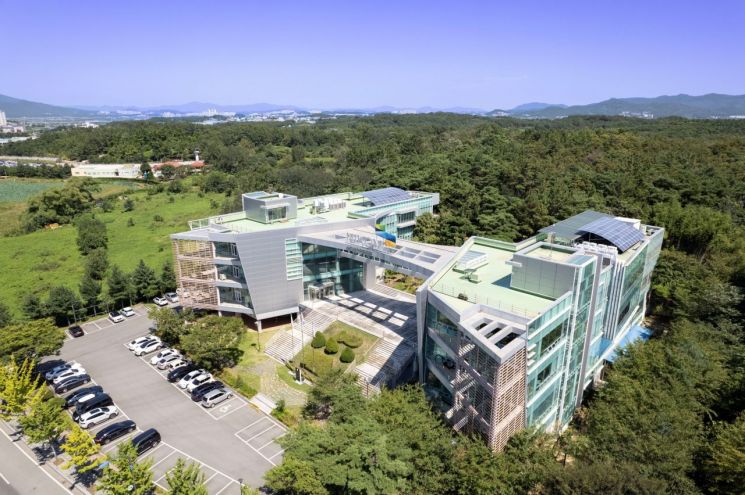
The WHO conducts a rigorous review every four years to determine whether to redesignate its collaborating centers, and the institute has once again proven its status by successfully passing this year's evaluation.
A WHO Collaborating Center is an international cooperative organization formed by the WHO, which selects specialized institutions in each field to carry out international health projects.
Currently, more than 800 collaborating centers are active in over 80 countries worldwide, with 26 institutions in the field of traditional medicine designated in countries such as Korea, China, India, Japan, the United States, and the United Kingdom.
In Korea, the National Institute for Korean Medicine Development is the only organization designated as a WHO Collaborating Center for Traditional, Complementary, and Integrative Medicine under WHO headquarters. Meanwhile, the Korea Institute of Oriental Medicine and Kyung Hee University Medical Center's East-West Medical Research Institute have been designated as collaborating centers by the WHO Western Pacific Regional Office (WPRO).
Since first being designated as a WHO headquarters collaborating center in 2021-the first such designation in Korea-the institute has supported the implementation of the WHO Traditional Medicine Strategy (2014-2025) and assisted the integration of traditional, complementary, and integrative medicine into primary healthcare systems.
Major achievements include publishing a report on the correlation between health insurance coverage and the use of Korean medicine among the elderly, and submitting joint cooperation proposals for the development of traditional medicine in the region.
The institute has also actively promoted personnel exchanges with WHO headquarters and WPRO, strengthened international cooperation by hosting the WPRO Member States Advisory Meeting and the WHO Collaborating Centers Meeting for Traditional, Complementary, and Integrative Medicine in Korea.
Notably, the institute played a leading role in the development of the new WHO Traditional Medicine Strategy (2025-2034), ensuring that the views of Western Pacific member states were reflected in the strategy.
The new strategy is scheduled to be announced at the WHO World Health Assembly to be held in Geneva, Switzerland, in May.
This year, the institute plans to expand international exchange and cooperation by supporting research on real-world data (RWD) for traditional, complementary, and integrative medicine, assisting with WHO traditional medicine quality standardization, and providing customized training on safety and quality of Korean medicine for WPRO member states.
With this redesignation as a WHO Collaborating Center, the National Institute for Korean Medicine Development is expected to further accelerate the globalization of Korean medicine.
© The Asia Business Daily(www.asiae.co.kr). All rights reserved.
![Clutching a Stolen Dior Bag, Saying "I Hate Being Poor but Real"... The Grotesque Con of a "Human Knockoff" [Slate]](https://cwcontent.asiae.co.kr/asiaresize/183/2026021902243444107_1771435474.jpg)
















