The 'Psychological Length' of Time Is Inversely Proportional to Age
A Year Feels Like 365 Days to a One-Year-Old, but Only 7 Days to Someone in Their Fifties
"Travel and Other Activities Can Help Change Perceived Time"
Why does time seem to pass faster as we age? A Japanese media outlet examined the connection between human 'perceived time' and aging through related theories.

On the 15th, Japan's Nihon Keizai Shimbun (Nikkei) reported on the relationship between aging and perceived time. According to the report, the feeling that time passes faster as one becomes an adult can be somewhat explained by the 'Janet's Law' proposed by 19th-century French philosopher Paul Janet. Janet's Law explains that the 'psychological length' of time is inversely proportional to age. For example, if a 1-year-old child perceives one year as 365 days, a 2-year-old child feels it as half that length, and a 10-year-old child perceives it as one-tenth. Based on this calculation, one year for a 50-year-old feels like only 7 days, and for those over 80, it feels like about 4 days.
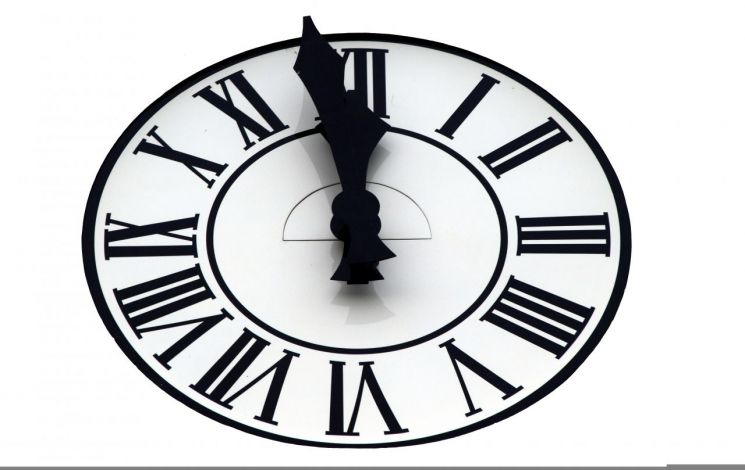
Professor Ichikawa Makoto of Chiba University stated, "Time is divided into two types: 'mental time,' which is the length one feels and judges, and 'clock time,' which is the objective time indicated by a clock." He explained, "When metabolism is active, mental time speeds up, and clock time slows down. Adults have slower metabolism than children, so objective time may feel like it passes faster." Additionally, he noted, "When there are many external stimuli such as sounds and light, perceived time tends to feel longer. Even in the same space, children receive more stimuli than adults, which extends their perceived time."
Professor Ichikawa added, "If we understand the key factors controlling perceived time, it may be possible to adjust it. For example, when you think 'I hope this time passes quickly,' it is better not to check the clock repeatedly, as this can have the opposite effect."
Nikkei also mentioned, "Time spent web surfing on a smartphone often becomes 'empty time' that does not remain in the brain. Therefore, looking at a smartphone for a long time makes the day feel short." They added, "Experiences that stimulate brain function tend to be linked to memory and lengthen perceived time. Activities such as traveling to new places, studying for certifications, or changing commuting routes help alter perceived time."
© The Asia Business Daily(www.asiae.co.kr). All rights reserved.


















