Although the 'Joseonjok' Label Was Removed Last Year,
China's Baidu Still Lists Yun Dong-ju's Nationality as 'Chinese'
Amid the 80th anniversary of the death of resistance poet Yun Dong-ju (1917?1945) during the Japanese colonial period, Professor Seokyung Deok from Sungshin Women's University criticized China for introducing poet Yun Dong-ju as one of their own nationals.
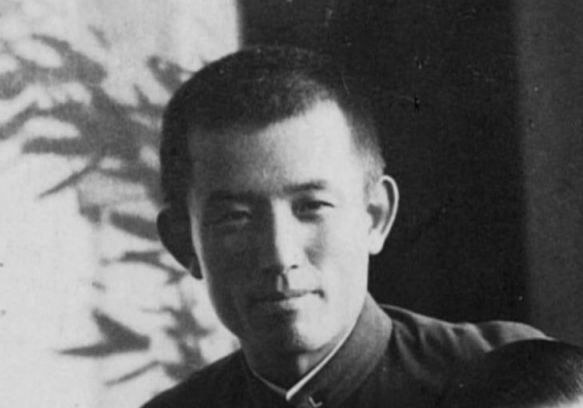
On the 16th, Professor Seokyung Deok stated through his social media (SNS), "China has not yet stopped distorting information about Yun Dong-ju." He criticized, "China's largest portal site Baidu Encyclopedia distorts Yun Dong-ju's nationality as 'Chinese.' For the past five years, I have continuously sent protest emails to Baidu to correct his nationality to 'Korean,' but they have ignored them so far." As a result of Professor Seokyung Deok's persistent protests to Baidu, last November the description of Yun Dong-ju as 'Joseonjok' was removed from his introduction page, but his nationality is still listed as 'Chinese.'
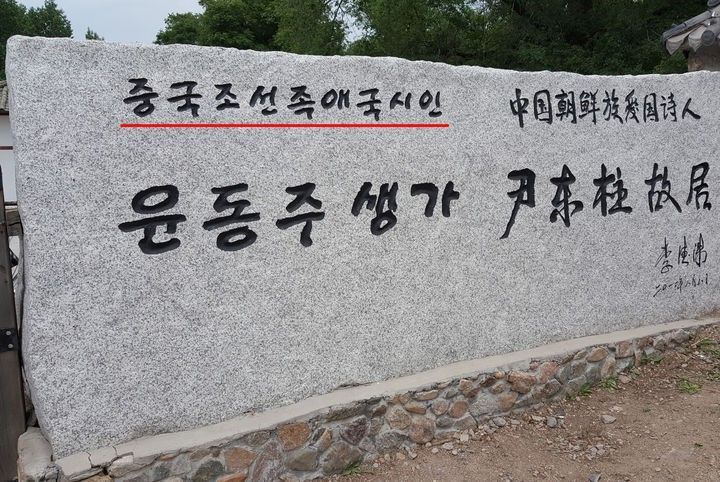 At the entrance of the birthplace of Yun Dong-ju in Yongjeong Village, China, there remains a large sign that reads "Chinese Joseonjok Patriotic Poet." Photo by Seokyoungdeok, Professor at Sungshin Women's University, Facebook.
He continued, "Also, two years ago, the Chinese Communist Party's official newspaper, the People's Daily-affiliated 'Global Times,' introduced Yun Dong-ju as a 'Joseonjok patriotic poet' who participated in the independence struggle against Japanese imperialism." He added, "Furthermore, at the entrance of Yun Dong-ju's birthplace in Yongjeong Village, Yanbian Korean Autonomous Prefecture, Jilin Province, China, a large sign remains that reads 'Chinese Joseonjok Patriotic Poet.' Because of this, many Chinese tourists who visited the birthplace regarded Yun Dong-ju as Chinese," he pointed out.
Professor Seokyung Deok emphasized, "Now the Korean government must strongly protest to the Chinese authorities regarding the distortion of Yun Dong-ju."
Meanwhile, Doshisha University in Kyoto, Japan, held a degree conferment ceremony at the campus chapel on the same day and awarded an honorary doctorate degree to poet Yun Dong-ju. Since its establishment in 1875, this is the first time the university has awarded an honorary doctorate to the late poet. Ryuta Itagaki, a professor in the Department of Sociology at Doshisha University, said, "This special decision reflects the university's regret for not being able to protect Yun, who was arrested and died while enrolled."
Yun Dong-ju graduated from Yeonhui Professional School (the predecessor of Yonsei University) and then entered Rikkyo University in Tokyo before transferring in October 1942 to the Department of English Language and Literature, Faculty of Letters and Culture at Doshisha University. In 1943, he was arrested by Japanese police on charges of participating in a student group discussing Korean independence. He was imprisoned at Fukuoka Prison and passed away on February 16, 1945, at the age of 28, six months before Korea's liberation. At Rikkyo University, which Yun attended before transferring to Doshisha University, a commemorative lecture and poetry reading event are scheduled for the 23rd.
© The Asia Business Daily(www.asiae.co.kr). All rights reserved.


















