Possibility of Using Old Law
to Impose 50% Tariffs on Imports
U.S. President Donald Trump on the 13th (local time) announced plans to declare reciprocal tariffs on countries around the world.
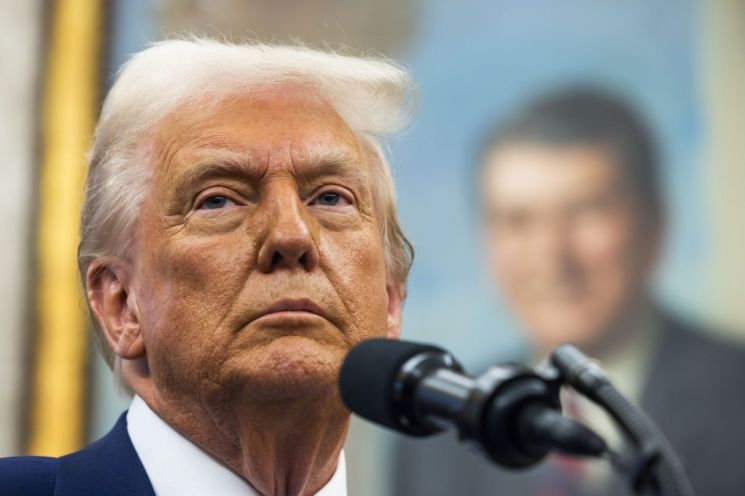 Donald Trump, President of the United States, is speaking at the White House in Washington DC. Photo by UPI Yonhap News
President Trump wrote on the social media platform 'Truth Social' that "It has been a great 3 weeks and probably the best ever," adding, "Today is an important day. Reciprocal tariffs!! Make America great again!!"
White House spokesperson Caroline Levitt stated in a press briefing the day before that the announcement of reciprocal tariffs would be made before Indian Prime Minister Narendra Modi's visit to the White House on the 13th.
Reciprocal tariffs mean that the U.S. imposes tariffs on goods from other countries at the same rate those countries apply to American products. While the exact level of tariffs to be imposed is unclear, it is generally expected to have a significant impact on both the U.S. and the global economy.
There are also prospects that President Trump may invoke the effectively obsolete Section 338 of the Trade Act of 1930 to immediately enforce reciprocal tariffs. This law grants the president the authority to impose tariffs of up to 50% on imports from countries that discriminate against U.S. commerce.
Since taking office last month, President Trump has been pressuring trading partners with high tariffs to address trade imbalances. On the 4th, he imposed an additional 10% tariff on China, and on the 10th, he decided to impose a 25% tariff on imported steel and aluminum starting from the 12th of next month.
© The Asia Business Daily(www.asiae.co.kr). All rights reserved.

















