Office Workers Struggle with Sleepless Nights Before Workdays
Sleep Deprivation Leads to 'Sleep Obsession'
"Tension Negatively Affects Sleep... Maintaining a Routine Is Key"
Mr. Lee (32), an office worker, struggles with sleep problems every Sunday night. The moment he lies down on the bed, his mind becomes cluttered, making it impossible to fall asleep, and even if he manages to doze off, he often wakes up in the middle of the night. As a result, he boards the bus to work feeling exhausted. He confessed, "I have tried sleeping pills and changed my pillow, but nothing helped," adding, "I'm afraid this might develop into a sleep disorder."
The number of office workers who cannot sleep is increasing. The number of people seeking treatment for sleep disorders has also surged. Worrying about sleep problems can lead to an obsessive cycle about sleep itself. Experts advise that maintaining regular daily habits to reduce tension can help alleviate stress-related sleep disorders.

South Korea is among the countries with the shortest sleep durations. According to the most recent average sleep time survey by the Organisation for Economic Co-operation and Development (OECD) in 2021, the average daily sleep time of Koreans was 7 hours and 51 minutes, about 30 minutes less than the OECD average of 8 hours and 27 minutes. It ranks second shortest in sleep duration after Japan.
Although this is longer than the general recommended daily sleep time (at least 7 hours), the statistics include infants and adolescents who tend to sleep longer, so the average daily sleep time for adults is presumed to be significantly lower.
The number of people visiting hospitals for sleep disorders is also increasing. According to data submitted by Nam In-soon, a member of the National Assembly’s Health and Welfare Committee from the Democratic Party, obtained from the National Health Insurance Service, the number of hospital visits for sleep disorders increased by 24%, from 990,000 in 2019 to 1.24 million in 2023.
Chronic sleep deprivation negatively affects not only mental but also physical health. In a report published the same year, the Korea Institute for Health and Social Affairs analyzed that "sleeping less than the recommended amount (at least 7 hours per day) negatively impacts chronic diseases such as hypertension, cardiovascular disease, diabetes, as well as the onset of depression and obesity, mental health, mortality risk, and overall life satisfaction." Excessive worry about lack of sleep can lead to 'sleep obsession.'
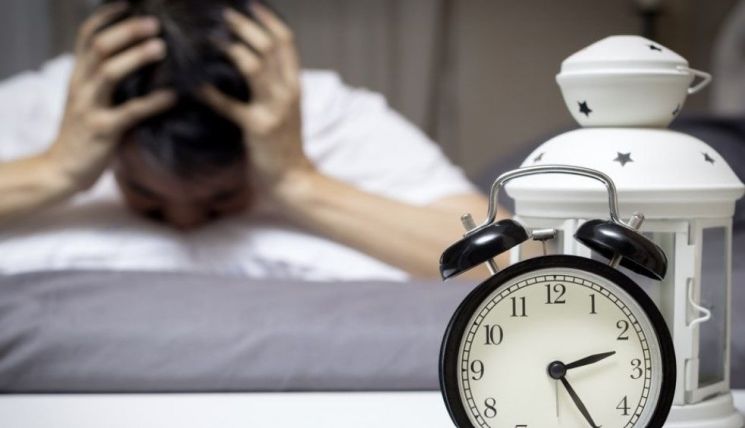
Experts say that stress-induced deterioration in sleep quality can cause sleep disorders. Professor Lim Myung-ho of Dankook University’s Department of Psychology explained, “When stressed, the body secretes various hormones such as cortisol, and these bodily changes can interfere with deep sleep or lead to sleep disorders. Cases of office workers experiencing sleep disorders due to stress are common.”
However, he advised against excessive worry about sleep deprivation. Professor Lim said, “Our bodies feel stable when similar conditions are maintained over a long period. Trying to alleviate sleep deprivation by suddenly going to bed earlier than usual or exercising excessively to create fatigue can actually increase tension. Creating and consistently following a personal routine to maintain calmness helps achieve deep sleep.”
© The Asia Business Daily(www.asiae.co.kr). All rights reserved.


















