Development of Ultra-Sensitive Cancer Diagnosis and Prognosis Monitoring Technology by Professor Yoonkyung Cho's Team at UNIST
Diagnosis of Early-Stage Cancer Patient Gene Mutations Untraceable by NGS, Featured on the Cover of ACS Nano
Domestic researchers have developed an innovative diagnostic technology that can detect lung cancer at an early stage with just a few drops of blood.
This technology has attracted attention from the medical community as it can diagnose early-stage lung cancer, which was difficult to detect with existing tests (NGS liquid biopsy).
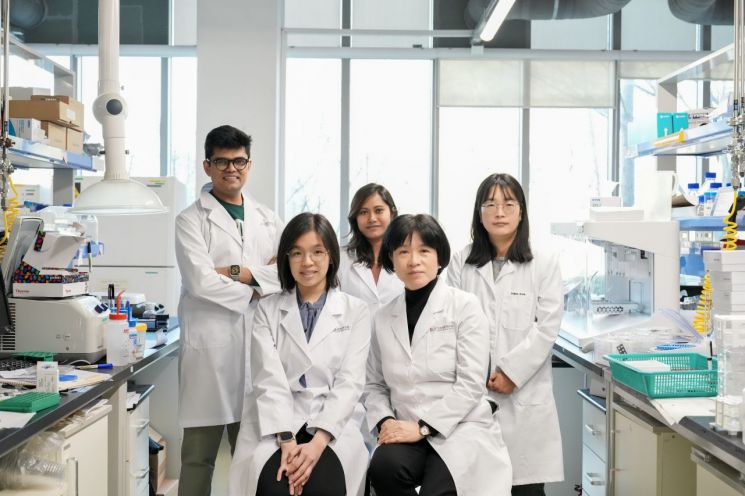 Research team. (Clockwise from the bottom right) Professor Jo Yoon-kyung, Researcher Elizabeth Maria Clarisa (first author), Researcher Sumit Kumar, Researcher Mamata Karmacharya, Researcher Park Joo-hee. Provided by UNIST
The research team led by Professor Yoonkyung Cho from the Department of Biomedical Engineering at UNIST announced on the 13th that they have developed a technology called ‘EV-CLIP’ that can diagnose cancer mutations using ultra-small amounts of plasma (the yellowish liquid in blood after blood cells settle) without preprocessing. The results of this study were selected as the cover paper of ACS Nano, a prestigious journal in the field of nanotechnology, and were published on the 11th.
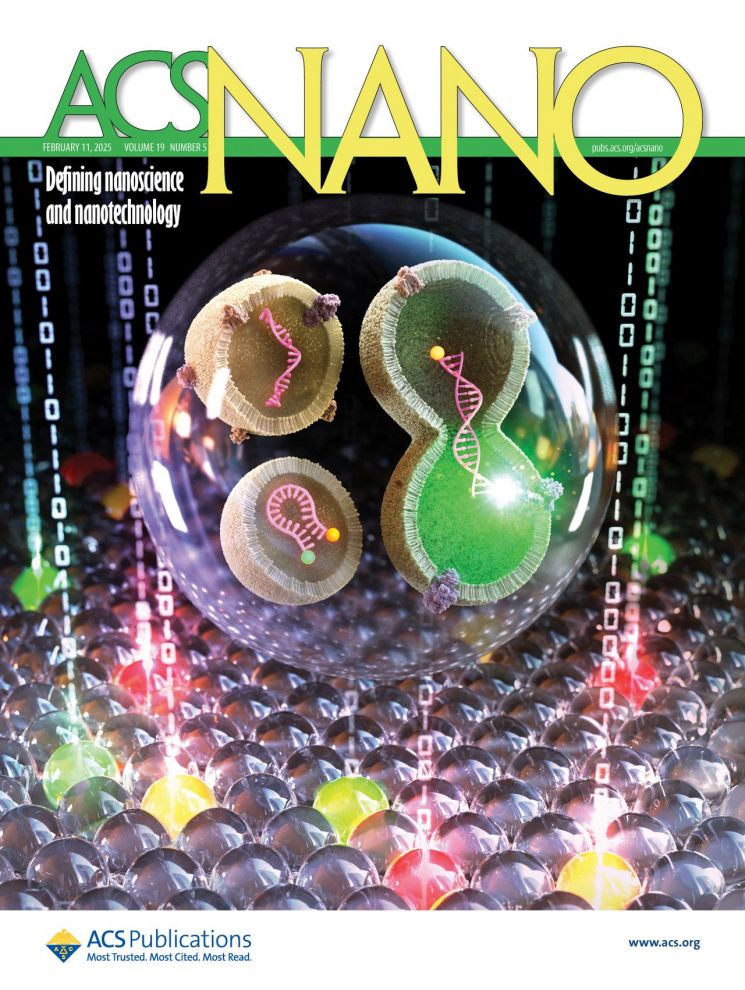
The ‘EV-CLIP’ diagnostic technology fuses extracellular vesicles (EVs) in the blood with artificial liposomes (CLIP) containing molecular beacons inside a tube thinner than a hair. The extracellular vesicles released from cancer cells contain genetic mutation information substances such as mRNA and miRNA, and when the molecular beacon meets these substances, it emits a fluorescent signal. This method can diagnose cancer using only about 4 to 5 drops of blood, equivalent to 20 microliters (?L) of plasma.
The research team designed the liposome surface to carry an electric charge to increase detection sensitivity. Due to its high sensitivity, it can be used not only to confirm the presence or absence of specific cancer mutations but also for early cancer diagnosis and monitoring residual cancer cells (minimal residual disease) after treatment. Unlike existing diagnostic methods, it does not require complex preprocessing steps such as extracting extracellular vesicles separately from plasma or amplifying genes.
Clinical trials analyzing the blood of 83 patients showed that the developed diagnostic technology detected the EGFR gene mutation, which is important for selecting lung cancer anticancer drugs, with 100% accuracy. In particular, it accurately detected mutations in stage 1 and 2 lung cancer patients, which were difficult to find with existing NGS-based liquid biopsies.
This technology has been transferred to the bio-venture company LabSpinner and is expected to be developed into a diagnostic kit that can be easily used in hospitals.
Elizabeth Maria Clarissa, a student who participated as the first author in the research, explained, “By compartmentalizing and analyzing extracellular vesicles, we were able to dramatically increase detection sensitivity. This will open new possibilities not only for cancer diagnosis but also for extracellular vesicle research as a whole.”
Professor Yoonkyung Cho said, “A path has been opened to detect cancer early and confirm treatment effects with just a few drops of blood. This technology will enable accurate diagnosis while greatly reducing patients’ pain and burden.”
This study was conducted jointly with Professor Injae Oh’s team at Chonnam National University Hospital, Professor Mihyun Kim’s team at Pusan National University Hospital, and Professor Jungseon Ryu’s team at Inha University Hospital, supported by the Institute for Basic Science and the National Research Foundation of Korea.
© The Asia Business Daily(www.asiae.co.kr). All rights reserved.


















