The Gyeonggi-do Fire and Disaster Headquarters plans to significantly improve the three-person occupancy rate of ambulances in the province from 52% to the 70% range by deploying additional emergency medical personnel.
On the 12th, the Fire and Disaster Headquarters announced that by deploying a total of 339 additional emergency personnel, including 149 new hires and 190 temporary workers (substitute personnel), they will be able to provide high-quality emergency services through improvements in the emergency work environment, such as expanding the 'three-person occupancy rate.'
The Fire and Disaster Headquarters expects that with this deployment of emergency personnel, the three-person occupancy rate of ambulances will rise significantly from 52% last year to 70% this year.
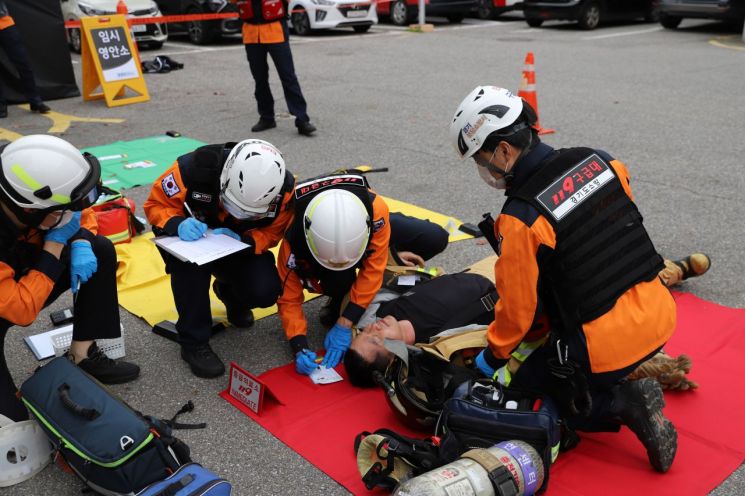 With the Gyeonggi-do Fire and Disaster Headquarters deploying additional emergency medical personnel, the three-person occupancy rate in ambulances across the province is expected to improve significantly from 52% to the 70% range. The photo shows emergency medical technicians during training. Photo by Gyeonggi-do Fire and Disaster Headquarters
Additionally, fire stations in Suwon, Suwon South, Bucheon, Uijeongbu, Ansan, and Seongnam, where emergency demand is relatively high, will operate under a four-shift, two-team system, improving the work environment for emergency responders who have been suffering from heavy workloads.
Separately, the Fire and Disaster Headquarters has increased the number of ambulances at the Ansan, Seongnam, and Goyang fire stations to ensure there are no gaps in the emergency and urgent medical system.
Jo Sun-ho, head of the Fire and Disaster Headquarters, stated, "We will steadily increase the three-person occupancy rate of ambulances by forecasting emergency demand and considering the work environment of each station. Going forward, we will not only increase personnel but also enhance the professionalism of emergency responders to provide the best emergency services to residents."
Meanwhile, the average daily number of emergency dispatches in the province last year was 2,190, with 1,188 patients transported, indicating a high workload for emergency responders.
© The Asia Business Daily(www.asiae.co.kr). All rights reserved.

















