Still No Phone Call Between Leaders of Both Countries
"Different From Trump's First Term"... Negotiation Cards Also Limited
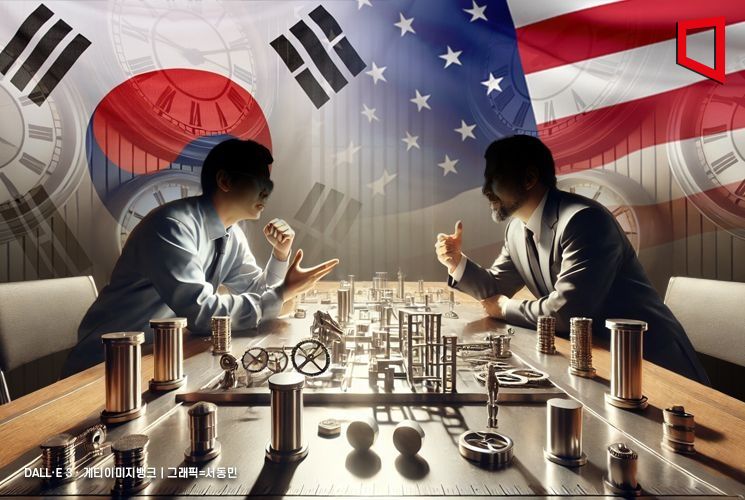
Countries have responded to U.S. President Donald Trump's tariff policies, but South Korea is struggling to establish a negotiation table. The government believes there is room for coordination, as was the case during Trump's first administration, but negotiation cards have diminished and negotiating power has weakened due to the acting leadership system.
According to related industries and political circles on the 12th, the biggest problem facing the South Korean government is the weakened external negotiating power caused by the acting leadership system. Choi Sang-mok, Acting Prime Minister and Minister of Strategy and Finance, has been continuously attempting to facilitate calls between the South Korean and U.S. presidents since President Trump's inauguration, but these have yet to materialize.
The U.S. Trade Representative (USTR), the American counterpart to Jeong In-kyo, Director General of the Trade Negotiations Headquarters, has not yet been confirmed by Congress, making the negotiation channel itself incomplete. It is difficult even to set up a negotiation table. An official from the Ministry of Trade, Industry and Energy said, "Jeong's plan to visit the U.S. has not been decided yet."
Currently, South Korea's cards for negotiating with the U.S. are limited. First, there is the option of adjusting the steel quota. During the first term of the Trump administration, when the U.S. government imposed a 25% tariff on steel under Section 232 of the Trade Expansion Act, the South Korean government created a kind of duty-free quota. Up to 2.63 million tons were exempted, and a 5.3% tariff was applied only to the excess volume. The government envisions discussing with the U.S. the possibility of reducing the current quota.
Another likely proposal is to increase imports of essential consumer goods desired by the U.S. or to suggest additional purchases of energy resources. In fact, Kim Hyun-jong, then Director General of the Trade Negotiations Headquarters, adopted a strategy of increasing imports of crude oil and LNG (liquefied natural gas) during negotiations with the Trump administration in 2018. In 2016, U.S. LNG accounted for only 0.2% of South Korea's total LNG imports, but by 2021, at the end of the Trump administration, it had increased to 18.5%.
However, given the current economic situation and trade environment changes, it is uncertain whether adjusting the steel quota or expanding energy imports alone can resolve the issues. During Trump's first administration, measures such as steel quota adjustments or energy import expansions were attractive negotiation proposals because they did not exist before, but the situation is different now. It is also a factor to consider that President Trump stated, "In the coming weeks, we will look not only at steel and aluminum but also at semiconductors, automobiles, and pharmaceuticals."
Accordingly, there are opinions that a strategic approach linked to other industries such as shipbuilding, automobiles, semiconductors, and batteries is necessary. An official from the Ministry of Trade, Industry and Energy said, "Due to security reasons, it is difficult to disclose specific details, but the government is preparing various negotiation cards at the national level."
© The Asia Business Daily(www.asiae.co.kr). All rights reserved.

















