"Direct exports amount to only several hundred thousand tons"
Taiwan also says "Direct impact is limited"
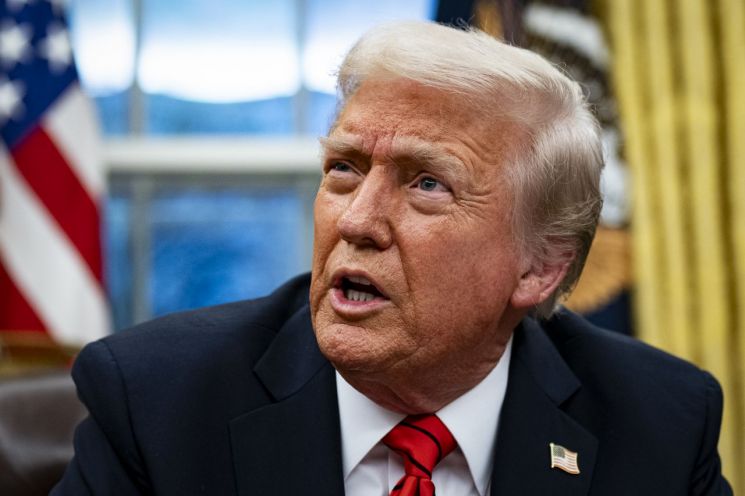
Following the imposition of a 10% general tariff on China, U.S. President Donald Trump announced on the 10th (local time) that a 25% tariff will be imposed on steel and aluminum. Chinese experts analyzed that the impact of this steel and aluminum tariff measure on China would be minimal.
Chinese economic media Caixin cited Xu Xiangchun, Chief Analyst at Chinese research institute MySteel, saying, "China's direct steel exports to the U.S. amount to only several hundred thousand tons, which is very small, and the direct impact of the additional tariff increase is also limited."
In fact, the major steel importers to the U.S. are Canada, Brazil, Mexico, South Korea, and Vietnam. The impact on China is minimal.
However, Chief Analyst Xu noted that if the U.S. imposes tariffs comprehensively, the U.S. market would be closed off, increasing supply in the international market, which could create competition with Chinese steel and aluminum products. He explained that indirect effects may gradually increase and should be monitored.
Caixin also viewed that the impact of aluminum tariffs would not be significant in the short term. Chinese industry expert Yang Puchang told Caixin that even if the U.S. imposes additional tariffs, the impact on aluminum exports would be relatively limited. This is because aluminum exports are already subject to relatively high anti-dumping and countervailing duties as well as Section 301 of the Trade Act.
However, since most of China's aluminum export products to the U.S. are already subject to 7.5% or 25% Section 301 tariffs, adding the newly announced 25% tariff and the 10% general tariff could have a greater impact.
The U.S. is the largest export destination for Chinese aluminum. Last year, China's aluminum exports to the U.S. amounted to 530,000 tons, accounting for 16% of China's total aluminum exports.
Taiwan, considered a major Asian steel export region to the U.S., is also monitoring the situation. According to Taiwan's Liberty Times, China Steel, which exported 9,000 tons of steel products to the U.S. last year, stated that the direct impact of the tariffs is relatively small. It is still unknown whether steel exports used in rolling, API pipes, hand tools, auto parts, and artificial intelligence (AI) servers will be affected.
China Steel analyzed that if President Trump strengthens trade restrictions on various countries and the Southeast Asian steel industry's production capacity is oversupplied, while the European Union (EU) further limits steel duty-free import quotas, it could intensify price competition among countries and encourage Asian countries to build steel trade barriers.
© The Asia Business Daily(www.asiae.co.kr). All rights reserved.

















