Ministry of the Interior and Safety Announces Measures to Prevent Road Icing Accidents
From Technology Development to Management of Icing-Prone Sections
The government has decided to apply road surface friction enhancement technology from the road design stage to prevent traffic accidents caused by winter road icing and to develop technologies that can delay road icing.
On the 11th, the Ministry of the Interior and Safety, together with related agencies, prepared the "Winter Road Icing Traffic Accident Cause Analysis and Human Damage Prevention Measures" to prevent casualties caused by winter road icing traffic accidents.
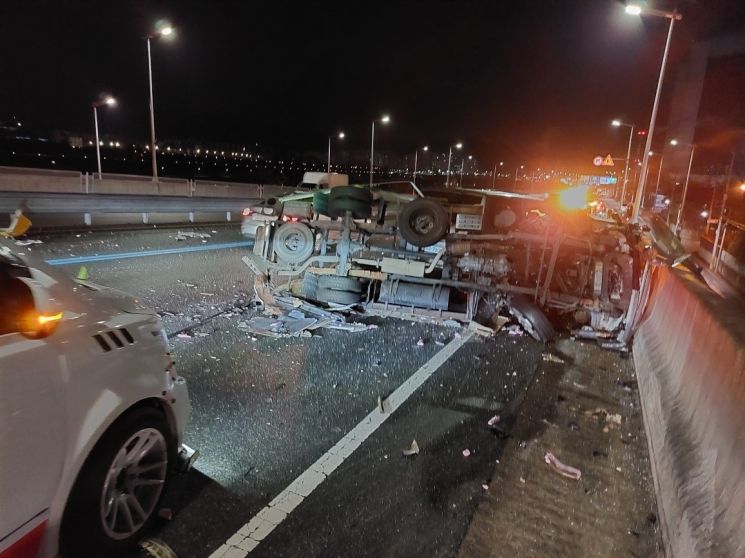
Traffic accidents caused by road icing occur steadily every year. From 2019 to 2023, a total of 3,944 cases occurred over the past five years, with 95 deaths and 6,589 injuries. Accordingly, in November last year, the government formed a joint public-private "Winter Road Icing Traffic Accident Disaster Cause Investigation Team" and widely collected opinions from road snow removal field workers and private experts.
First, the government plans to review icing risk factors from the design stage when constructing roads and to consider and reflect icing prevention facilities such as enhancing road surface friction in areas prone to icing. The targets include tunnel entrances and exits, bridges, slopes, curves, embankments, shaded areas, and vehicle merging sections.
Provision of weather information on road icing will also be strengthened. Considering that there is about a 30-minute time delay from observation to the provision of risk information when producing road black ice risk information based on meteorological observation data, the government will additionally utilize ultra-short-term precipitation forecast data for 30 minutes ahead to improve the accuracy of the information.
Efforts will also be made to improve the management system for road icing vulnerable sections. A standardized guideline for designating icing vulnerable sections will be prepared, and the items and formats of icing vulnerable section data, which are currently collected and managed differently by each road management agency (such as the National Land Management Office, local governments, road corporations, and private road operators), will be standardized.
The designation of snow removal vehicles as emergency vehicles will increase. During the winter season (November to March), snow removal vehicles will be broadly designated as emergency vehicles, allowing the use of warning lights and sirens and passage through emergency lanes to prevent delays in snow removal operations.
A safety management system enhancement plan was also announced. The authority to install unmanned traffic enforcement equipment will be established to allow road management offices and road management operators to install such equipment, thereby increasing enforcement effectiveness. A representative example is the phased expansion of variable speed enforcement systems on major bridge sections vulnerable to icing. In addition, to help drivers visually recognize the risk of icing more easily, responsive road surface markings that change color or patterns when weather conditions likely to cause icing are met will be introduced. Lee Han-kyung, Director of the Disaster and Safety Management Headquarters, stated, "Since traffic accidents caused by icing are highly likely to lead to casualties, we will thoroughly implement the government measures prepared this time in cooperation with related agencies."
© The Asia Business Daily(www.asiae.co.kr). All rights reserved.

















