2023 Records Lowest Annual PM-2.5 Level at 15.6㎍/㎥
Lowest Since Monitoring Began in 2015
Drop in Fine Dust from Northeastern China Contributes
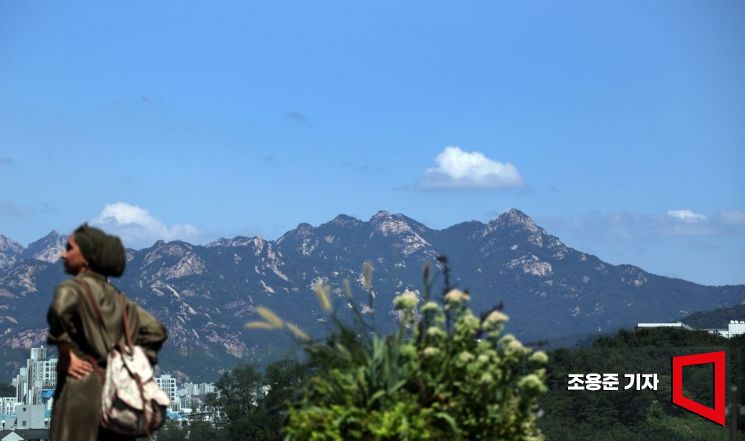
Last year recorded the lowest nationwide concentration of fine particulate matter (PM-2.5). The government explained that this was due to a reduction in the influx of fine dust from China and strengthened domestic mitigation policies.
According to the Ministry of Environment on the 11th, the annual average concentration of fine particulate matter (PM-2.5) nationwide last year was 15.6㎍/㎥. This is the lowest since PM-2.5 monitoring began in 2015. The concentration of fine particulate matter decreased by 14.3% compared to the previous year (18.2㎍/㎥) and by 38.1% compared to 2015 (25.2㎍/㎥).
The number of days with "Good" fine particulate matter levels (nationwide daily average of 15㎍/㎥ or less) was counted at 212 days, the highest since monitoring began. Conversely, the number of days exceeding the "Bad" grade (nationwide daily average of 36㎍/㎥ or more) was 10 days, the lowest on record. There were no occurrences of "Very Bad" (nationwide daily average of 76㎍/㎥ or more) days.
By region, Jeju and Jeonnam had the lowest concentrations at 12.3㎍/㎥, followed by Gangwon (12.9㎍/㎥) and Gyeongnam (13.0㎍/㎥). The region with the most improved fine particulate matter concentration was Jeonbuk (16.0㎍/㎥), showing a 54.8% improvement compared to 2015.
The Ministry of Environment analyzed that domestic policy effects had an impact. Last year, the Ministry set total allowable emissions for air pollutants targeting business sites within air quality management zones. The number of targeted business sites expanded from 400 in 2020 to 1,013. Early scrappage support was initiated for grade 4 diesel vehicles. The number of grade 4 diesel vehicles, which reached 976,000 in 2023, decreased by 15.8% to 822,000 last year.
The decrease in China's fine particulate matter concentration also positively affected Korea's clear skies. The PM-2.5 concentration in the Jing-Jin-Ji region (Beijing, Tianjin, Hebei) and surrounding areas in northeastern China adjacent to Korea was 42.2㎍/㎥ last year. This is the lowest since 2015, improving by 45.2% from 77㎍/㎥ at that time. The Yangtze River Delta region in China also saw a drop in PM-2.5 concentration from 53㎍/㎥ to 33㎍/㎥.
Meteorological conditions also contributed to reducing fine particulate matter concentrations. Last year, the number of rainy days was 114, six days more than the previous year. The more it rains, the fewer stagnant air days occur, reducing fine particulate matter concentrations. In particular, in February, strong easterly winds blew along with precipitation, and in March, the frequency of calm wind conditions (wind speed below 0.5 m/s) decreased, leading to reductions in fine particulate matter.
However, since high concentrations of fine particulate matter can occur at any time, the Ministry of Environment stated that it is promoting strengthened mitigation measures. Until March, the operation of grade 5 vehicles will be restricted in the metropolitan area and six major special and metropolitan cities, and voluntary reductions by large business sites will be encouraged.
Kim Wan-seop, Minister of Environment, said, "Focused mitigation policies targeting key emission sources such as industry, transportation, and daily life are showing concrete results in improving fine particulate matter concentrations," adding, "We will faithfully implement the ongoing seasonal fine dust management system and do our best to protect public health from fine particulate matter."
© The Asia Business Daily(www.asiae.co.kr). All rights reserved.

















