Ministry of Science and ICT and Ministry of Education
to Launch 'National Research Lab (NRL 2.0)' Project
to Enhance University Research Support Systems
A mega-scale 'National Research Lab (NRL)' like the United States' Lawrence Berkeley National Laboratory (LBNL), which has produced 16 Nobel Prize winners, will be established in South Korea as well. On the 10th, the Ministry of Science and ICT and the Ministry of Education announced that they will actively promote the 'National Research Lab (NRL 2.0)' project to create a leading model of sustainable university-affiliated research institutes. The goal is to improve the research capabilities and support systems of domestic universities.
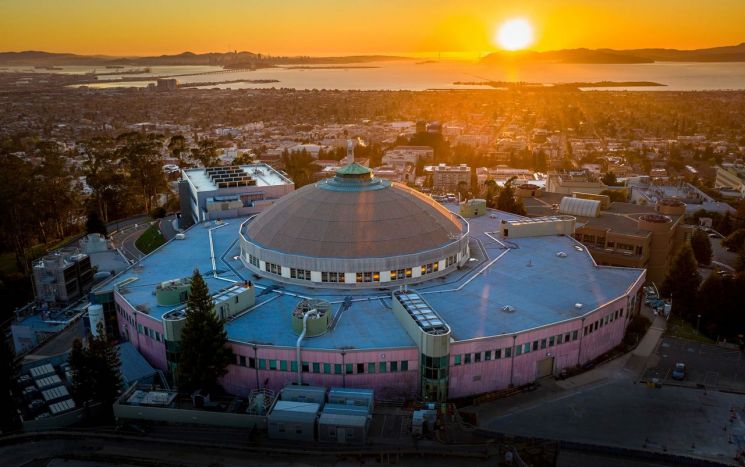
The core of the National Research Lab project is for the Ministry of Science and ICT and the Ministry of Education to share funding to establish university-affiliated research institutes that lead world-class research. This project provides 10 billion KRW annually for 10 years, and plans to select four research institutes this year. The selected institutes will autonomously manage their budgets to freely expand research personnel, build research facilities and equipment, and conduct domestic and international joint research and development.
The government’s model, the Lawrence Berkeley National Laboratory, is a research and development center established in 1931 by the University of California (UC) in Berkeley, California, USA. Founded by Ernest Lawrence, who invented the cyclotron and won the Nobel Prize, it has produced a total of 16 Nobel laureates to date. It consists of six research fields and 22 scientific departments, employing a total of 3,804 people, including 1,800 full-time researchers and engineers, and 800 students or postdoctoral researchers. In 2023, it received a budget of approximately 1.5 billion USD (about 2.1031 trillion KRW).
The government judges that domestic universities lag behind in global research competitiveness due to department-centered operations, and that the decline in the school-age population and the outflow of talent overseas are intensifying difficulties in establishing an innovative research ecosystem. Therefore, it deems system innovation essential. Accordingly, it plans to build three innovative systems: 'aiming for world-class status through large-scale long-term support,' 'breaking down barriers between disciplines, institutions, and ministries,' and 'guaranteeing autonomy in research institute operations and budget management.'
The Ministry of Science and ICT and the Ministry of Education finalized and announced the 'National Research Lab (NRL 2.0) Project Basic Plan' on the 10th after review by the National Research Lab Project Promotion Committee. They plan to accept new project applications until the end of April. The project support targets are university-affiliated research institutes in the science and engineering fields. Institutes will be selected through a comprehensive evaluation of their capabilities, development plans, and the university’s commitment to fostering the research institute, with the project starting in September.
The selected National Research Labs will be operated as direct research institutes under the university headquarters. Minister of Science and ICT, Sang-im Yoo, stated, "Enhancing the research competitiveness of universities, which are the forefront bases of advanced research, is a very urgent national task," adding, "Just as the past Nationally Designated Research Lab (NRL 1.0) project greatly contributed to expanding the barren domestic university research ecosystem, we expect the National Research Lab (NRL 2.0) project to be a catalyst for improving domestic university research capabilities and expanding leading research systems."
Deputy Prime Minister and Minister of Education, Ju-ho Lee, said, "Building an innovative research ecosystem based on university autonomy is a very important issue for the future of our society," and added, "Through the National Research Lab project, we hope to elevate university research competitiveness to the world’s highest level, making domestic university research institutes hubs that lead research innovation in the international community and attract outstanding talent from home and abroad."
Meanwhile, detailed information on the new project call and schedule for the National Research Lab project can be found on the websites of the Ministry of Science and ICT, the Ministry of Education, and the National Research Foundation of Korea.
© The Asia Business Daily(www.asiae.co.kr). All rights reserved.

















