Global Energy Trader Vitol Releases First Long-Term Oil Demand Outlook
Oil Demand Expected to Remain at Current Levels in 2040
"Economic Burden of Climate Change Efforts and Lack of Technological Innovation"
There is a forecast that global oil demand will not decrease until 2040, 15 years from now. The global energy trading company Vitol made this forecast based on the premise that countries will not implement climate change policies that impose significant economic burdens and that no innovative technologies will emerge to reduce oil demand.
Vitol, which trades 7% of the world's oil demand, recently released a 'Long-term Oil Demand Outlook' report on its website outlining these points. The report projects global oil demand from this year through 2040. The reason for setting the forecast period at 15 years was explained as "considering technological changes and vehicle replacement cycles." Beyond 15 years, it is difficult to predict how these factors affecting oil demand will change, increasing uncertainty.
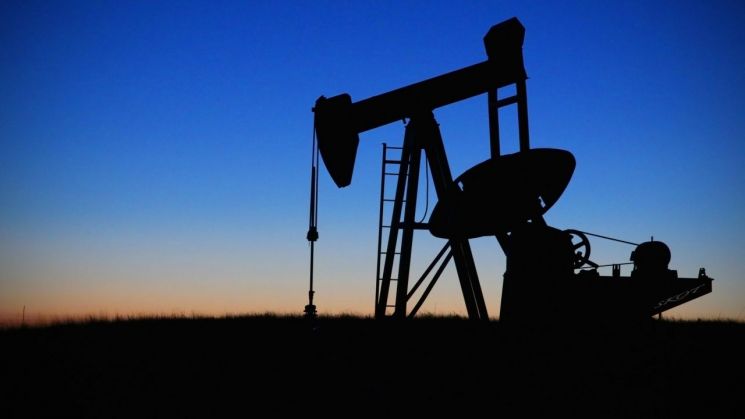
Vitol forecasted that global oil consumption is unlikely to decrease until 2040. Oil demand is expected to peak at 110 million barrels per day around 2035, then begin to decline, reaching the current level of 105 million barrels per day by 2040. The report stated, "Global ambitions to limit climate change are driving efforts to reduce oil consumption and lower carbon dioxide emissions," but "population growth, economic development, and urbanization continue to increase demand for transportation, plastics, chemicals, and energy, which in turn increases oil demand."
The projection that oil demand will remain at current levels in 2040 is based on the analysis that increased demand for plastics will offset the decline in demand for vehicles. First, gasoline demand in the European Union (EU), the United States, and China is expected to decrease by about 5 million barrels per day by 2040 compared to current levels. As a result, the share of these countries in global gasoline demand will decline from 55% to 44%, but will still remain significant. In particular, the United States is expected to remain the world's largest gasoline consumer market in 2040.
The limited decline in gasoline demand is based on the analysis that internal combustion engine vehicles will still constitute the majority in 2040. Vitol expects the global vehicle fleet to increase by about 550 million units to a total of 2 billion vehicles by 2040. The share of electric vehicles (EVs) and plug-in hybrid electric vehicles (PHEVs) is expected to be at most 38% of all vehicles in 2040. Internal combustion engine vehicles will still account for more than half of the global automobile market, limiting the decline in gasoline demand.
On the other hand, Vitol expects daily oil feedstock demand in the petrochemical sector to increase by 6 million barrels by 2040, accounting for 20% of crude oil. Plastics play an important role in almost every aspect of modern society and are essential for economic activities and development such as communication technologies and medical innovations. Therefore, despite efforts by countries to reduce environmental impacts, it is expected to be difficult to replace petroleum-based plastics before 2040.
In projecting long-term oil demand, Vitol assumed that ▲climate change responses will continue but may be limited if economic burdens are excessive, and ▲no innovative technologies will emerge by 2040 that fundamentally change oil demand. An energy industry official said, "Considering that Vitol is a company that trades oil, this forecast can also be seen as reflecting the expectation that oil demand will not decrease by 2040," adding, "To prevent Vitol's forecast from becoming reality, countries must continue their climate change efforts despite economic burdens and actively pursue the development of new technologies to reduce oil demand."
© The Asia Business Daily(www.asiae.co.kr). All rights reserved.

















