US-Japan Summit Held
Japan Pledges to Expand US Energy Imports and Increase Defense Spending
Trump: "Getting Along with Kim Jong-un Is a Great Asset"
Mentions US Trade Deficit, Announces Reciprocal Tariffs
"Japan's Nippon Steel to Invest in US Steel"... Firmly Denies Acquisition
Japanese Prime Minister Shigeru Ishiba unveiled a gift package worth $1 trillion in investments to the United States during the first US-Japan summit held after President Donald Trump's inauguration. By expanding imports of American energy, increasing US investments, and boosting defense spending, he aimed to build a close relationship with the US and expressed his determination to "open a golden era of the US-Japan alliance." President Trump responded by reaffirming the US defense commitment to Japan.
At a press conference following the summit, President Trump stated, "The United States will engage with North Korea," reaffirming his willingness to hold talks with North Korean Supreme Leader Kim Jong-un. He also announced that next week he would unveil 'reciprocal tariffs' measures targeting several countries.
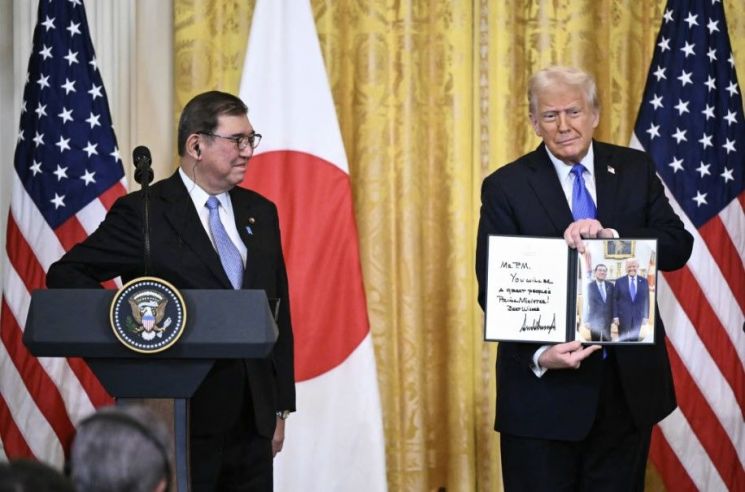
Japan's Ishiba Presents Gifts to Trump... Trump Denies US Steel Acquisition
On the 7th (local time), President Trump shared the outcomes of the US-Japan summit with Prime Minister Ishiba at the White House during a press conference.
Prime Minister Ishiba attracted significant attention as the second foreign leader to meet President Trump after Israeli Prime Minister Benjamin Netanyahu. Facing anticipated pressure from the Trump administration's second term on issues such as trade imbalance resolution and increased defense spending, Ishiba proactively offered gifts in trade and security sectors.
President Trump said, "Japan has promised to double its defense spending by 2027 compared to my first term." Until now, President Trump has consistently pressured allies to increase defense spending relative to their GDP, and Japan has taken the initiative to accept this demand.
Japan also pledged to expand imports of American energy and increase investments in the US.
President Trump explained, "Japan will soon begin record-scale imports of American liquefied natural gas (LNG)," adding, "We are discussing joint investments between Japan and the US related to oil and gas in Alaska." He expressed expectations that these measures would contribute to improving the US trade deficit with Japan.
Prime Minister Ishiba stated that Japan would significantly increase its investment in the US to $1 trillion and expand cooperation in advanced technology industries such as artificial intelligence (AI) and semiconductors.
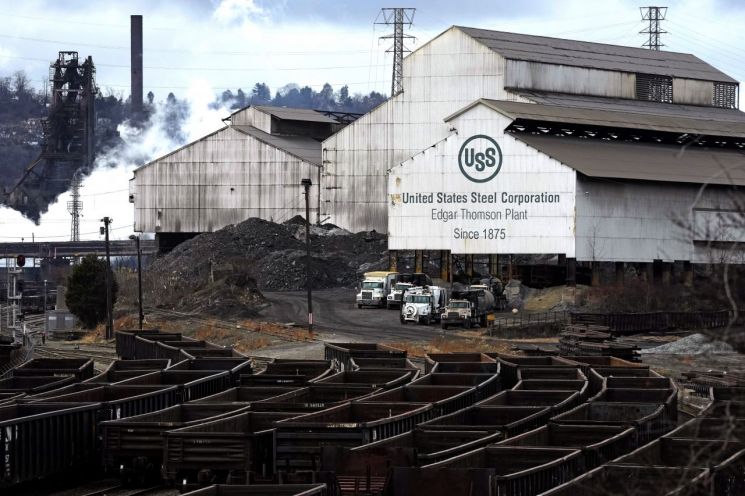
Meanwhile, President Trump promised Prime Minister Ishiba 100% security deterrence for Japan but firmly denied the acquisition of US Steel by Nippon Steel. President Trump said Nippon Steel would "consider investment rather than acquiring US Steel" and mentioned plans to meet with Nippon Steel representatives next week to engage in "mediation and coordination." Prime Minister Ishiba also said that Japanese technology would be provided to American steel plants and that the investment would be mutually beneficial.
Previously, Nippon Steel announced plans in December 2023 to acquire US Steel for $15 billion but faced opposition from political circles and labor unions. Subsequently, the Biden administration last month denied Nippon Steel's acquisition of US Steel citing national security concerns.
Trump Emphasizes Willingness for North Korea-US Dialogue... "Getting Along with Kim Jong-un Is a Great Asset"
Following the US-Japan summit, President Trump expressed his willingness to engage in North Korea-US dialogue.
He said about Chairman Kim, "We have maintained a good relationship," adding, "I think getting along with him is a very great asset for everyone." He continued, "I get along well with him, and he gets along well with me," explaining, "That is a good thing, not a bad thing."
In particular, by stating "The United States will engage with North Korea," he raised expectations that a North Korea-US summit could be held during Trump's second term.
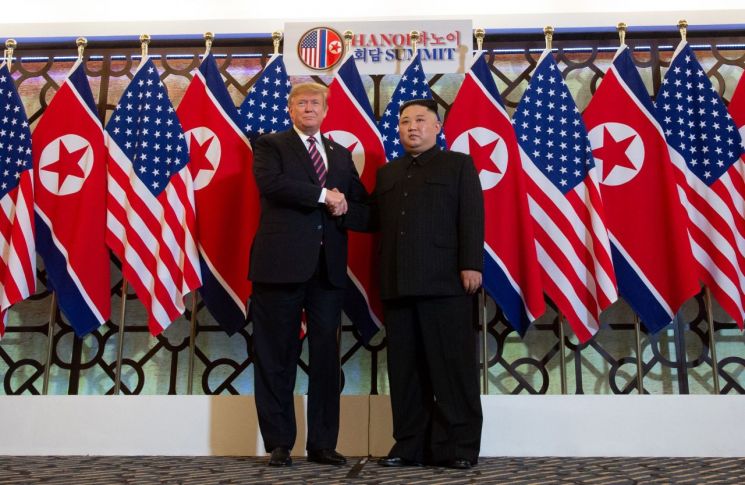
Previously, during his first term, President Trump held the first and second North Korea-US summits with Chairman Kim in Singapore in 2018 and Hanoi, Vietnam in 2019. In June 2019, although not a summit, they briefly met at Panmunjom. However, President Trump did not offer any specific or additional proposals regarding North Korea-US relations during this press conference.
The principle of North Korea's complete denuclearization and security commitments on the Korean Peninsula were also confirmed.
President Trump stated, "We will achieve 'peace through strength' across the Indo-Pacific region," adding, "To this end, we will dedicate ourselves to efforts to ensure safety and stability on the Korean Peninsula that began at the start of my first term."
Prime Minister Ishiba mentioned, "Japan and the United States confirmed cooperation for North Korea's complete denuclearization," suggesting that President Trump agreed with the goal of North Korea's denuclearization. He said it would be "great" if President Trump could help promote North Korea's denuclearization and expressed hope that "if President Trump returns to power, we can move forward toward resolving issues with North Korea." He also urged North Korea to repatriate Japanese abductees taken in the late 1970s.
Prime Minister Ishiba further emphasized the need for a strong US-Japan alliance to realize a free and open Indo-Pacific, stating, "We agreed with President Trump to enhance the deterrence and response capabilities of the US-Japan alliance and to closely cooperate on regional challenges."
Trump: "Reciprocal Tariffs Announcement Next Week"... Concerns Over Global Tariff War
At the press conference, President Trump announced plans to unveil reciprocal tariff measures targeting several countries next week. He mentioned reciprocal tariffs while telling Prime Minister Ishiba that he wanted to reduce the $100 billion US trade deficit with Japan.
President Trump said reciprocal tariffs would affect "everyone," adding, "We have to do this so that we can be treated equally with other countries. We don't want to be treated more or less." He said the announcement would likely be made on the 10th or 11th.
Regarding automobile tariffs, he said, "That is always a topic of discussion and a very big issue," explaining, "We have to make those (car tariffs) equal."
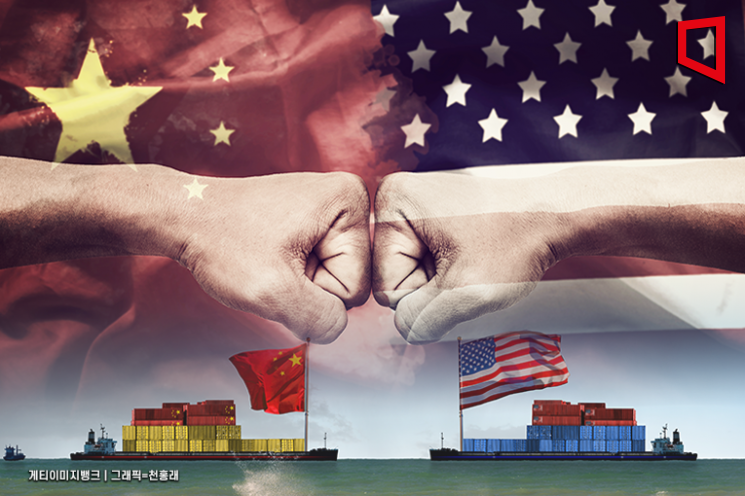
Earlier, President Trump pledged during his candidacy to introduce the Reciprocal Trade Act and impose reciprocal tariffs. Reciprocal tariffs mean that the US would impose the same tariff rates on imported goods from foreign countries as those countries impose on American imports. The current average US tariff rate is about 3%, which is very low compared to other countries. With President Trump's announcement of reciprocal tariffs, concerns are rising that the tariff war, which began on the 1st with an executive order targeting Mexico, Canada, and China, will expand globally. The US has temporarily exempted Mexico and Canada from the general 25% tariff for one month but has applied an additional 10% tariff on China starting the 4th.
Attention is also focused on whether South Korea will be included in the US reciprocal tariff targets. South Korea runs a large trade surplus with the US in the automobile sector, so if President Trump raises car tariffs, it is expected to have an inevitable impact.
© The Asia Business Daily(www.asiae.co.kr). All rights reserved.



















