IMF: "South Korea's foreign exchange reserves are sufficient to withstand external shocks"
Assesses real estate-related financial risks as manageable
Highlights need for continued monitoring and proactive response
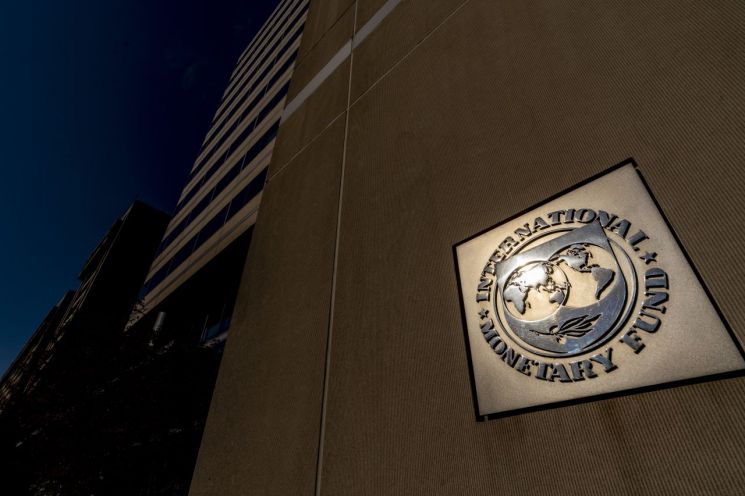
The International Monetary Fund (IMF) recently assessed that despite concerns such as exchange rate increases due to expanded political uncertainty, "South Korea's foreign exchange reserves are at a level sufficiently capable of responding to external shocks."
In the '2024 South Korea Article IV Consultation Report' released on the 7th (local time), the IMF stated, "Stress test results show that South Korea's foreign exchange reserves are at a level sufficiently capable of responding to external shocks, and the net external financial assets, which have recently expanded to 43.9% of GDP, are also an important factor supporting external soundness."
This is interpreted to mean that the foreign exchange reserves are sufficiently stable to defend against outflows of foreign currency funds caused by shocks from increased political uncertainty. According to foreign exchange reserve statistics announced by the Bank of Korea on the 5th, as of the end of January, South Korea's foreign exchange reserves stood at $411.01 billion. The reserves decreased by about $4.6 billion compared to the previous month due to usage for exchange rate defense and other purposes.
Net external financial assets, which reflect South Korea's external payment capacity, reached $977.8 billion as of the end of the third quarter last year.
Regarding real estate-related financial risks, the IMF noted, "There are potential vulnerabilities in the financial sector such as the housing market and real estate project financing (PF), but they are at a manageable level," while also recommending, "monitoring of vulnerabilities and proactive response efforts are necessary."
The IMF evaluated positively the management of household debt including strengthening the debt service ratio (DSR), expansion of housing supply, and smooth landing measures for PF, stating that corporate value-up and foreign exchange market structural improvement policies contributed to enhancing stock market efficiency and advancing the foreign exchange market. It also urged that market stabilization measures, which were implemented immediately after the Legoland incident and the emergency martial law situation, helped prevent rapid market turmoil but should be terminated promptly once the market normalizes.
The IMF projected South Korea's economic growth rate for this year at 2.0%, the same figure announced in last month's World Economic Outlook (WEO). The IMF stated, "This year, South Korea's economy is expected to remain at the potential growth rate level due to solid exports, private consumption, and a moderate recovery in investment." The current account surplus, which expanded to 4.2% of GDP last year, is expected to record about 3.6% this year due to increased imports influenced by consumption recovery.
The IMF pointed out that "downside risks to the South Korean economy prevail," citing factors such as ongoing political uncertainty, policy changes in the new U.S. administration, weak semiconductor demand, economic sluggishness in major trading partners, and intensifying geopolitical conflicts as downside risk factors. It warned, "If political uncertainty prolongs, it could negatively affect investment and consumer sentiment and increase financial market volatility."
This report was prepared based on the annual consultation conducted by the IMF Korea mission team, which visited South Korea from November 7 to 20 last year and held discussions with key government ministries and related agencies including the Ministry of Economy and Finance and the Bank of Korea.
© The Asia Business Daily(www.asiae.co.kr). All rights reserved.
![Clutching a Stolen Dior Bag, Saying "I Hate Being Poor but Real"... The Grotesque Con of a "Human Knockoff" [Slate]](https://cwcontent.asiae.co.kr/asiaresize/183/2026021902243444107_1771435474.jpg)
















