KAIST Researchers Discover Hair Loss Alleviation Function of Tannic Acid
First Case of Binding to Hair and Delivering Hair Loss Alleviating Ingredients
Applied to Gravity Shampoo by Faculty Startup Polyphenol Factory
Researchers at the Korea Advanced Institute of Science and Technology (KAIST) have discovered that tannic acid, a type of natural polyphenol, acts as an ‘adhesion mediator’ that alleviates hair loss. This technology is already applied in shampoos currently on the market.
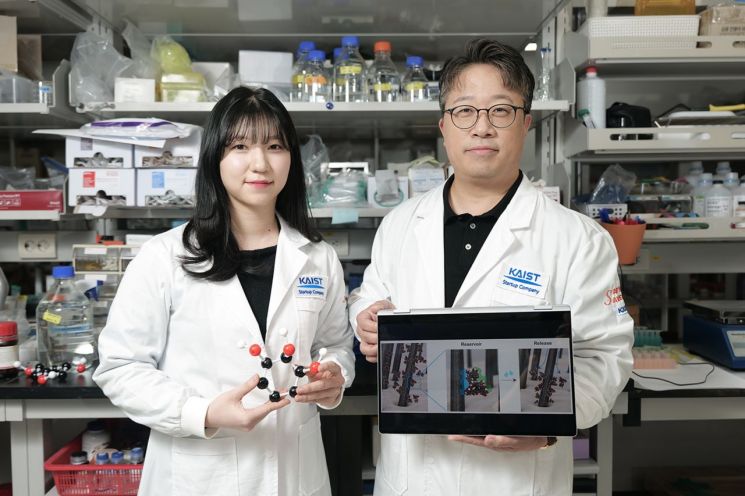
KAIST (President Kwang Hyung Lee) announced on the 6th that Professor Haesin Lee’s research team in the Department of Chemistry developed a new hair loss prevention technology that gradually releases functional ingredients to alleviate hair loss using tannic acid-based coating technology.
Hair loss includes androgenetic alopecia (AGA) and telogen effluvium (TE), which result from a complex interplay of genetic, hormonal, and environmental factors. To date, there is a lack of effective treatments with minimal side effects.
Representative hair loss treatments such as minoxidil and finasteride show some efficacy but require long-term use, have variable effectiveness depending on individual constitution, and some users experience side effects.
Professor Haesin Lee’s team demonstrated that tannic acid strongly binds to keratin, the main protein in hair, allowing it to continuously adhere to the hair surface. They confirmed that this property can be utilized to release specific functional ingredients in a controlled manner.
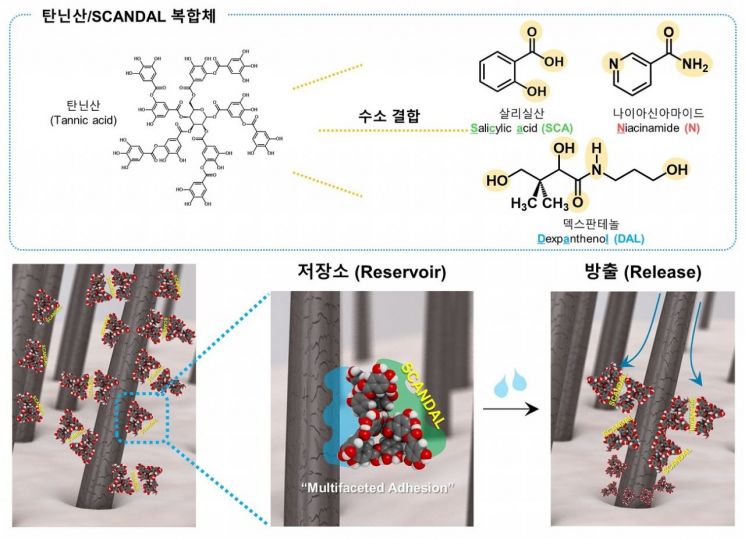 Schematic diagram of the hair loss alleviation mechanism by the tannic acid-SCANDAL complex. Tannic acid is a polyphenol compound containing gallol groups with adhesive functions in 360 degrees. On one side, it binds to the hair surface, and on the other side, it binds to SCANDAL, a functional ingredient for hair loss alleviation, storing it on the hair surface. Upon contact with moisture, SCANDAL is gradually released, delivered to the scalp and hair follicles, exhibiting hair loss alleviation effects.
In particular, the team developed a combination containing hair loss alleviating functional ingredients such as salicylic acid (SCA), niacinamide (N), and dexpanthenol (DAL), naming it ‘SCANDAL’. The study showed that the SCANDAL complex bound with tannic acid is gradually released upon contact with moisture and is delivered along the hair surface to the hair follicles.
The research team at Goodmona Clinic (Director Geonmin Lee) applied a shampoo containing the tannic acid/SCANDAL complex to 12 patients with hair loss for 7 days, observing significant hair loss reduction in all participants. On average, a 56.2% reduction in hair loss was recorded, with some cases showing up to a 90.2% decrease.
This suggests that tannic acid’s ability to stably maintain SCANDAL components on the hair surface and gradually release them to the hair follicles may be effective in alleviating hair loss.
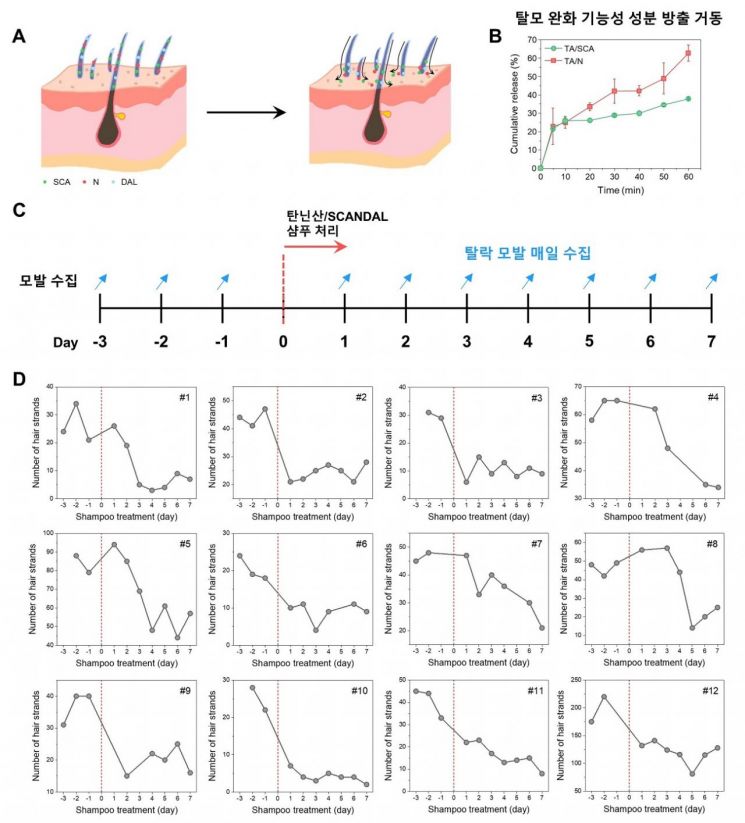 The hair loss mitigation functional ingredient (SCANDAL) stored on the hair surface along with tannic acid is gradually released upon contact with moisture and delivered to the hair follicle along the hair surface. Salicylic acid (SCA) and niacinamide (N) were each released by more than 25% within 10 minutes. When a shampoo containing the tannic acid/SCANDAL complex was applied to the hair of 12 participants, hair loss was reduced by an average of approximately 56.2%, with a reduction range from a minimum of 26.6% to a maximum of 90.2%. These results suggest that tannic acid stably binds SCANDAL to the hair surface, enabling its gradual release to the hair follicle, thereby exhibiting a hair loss mitigation effect.
Professor Haesin Lee stated, “Tannic acid, a type of natural polyphenol, has strong antioxidant effects and a characteristic of strongly binding to proteins, proving its role as a bioadhesive.”
He added, “This study is the first case of binding with hair and delivering hair loss alleviating ingredients, applied in the productized ‘Grabity’ shampoo through the faculty startup company Polyphenol Factory. We are continuing efforts to commercialize more products based on further research results, such as shampoos that dramatically increase the strength of thinning hair and products that straighten curly hair.”
The research team expects that products with fewer side effects and suitable for long-term use can be developed compared to existing hair loss treatments. They believe this approach offers higher consumer accessibility and can become an easy-to-use hair loss management solution in daily life, unlike the burdensome existing treatments.
The research results can be applied not only to shampoos and treatments but also to hair tonics, scalp serums, scalp masks, and even post-hair transplant care products. Furthermore, as an eco-friendly bio-material based on natural ingredients, there is great potential for collaboration with the cosmetics and pharmaceutical industries.
Dr. Eunwoo Kim, a doctoral candidate at KAIST’s Department of Chemistry, is the first author, and Professor Haesin Lee is the corresponding author of this study, which was published online on January 6 in the international journal Advanced Materials Interfaces (Paper title: Leveraging Multifaceted Polyphenol Interactions: An Approach for Hair Loss Mitigation). DOI: 10.1002/admi.202400851
Meanwhile, this research was conducted with support from Polyphenol Factory, a KAIST faculty startup company. Imjin, Executive Director of Polyphenol Factory, said, “Although the shampoo applying this technology is already on sale, it took time to be officially recognized for its hair loss alleviation function through a top-tier academic journal. This will serve as a milestone proving the technology’s excellence.”
© The Asia Business Daily(www.asiae.co.kr). All rights reserved.



















