Gyeonggi Province conducted tests for pesticide residues on agricultural and marine products distributed within the province ahead of the Jeongwol Daeboreum holiday, and all were found to be safe.
The Gyeonggi Provincial Institute of Health and Environment announced on the 7th that from the 6th to the 24th of last month, they collected 105 agricultural product samples from 10 local food direct stores and small to large supermarkets in 10 areas within the province, including Hwaseong, Yongin, Uijeongbu, Ansan, Gunpo, Gwangju, and Gwacheon, and analyzed them for pesticide residues, all of which were found to be compliant.
The agricultural products tested included 86 domestic general agricultural products, 10 imported agricultural products, 2 organic certified agricultural products, and 7 pesticide-free certified agricultural products.
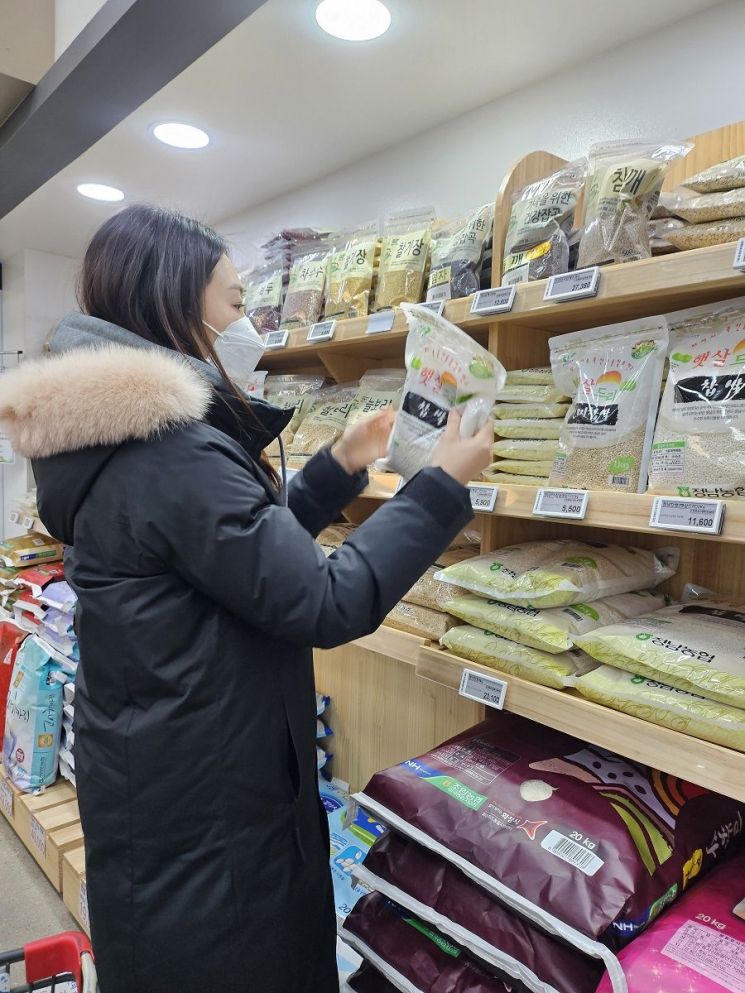 Gyeonggi-do Institute of Health and Environment is collecting products sold on the market to inspect residual pesticides in agricultural and marine products in the province ahead of Jeongwol Daeboreum. Provided by Gyeonggi-do
Detailed items included ▲ 41 samples of ingredients for Ogokbap (five-grain rice) such as sorghum, millet, adlay, soybeans, and foxtail millet ▲ 45 samples of namul (seasoned vegetable dishes) ingredients such as balloon flower root, eggplant, radish, pumpkin, and bracken ▲ 19 samples of bureom (nuts eaten on Daeboreum) such as walnuts, chestnuts, peanuts, and pine nuts.
An official from the Provincial Institute of Health and Environment stated, "After testing for a total of 475 types of pesticide components, all 105 agricultural product samples were confirmed to be within the allowable pesticide residue limits and safe. We will continue to conduct thorough pesticide residue inspections by season and theme through the Agricultural Product Safety Keeper project and provide transparent results to ensure safe food for the residents of the province."
© The Asia Business Daily(www.asiae.co.kr). All rights reserved.

















