Claims Contradict Previous Interpretation of Western Site
Differences Interpreted as Hierarchical Status of Buildings
Several Rare Artifacts Also Unearthed Nearby
The Donggung, an independent space of the Silla crown prince, has been confirmed for the first time. On the 6th, the Cultural Heritage Administration announced, "Contrary to the previous belief that Donggung was a large building site located west of Wolji Pond, it is now estimated to have been located east of Wolji."
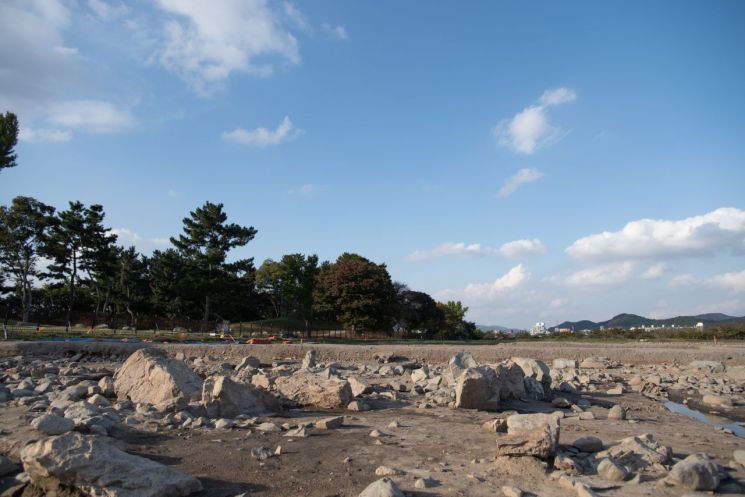 Wongi discovered at the site of a large building east of Wolji Pond
 Photo by the Cultural Heritage Administration
This claim contradicts previous interpretations. Scholars have long recognized the area of District Ⅰ-Ga, on the left side of Wolji, as the site of Donggung. This was because several relics related to Donggung, including roof tiles inscribed with 'Uibongsanyeongaeto (儀鳳四年皆土),' were discovered during investigations conducted over about two years starting in 1975. 'Uibongsanyeon' refers to the fourth year of the Tang dynasty's reign title, corresponding to the 19th year of King Munmu's reign (679), when Donggung was said to have been established. The fact that the building site was located east of Wolseong (Moonseong), the Silla royal fortress in Gyeongju, also supported this hypothesis. According to texts such as the 'Chunqiu Zuozhuan Zhengyi (春秋左傳正義),' the king resided in the west, where all things come to fruition, while the crown prince stayed in the east, where all things grow.
This conventional belief was completely overturned by excavations conducted by the Cultural Heritage Administration since 2014. Traces of a building measuring five bays wide and four bays deep were discovered in District Ⅱ-Na, east of Wolji. The scale is not larger than the building west of Wolji, which measures seven bays wide and four bays deep. The height, measured from the stair entrance, is 50.3 meters above sea level, lower than the 52.6 meters on the west side.
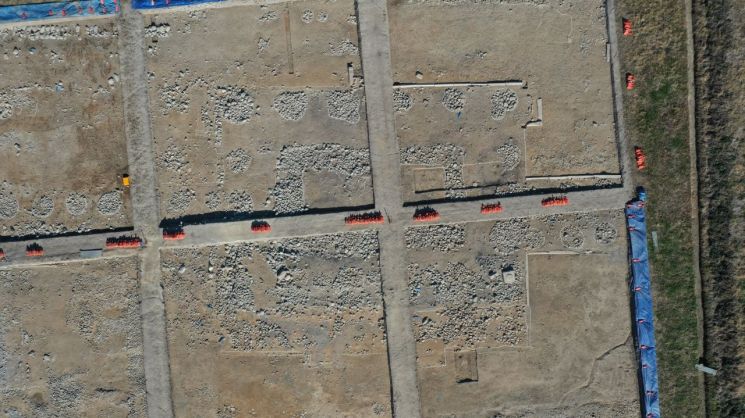 Panoramic view of the large building site east of Wolji Pond [Photo by the Cultural Heritage Administration]
The Cultural Heritage Administration interpreted this as a difference in hierarchical status of the buildings. At a briefing held at COEX in Seoul, Director Choi Eung-cheon stated, "From the stage of land preparation, the Donggung building was planned with a hierarchical distinction between the king's and the crown prince's spaces, and the landscape was designed accordingly. It is reasonable to regard the building site east of Wolji as Donggung and the previously assumed Donggung site on the west side as the king's space."
Kim Kyung-ryeol, a curator at the National Gyeongju Cultural Heritage Research Institute, also said, "Considering the results of previous investigations and the artifacts unearthed, there is a 95% probability that the eastern building was Donggung." He cited a special architectural technique as decisive evidence. The Cultural Heritage Administration discovered traces of a building surrounded by corridor-style structures and a large courtyard facility in the area. Stair traces connecting the buildings were also found, suggesting an extension of a wide platform structure called Woldae (a broad platform-type terrace). Woldae is installed only in major buildings such as palaces.
To the south of this building site, traces of a separately constructed garden pond (wonji) were also confirmed. There are signs of islands built in the center and south of the pond, suggesting it boasted a beautiful landscape. Director Choi said, "With an independent drainage system, this will be an opportunity to completely rethink the Silla people's civil engineering skills as well as the 'Donggung and Wolji' complex."
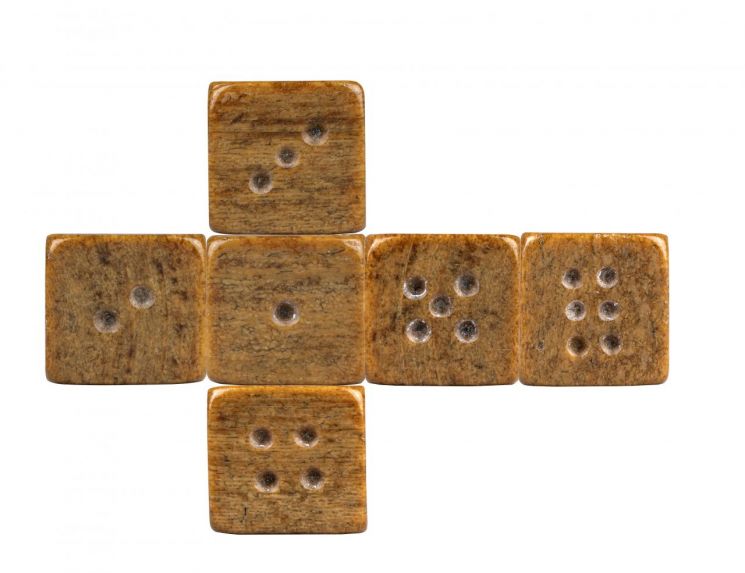
Previously, several rare artifacts were excavated nearby. Representative examples include dice made from ivory (elephant tusks) discovered in 2017 and a 'Hwajodo (花鳥圖)'?a painting of a pair of wild pigeons and flowers intricately engraved on gold leaf?confirmed in 2022. Director Choi said, "The dice are a rare, high-quality game made from ivory, and the Hwajodo, engraved with lines about half the thickness of a hair on thin gold leaf, shows an extreme level of detail that cannot be seen with the naked eye."
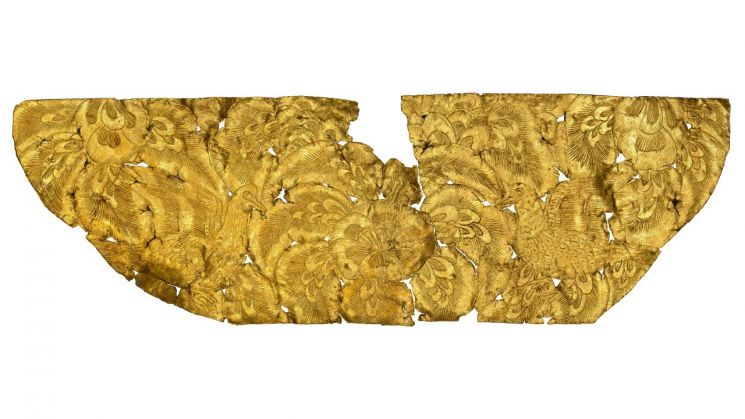
Lee Jong-hoon, Director of Historical Site Policy, stated, "The place where these two artifacts were excavated is north of the 'real Donggung,' and it is presumed to have been the living space for the crown prince and palace attendants who supported him." This suggests that the crown prince might have played dice games with palace attendants in front of the painting adorned with Hwajodo.
© The Asia Business Daily(www.asiae.co.kr). All rights reserved.



















