Establishment or Improvement of 60 Systems in Five Key Areas:
Living Information, Welfare and Health, Economy and Jobs, Culture and Education, Safety and Environment
Expansion of Shared Parking Lots, Creation of Youth Welfare Center, Introduction of Volunteer Mileage System,
Extension of Household Waste Disposal Hours, and More
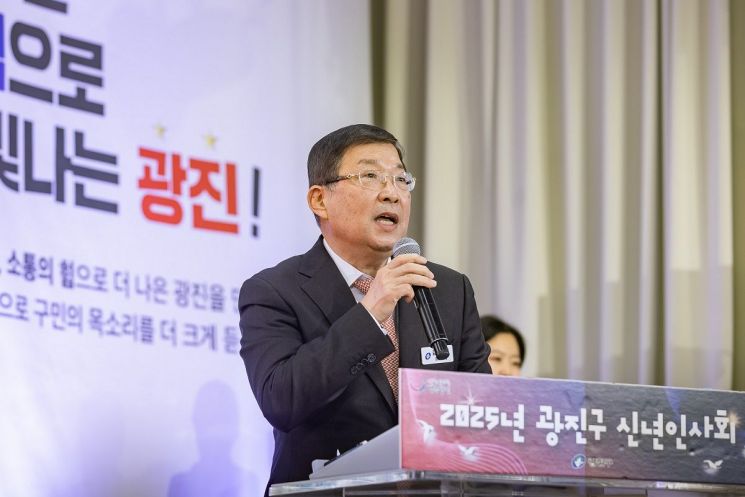
Gwangjin-gu (District Mayor Kim Kyung-ho) introduces newly implemented or revised systems starting this year.
The district will establish or improve a total of 60 policies across five major areas: ▲Living Information ▲Welfare and Health ▲Economy and Jobs ▲Culture and Education ▲Safety and Environment.
First, in the Living Information sector, the district announces the relocation of the district office. Gwangjin-gu Office is moving its office for the first time since its opening in 1995. The new office building, completed in the area of 680-22 Jayang-dong, is adjacent to various cultural and convenience facilities and offers improved accessibility, making it more convenient for residents to visit.
Shared parking lots will also be expanded this year. A total of 164 parking spaces will be created at the 50 Plus East Campus parking lot, and 170 spaces at the Jayang 4-dong traditional market parking lot, alleviating parking difficulties and ensuring pedestrian safety.
Additionally, the district will enhance resident convenience through initiatives such as the Volunteer Mileage System, which accumulates volunteer hours of residents affiliated with the district volunteer center as mileage points; the implementation of Family Relationship Registration Consultation Days; and the operation of a one-stop passport service for socially vulnerable groups.
In the Economy and Jobs sector, the interest rates on loans from the Small and Medium Enterprise Development Fund will be lowered to reduce the financial burden on small and medium-sized enterprises and small business owners. A new hygiene management and quarantine support policy for traditional markets will be introduced to create cleaner markets and revitalize the local economy. The Youth Startup Support Center and the 50 Plus East Campus for middle-aged adults will also open, providing career planning and employment/startup support.
Support in the Welfare and Health sector will be expanded. The holiday consolation money for national veterans will increase from 30,000 won to 50,000 won, and dining days for seniors at senior centers will be expanded from twice a month to four times a month. Free pertussis vaccinations will be provided to pregnant women and their spouses to prevent infectious diseases.
In the Culture and Education sector, a Youth Cultural Life Voucher will be newly introduced, and the support target for the Lifelong Education Voucher will be expanded from low-income youth to low-income adults, with the support amount increasing from 300,000 won to 350,000 won, supporting those in cultural and artistic blind spots. Furthermore, a youth welfare center equipped with a multipurpose hall, study rooms, and a shared kitchen will be established to meet the diverse needs of local youth.
Policies to create a safe and pleasant environment will also be implemented. An intelligent CCTV-based rapid missing person search system will be established to respond quickly to missing person reports, and an injury diagnosis unit insurance with a limit of 300,000 won will be newly introduced under the resident life safety insurance. The time for disposing of household waste will be moved forward from 7 p.m. to 6 p.m. to increase convenience, and subsidies will be provided for home food waste reduction devices to fundamentally reduce food waste.
In addition, the district will strive to make Gwangjin a better place to live by conducting information technology education for information-vulnerable groups, operating basic bicycle classes for all ages from infants to adults, and providing subsidies for building-type solar panel installations across all areas of daily life.
Detailed information can be checked in an e-book format on the resident living information bulletin board under the sector-specific information section of the Gwangjin-gu Office website in February, and printed booklets will also be available at major civil service departments of the district office and community service centers.
Kim Kyung-ho, Mayor of Gwangjin-gu, said, “We plan to actively promote district administration through the publication of ‘2025 Changing Gwangjin,’ and we hope many residents will use it to benefit from the new systems.” He added, “We will do our best to implement policies so that residents can feel the development of Gwangjin-gu throughout the year.”
© The Asia Business Daily(www.asiae.co.kr). All rights reserved.

















