"Up to 1.825 Trillion KRW Can Be Saved Annually
Through Power Control Optimization"
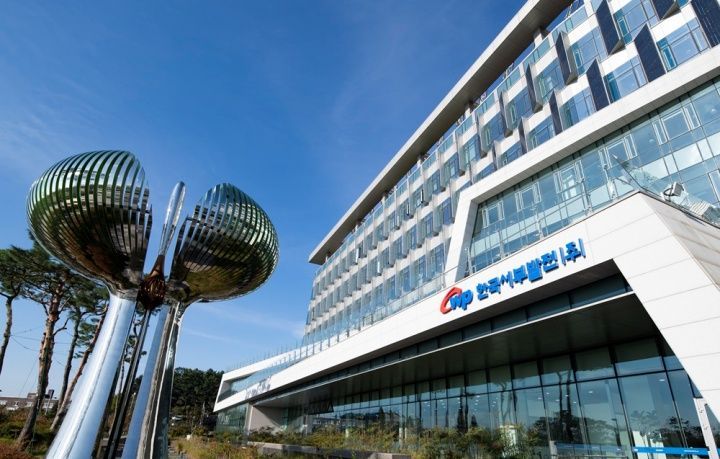
The Korea Electric Power Corporation (KEPCO) subsidiary, Western Power, incurred a total loss of 39.2 billion KRW due to negligence in economic feasibility review, prompting the Board of Audit and Inspection to demand disciplinary action and caution for the responsible personnel.
On the 6th, the Board of Audit and Inspection released an audit report titled "Status of Operation and Management of Major Power Generation Facilities," stating, "KEPCO subsidiaries continue to suffer losses due to poor power generation facility installations and investments," highlighting this issue.
According to the report, Western Power invested in a wind power project in Sweden but failed to properly conduct an economic feasibility review, such as not utilizing local wind speed data, resulting in the complete loss of the 39.2 billion KRW investment.
The Board of Audit and Inspection stated, "Western Power included an internal rate of return (IRR) of 7.31% as recorded in the financial model without recalculating it, and prepared the agenda for the enterprise risk management committee excluding risk factors such as compensation payments, leading to the total loss of the investment." They added, "Disciplinary action and caution were requested for eight related personnel."
Additionally, Western Power unjustly exempted a penalty of 2.2 billion KRW from a company that failed to meet the mandatory coal ash removal volume under a service contract. Consequently, the Board of Audit and Inspection demanded disciplinary action and caution for three related personnel.
Another KEPCO subsidiary, Southern Power, was found to have wasted 450 million KRW of budget by signing a contract amendment to purchase more solar cell modules than necessary, despite the supplier failing to fulfill the contract at Busan New Port, without imposing any sanctions.
Furthermore, a simulated analysis of the Korea Power Exchange's (KPX) power control performance confirmed that optimizing power control could reduce generation costs by as much as 1.825 trillion KRW annually.
The Board of Audit and Inspection explained, "South Korea lacks indicators to assess the economic efficiency of power control performed by KPX, and there is no system for analyzing power control performance. Referring to the U.S. case, we analyzed KPX's control performance over one year from October 2022 to September 2023."
Moreover, it was found that KPX does not operate work shifts on holidays, which reduces the accuracy of power demand forecasts for the following day.
The Board of Audit and Inspection demanded that KPX develop and establish a power control system capable of reducing generation costs and instructed them to devise measures such as adjusting nationwide power demand forecasts for the day after holidays through expert meetings to improve forecast accuracy.
© The Asia Business Daily(www.asiae.co.kr). All rights reserved.

















