Production Increase to Begin in April as Planned
U.S. Excluded from OPEC Production Monitoring Committee
U.S. Oil Industry Also Skeptical About Increasing Output
The Organization of the Petroleum Exporting Countries (OPEC) and non-OPEC oil-producing countries, collectively known as OPEC Plus (+), have announced their intention to maintain their existing production cut policy. This effectively rejects President Donald Trump's demand to increase oil production. Trump's plan to lower interest rates by reducing oil prices to curb inflation has also been disrupted.
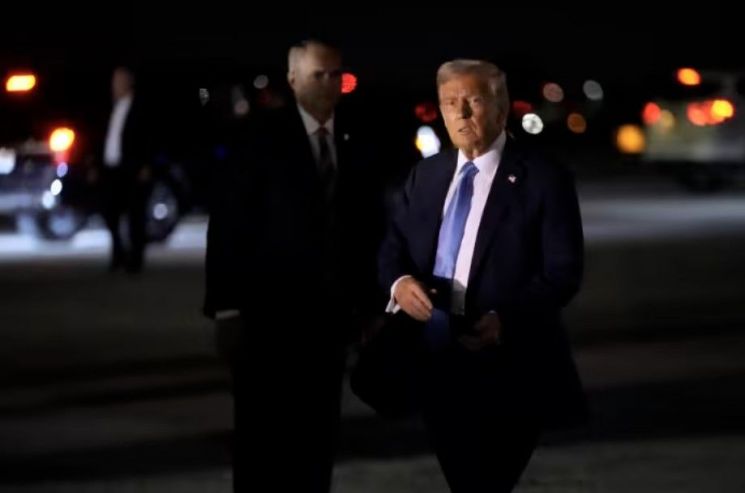
On the 3rd (local time), OPEC+ held a ministerial-level monitoring committee (JMMC) meeting via video conference and agreed on this approach. The JMMC is an organization that monitors oil market trends and provides policy recommendations to OPEC+. After reviewing data from November to December of last year, the committee stated that "the overall compliance of OPEC and non-OPEC countries remains high." Accordingly, OPEC+ plans to gradually increase oil production starting in April this year, as per the existing agreement. The final decision on whether to increase production is expected to be made in early March. This OPEC+ decision is interpreted as a de facto refusal to comply with President Trump's demand for increased production.
According to the Financial Times (FT) on the 3rd (local time), in response to President Trump's demand to lower oil prices, OPEC+ has decided to exclude the U.S. government agency, the Energy Information Administration (EIA), from the list of external organizations monitoring compliance with production and supply agreements.
Earlier, on the 23rd of last month at the World Economic Forum (WEF) held in Davos, Switzerland, President Trump mentioned the connection between international oil prices and the Ukraine war, stating that he would ask Saudi Arabia and OPEC to lower oil prices, and that if oil prices fell, the Russia-Ukraine war would end immediately. He targeted Saudi Arabia and OPEC, saying, "They bear some responsibility for what is currently happening," and emphasized that oil prices need to rise to end the war.
President Trump's demand for increased production was also influenced by his view that high oil prices cause inflation, which hinders interest rate cuts. During an executive order signing ceremony at the White House Oval Office last month, Trump said, "If oil prices go down, prices will come down, and then there will be no inflation. Then interest rates will come down." He attributed rising prices to high oil prices.
Like OPEC+, the U.S. oil industry is also skeptical about increasing production. The Wall Street Journal (WSJ) reported on the 3rd (local time), citing senior oil industry executives, that although President Trump promised regulatory easing to boost oil production, the shale oil industry in the U.S. believes that increasing production will be difficult regardless of the level of regulatory relaxation. This is because the U.S. shale industry, which grew through the "shale revolution" in the 2010s, has now entered a mature phase, changing the nature of the industry.
Therefore, President Trump's advisors consider persuading Saudi Arabia, which leads OPEC, to induce OPEC to increase production as the best alternative, but this also seems difficult. The decision by OPEC+ to maintain production cuts announced that day alone illustrates this. WSJ reported that Saudi Arabia conveyed to former U.S. officials that it does not want to increase oil production, and this stance has been shared with the Trump administration.
© The Asia Business Daily(www.asiae.co.kr). All rights reserved.

















