Expansion of Accommodation Taxes by Japanese Local Governments
Kyoto to Drastically Raise Current Tax to Over 90,000 Won Starting Next Year
Local governments in Japan are increasingly pushing for the introduction of accommodation taxes, sparking growing controversy, according to local reports. Some areas are preparing to introduce accommodation taxes of about 100,000 won per night, which is expected to increase the burden on Korean travelers to Japan.
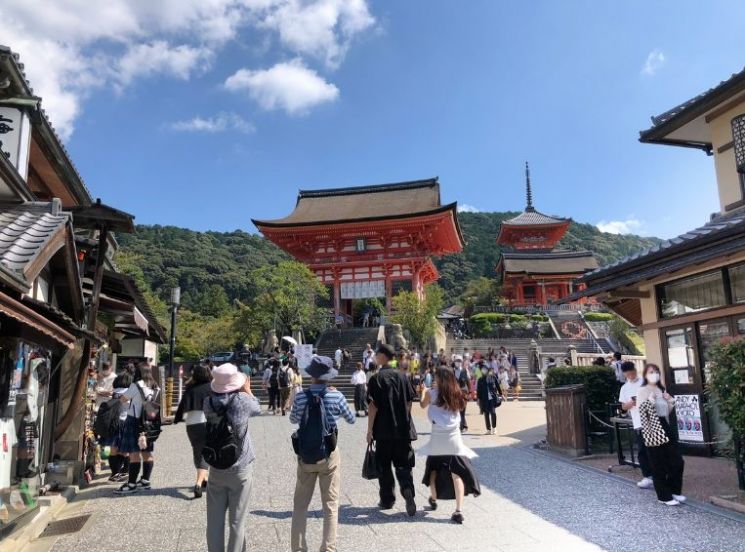 Kiyomizudera Temple, a representative tourist attraction of Kyoto, located in Higashiyama Ward, Kyoto City, Kyoto Prefecture, Japan. Provided by Kyoto City
On the 3rd, the Asahi Shimbun reported that the number of local governments introducing accommodation taxes under the pretext of promoting tourism is rapidly increasing, leading to growing disputes.
According to the newspaper, Niseko Town in Hokkaido introduced the tax in November last year, and Tokoname City in Aichi Prefecture began collecting accommodation taxes last month. Fourteen prefectures, cities, and towns including Hiroshima Prefecture, Sapporo City, and Sendai City plan to introduce the tax this year. As of 2023, nine local governments imposed accommodation taxes, but 43 local governments, including Okinawa Prefecture and Kumamoto City, have started concrete reviews for introduction.
Some local governments have also raised the accommodation taxes they have been collecting so far. Kyoto City in Kyoto Prefecture, a representative historical and tourist city in Japan, is the main example. Kyoto City plans to significantly increase the current accommodation tax, which ranges from 200 to 1,000 yen (approximately 1,800 to 9,400 won), up to 10,000 yen (92,000 won), a tenfold increase. The goal is to implement this next year. If realized, it will become the local government with the highest accommodation tax.
Earlier, Kyoto Mayor Koji Matsui announced plans to raise the accommodation tax to improve environmental maintenance due to the increase in tourists. Kyoto City's accommodation tax revenue for the 2023 fiscal year (April 2023 to March 2024) reached a record high of 5.2 billion yen (about 47.8 billion won). If the increase is confirmed, it is expected to rise to 10 billion yen (about 92 billion won) annually.
Local governments plan to use the accommodation tax revenue to expand shuttle buses, install wireless LAN for tourists, and produce guide maps to enhance tourism infrastructure, but there are also concerns that it could lead to a decrease in tourists. The media conveyed expert advice that "a blueprint for regional tourism should be drawn and shared with residents, and information on usage and effects should be thoroughly disclosed and regularly checked."
© The Asia Business Daily(www.asiae.co.kr). All rights reserved.

















