U.S. Consumer Groups Oppose Trump's Tariffs
Retaliation Against American Exporters Expected
Tariffs Criticized as the Largest Tax Increase
Even the Republican Party, President Donald Trump's own party, has voiced opposition to the tariff war he triggered. The U.S. business community is concerned that President Trump's indiscriminate imposition of tariffs could undermine the foundation of the free trade system and cause economic damage to the U.S. amounting to about 300 trillion won.
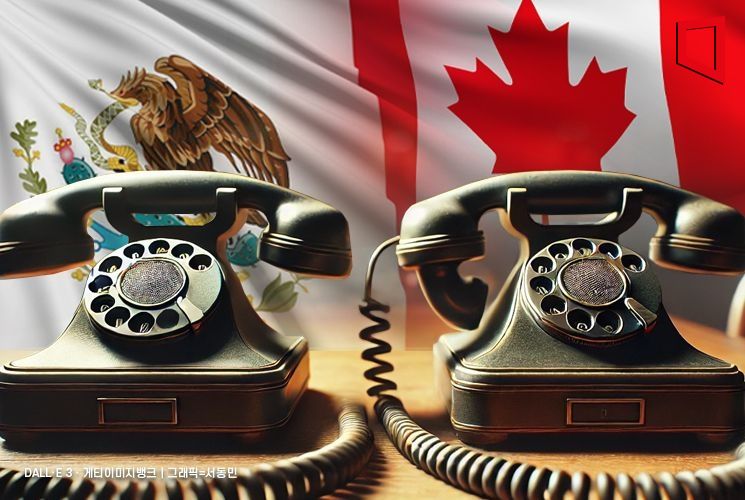
According to the British Financial Times (FT) on the 2nd (local time), the Consumer Brands Association (CBA), a trade group representing U.S. grocery retailers, claimed that President Trump's tariffs would lead to higher consumer prices in the U.S. and disrupt supply chains.
Tom Madrecki, vice president of supply chain at CBA, expressed concern that "tariffs on all goods imported from Mexico and Canada, especially on materials and parts not available in the U.S., will raise consumer prices and could lead to retaliation against U.S. exporters."
He explained that if import prices rise due to these tariff measures, an increase in domestic product prices in the U.S. is inevitable. Automobile manufacturers expect that tariffs will increase the cost of producing cars in the U.S.
John Murphy, senior vice president of the U.S. Chamber of Commerce, also said, "While it is right for the president to focus on weakened borders and issues like fentanyl, imposing tariffs does not solve these problems and only raises prices in the U.S."
The Peterson Institute for International Economics (PIIE) likened the tariff measures to a tax increase. Kim Clausing, a senior fellow at the institute, said, "Tariffs represent the largest tax increase since the 1990s," adding, "We have become accustomed to frictionless trade in North America, and for some, this has lasted a lifetime." This reflected concerns that indiscriminate tariff imposition could shake the foundation of the free trade system. She predicted that imposing a 25% tariff in this environment of free trade would deliver a huge shock to the U.S. economy.
Earlier, the Peterson Institute analyzed that the tariff measures could cause economic damage to the U.S. economy worth about $200 billion (293.24 trillion won) during Trump's term. The economic damage from increased tariffs on Chinese imports was expected to reach about $55 billion (80.64 trillion won).
Even within the opposition Republican Party, voices criticizing the tariff imposition emerged. Senator Tim Scott (South Carolina) condemned Trump's aggressive trade measures as "just a tax on the people of South Carolina."
Senator Scott wrote on X (formerly Twitter), "I understand and appreciate the willingness to confront the actions of countries like China that constantly break and ignore the rules, but treating our close and long-term allies the same way is unproductive."
Senator Rand Paul (Kentucky) also wrote on X, "Tariffs are simply taxes. Conservatives once opposed new taxes. If you tax trade, trade will decrease and prices will rise."
© The Asia Business Daily(www.asiae.co.kr). All rights reserved.

















