Cultural Heritage Administration to Investigate Nine New Intangible Heritage Items This Year
Blacksmiths who heat iron to make tools and seaweed farming activities are being evaluated for their value as national intangible heritage.
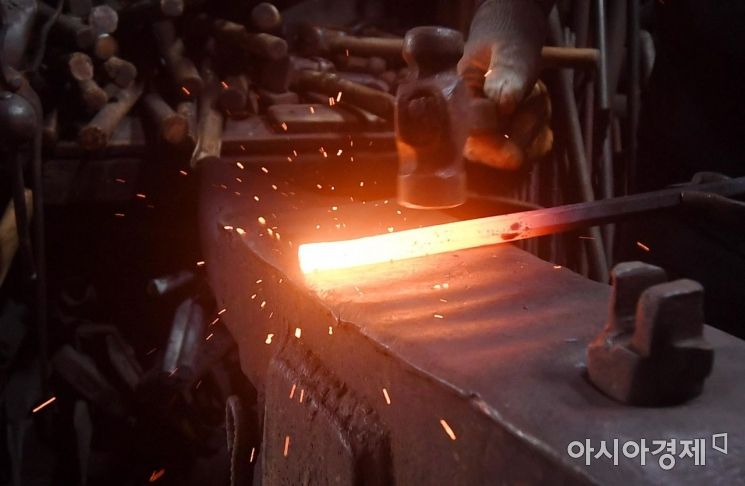 On the 8th, amid the sweltering heat, blacksmiths at Bulgwang Blacksmith Shop in Eunpyeong-gu, Seoul, are sweating profusely as they craft tools and other items. Photo by Kim Hyun-min kimhyun81@
The Cultural Heritage Administration announced on the 3rd that it will conduct investigations this year to designate nine new items as national intangible heritage. The subjects include blacksmithing, 'Seonhwa (禪畵)', 'knowledge of tidal patterns', 'seaweed harvesting and traditional fishing village communities', 'deokjang and drying techniques', 'Korean hoe culture', 'village forests and traditional knowledge', 'traditional irrigation knowledge and culture', and 'seaweed farming fisheries'.
Blacksmithing refers to artisans who possess and pass down traditional ironware production techniques or the techniques themselves. In Chungnam Province, the blacksmiths of Dangjin, who have carried on the tradition of the forge (冶場) technology for over 100 years, were designated as a provincial intangible heritage in 2016.
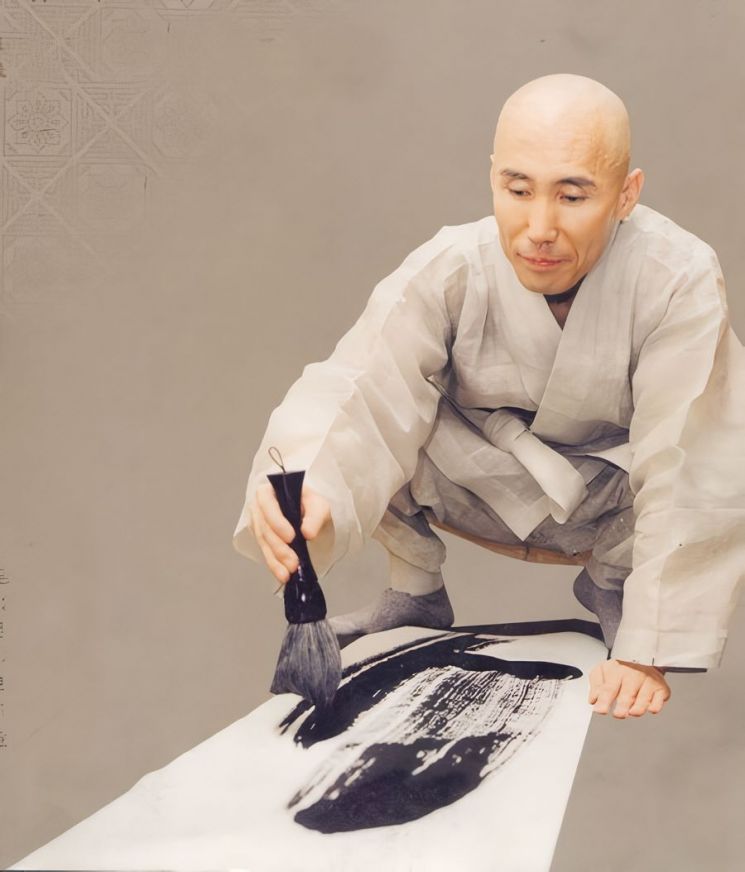
Seonhwa is Buddhist painting that freely expresses enlightenment without being bound by specific painting or calligraphy methods. It is considered part of the process of practicing Seon (禪) in Buddhism. It is currently designated as an intangible heritage of Busan City. A Cultural Heritage Administration official said, "Since the designation investigation conducted last year was not completed, it has been included again this year."
Most of the other newly listed items for investigation are heritage based on traditional knowledge. Knowledge of tidal patterns refers to the understanding and awareness of the tidal differences in Korea's seas, and hoe culture encompasses the history and usage methods of the traditional farming tool, the hoe. Village forests and traditional knowledge represent intangible heritage that shows how village communities perceived the forests, which are key communal spaces.
A Cultural Heritage Administration official explained, "We plan to focus on intangible heritage values mainly for community-transmitted items that do not separately recognize holders or holder groups."
This year, the Cultural Heritage Administration will also investigate the status of holders for thirty-one traditional performing arts and technical fields. Items selecting new holders include 'Geomungo Sanjo', 'Seodo Sori', 'Seungmu', 'Gyeonggi Minyo', 'Gayageum Sanjo and Byeongchang (병창)', 'Daegeum Jeongak', 'Nubi-jang', 'Traditional Jang', and 'Onggi-jang'.
Gyeonggi Minyo recognized two holders in 2023, but at that time, some transmitters argued that holders should be recognized by school or style. For the fifteen items included in UNESCO's Intangible Cultural Heritage of Humanity 'Korean Mask Dance', such as 'Bukcheong Saja Noreum', 'Hahoe Byeolsingut Talnori', and 'Yangju Byeolsandae Nori', the plan is to recognize transmission instructors.
© The Asia Business Daily(www.asiae.co.kr). All rights reserved.


















