High Dependence on Imports of Beef and Fruits from Mexico and Canada
"Tariffs Will Ultimately Be Passed on to Consumers," Experts Warn
As U.S. President Donald Trump proceeded with imposing tariffs on Mexico and Canada as announced, concerns have arisen that food prices in the United States will increase as a result.
On the 1st (local time), major foreign media outlets such as The Wall Street Journal (WSJ) and The New York Times (NYT) reported that President Trump signed an executive order imposing tariffs of 25% on all imports from Mexico and 25% (10% on energy) on imports from Canada. According to statistics from the U.S. Department of Agriculture and Customs, among the $195.9 billion (approximately 285 trillion KRW) worth of agricultural imports to the U.S. in 2023, about 44%, or approximately $86 billion (about 125 trillion KRW), were imports from Mexico and Canada.
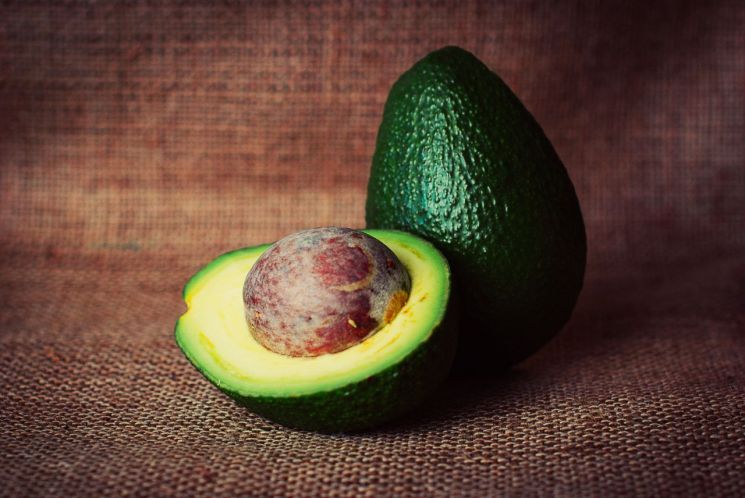
Foreign media pointed out that prices of food items such as avocados, 90% of which are imported from Mexico, orange juice (35% from Mexico), and strawberries (20%) are expected to rise. They criticized that if retaliatory tariffs are added, it could escalate into a trade war.
Rob Fox, an economist at CoBank, said, "Since the U.S. imports most of its fresh fruits and vegetables from Mexico and Canada, prices of these products will definitely rise," adding, "(However, due to reasons such as climate) substitution is not easy."
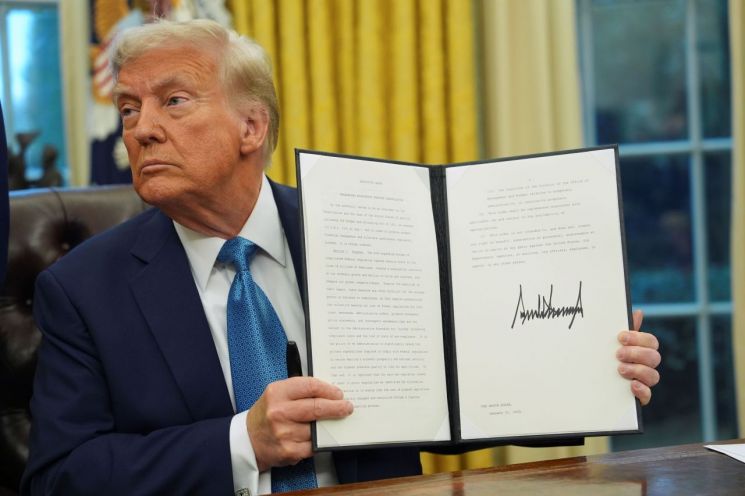 Donald Trump, President of the United States, is holding up a signed executive order at the White House in Washington on the 31st (local time). Photo by AP Yonhap News
Beef prices are also a concern. According to U.S. government statistics, retail prices for ground beef hit an all-time high last September. The price of hamburger meat has risen by 42% compared to four years ago. Lance Zimmerman, a food and agriculture analyst at Rabobank, explained, "Despite the soaring beef prices, U.S. beef demand last year was the highest in 38 years," adding, "Although the number of cattle raised domestically decreased, this was offset by increased imports." Therefore, if tariffs are imposed, market disruption could occur.
David Kuttler, spokesperson for the National Grocers Association (NGA), pointed out that tariffs would effectively act as a 'food tax,' criticizing that "(imposing tariffs) is not an effective solution." Joe Brusuelas, chief economist at tax and consulting firm RSM US, also emphasized, "This kind of import tax increase is almost always passed on to consumers."
The WSJ strongly criticized, "(If policies such as tariff imposition continue,) the U.S. could become a perfectly closed economy that makes everything domestically," adding, "Such a 'self-sufficient' society is not the world we live in, nor the world we want to live in."
© The Asia Business Daily(www.asiae.co.kr). All rights reserved.


















