Trump Orders 25% Emergency Tariff on Colombian Imports
State Department Approves Visa Restrictions on Colombian Government Officials
On the 26th (local time), U.S. President Donald Trump initiated high tariffs and financial sanctions in retaliation, along with visa restrictions on government officials, after Colombia refused to allow planes carrying Colombian nationals illegally residing in the United States to land. This is interpreted as a harsh retaliatory measure chosen to prevent other countries from refusing the deportation of illegal immigrants by the U.S.
According to local media such as The Wall Street Journal (WSJ) and the U.S. State Department on the 26th (local time), President Trump ordered the implementation of tariffs on Colombia for the first time since his inauguration. The U.S. is currently drafting related proposals while negotiating with the Colombian government to avoid imposing tariffs.
President Trump posted on his social media platform Truth Social, which he founded, "I have just been informed that two U.S.-bound deportation flights carrying numerous illegal criminals were denied landing in Colombia," adding, "this landing denial threatens U.S. national security and public safety. I have ordered the immediate implementation of urgent and decisive retaliatory measures." President Trump first imposed an emergency 25% tariff on U.S. imports from Colombia, with plans to increase it to 50% after one week.
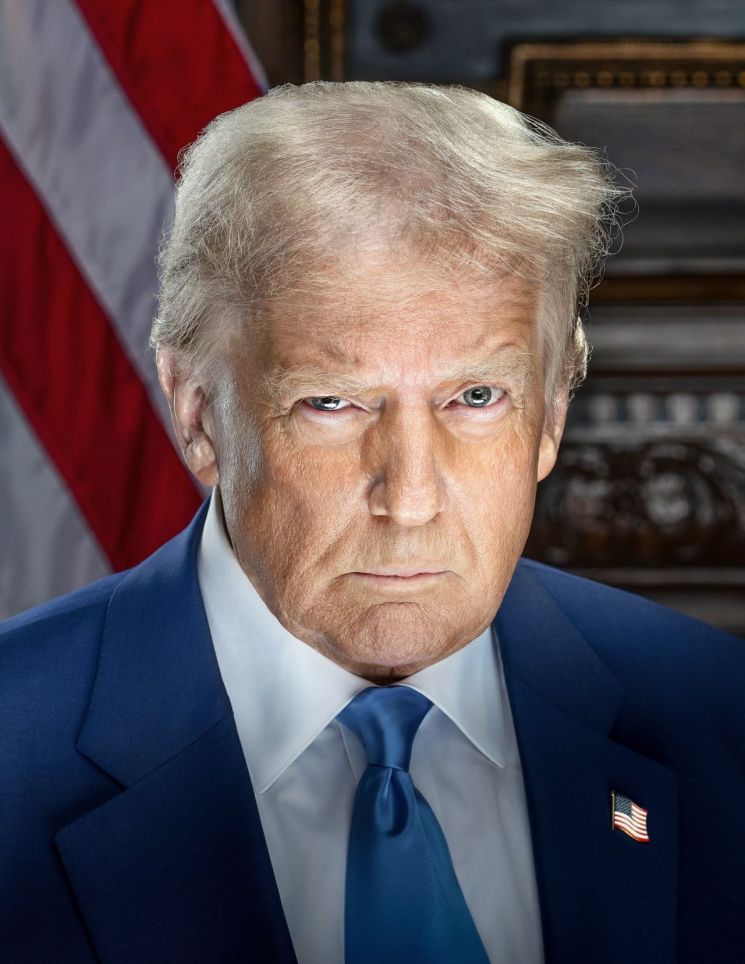
President Trump ordered enhanced customs and border inspections on Colombian nationals and cargo based on national security grounds, as well as Treasury, banking, and financial sanctions under the International Emergency Economic Powers Act (IEEPA). He emphasized, "This is only the beginning, and we will not allow the Colombian government to violate its legal obligations regarding the acceptance and deportation of criminals it sends to the U.S."
Additionally, Secretary of State Mike Rubio approved visa restrictions on Colombian government officials and their immediate families on the same day. The U.S. State Department explained in a press release that "this was carried out under the U.S. government's legal authority to deny entry to individuals who could potentially have a negative impact on U.S. foreign policy." The State Department plans to continue visa restrictions until Colombia accepts the return of its nationals.
President Trump's announcement of retaliatory measures against Colombia came immediately after Colombian President Gustavo Petro declared that he would refuse the entry of U.S. military planes carrying illegal immigrants from his country. President Petro stated, "We cannot force immigrants to stay in countries that do not want them. However, if those countries want to deport them, dignity and respect for the immigrants and our country must be a prerequisite," expressing opposition to the use of military planes for repatriation.
President Petro indicated that he accepts repatriation via civilian aircraft and plans to provide his presidential plane to repatriate his nationals who were on the U.S. military planes, according to CNN. While Latin American countries have expressed concerns about President Trump's large-scale deportation plans, Colombia is the first to explicitly refuse entry to planes carrying immigrants.
In response to President Trump's tariff imposition, President Petro posted on X (formerly Twitter) on the same day, stating, "I have instructed the Minister of Foreign Trade to raise tariffs on goods imported from the U.S. by 25%." According to AFP, President Petro initially set the tariff rate at 50% but later deleted that and revised it to 25%.
Latin American countries have expressed dissatisfaction with the large-scale deportation operation launched by the Trump administration last week. Mexican authorities reportedly plan to reject the Trump administration's request to use military planes for deporting illegal immigrants. However, the New York Times (NYT) reported that Mexican authorities have not yet publicly disclosed whether they accepted the use of military planes for deportations. Brazilian diplomatic authorities also issued a critical statement the previous day, claiming that Brazilian nationals deported via civilian flights were treated inhumanely while handcuffed during the repatriation process.
Following Colombia's refusal to allow military planes to land, Secretary Rubio stated, "President Trump has made it clear that the U.S. will no longer listen to lies or be taken advantage of. It is each country's responsibility to seriously and promptly repatriate their nationals illegally residing in the U.S.," adding, "As today's measures show, we remain firmly committed to ending illegal immigration and strengthening U.S. border security."
On the other hand, Colombia runs an annual trade deficit of about $1.4 billion with the U.S. and is the world's second-largest importer of U.S. corn and corn feed, making it uncertain whether the Trump administration will actually impose tariffs. Imposing tariffs on Colombia could conflict with the government's goal of reducing the trade deficit. According to the Associated Press (AP), states with strong Republican support such as Iowa, Indiana, and Nebraska earned more than $733 million last year from exports of corn and other products to Colombia.
Meanwhile, AP and other outlets reported that a major crackdown on illegal immigrants began in Chicago, Illinois, a representative U.S. sanctuary city, on the same day. According to Acting Deputy Attorney General Emil Bove, the operation involved multiple federal agencies, including Immigration and Customs Enforcement (ICE), the Department of Homeland Security (DHS), the Federal Bureau of Investigation (FBI), the Drug Enforcement Administration (DEA), and the Bureau of Alcohol, Tobacco, Firearms and Explosives (BATFE). ICE spokesperson Jeff Carter stated in a press release without revealing specific operational details, "ICE has begun enhanced targeted enforcement in Chicago."
© The Asia Business Daily(www.asiae.co.kr). All rights reserved.

















