Presenting a New Paradigm of Welfare Policy Transformation
Implementation of New Policies... Introduction of a Customized Mobile App
Gwangyang City in Jeollanam-do is officially launching the 'Life Welfare Platform 2.0' to overcome the challenges of low birth rates, an aging population, and the risk of regional extinction.
The 'Life Welfare Platform 2.0' aims to establish a comprehensive welfare system throughout all stages of life and dramatically improve citizens' quality of life through customized welfare policies linked to population strategies.
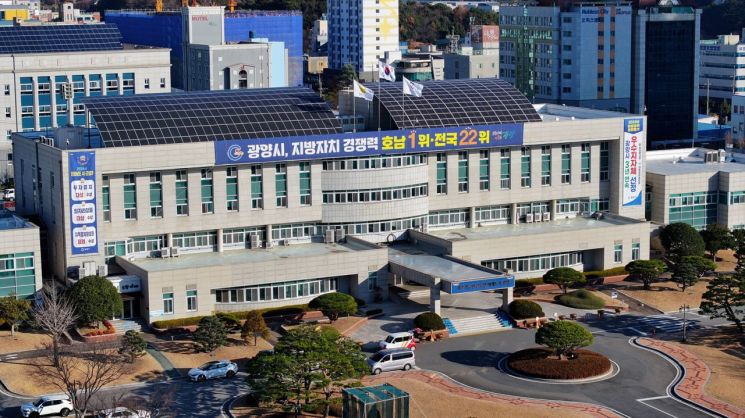
The city plans to focus on four key directions to ensure that the Life Welfare Platform 2.0 becomes a sustainable welfare system encompassing all stages of citizens' lives, rather than simply expanding existing policies: ▲Comprehensive welfare ▲Robust welfare ▲Customized welfare ▲Digital welfare. In particular, to allow citizens to experience systematic and convenient welfare services, the city will newly introduce the integrated mobile app 'MY Gwangyang', aiming to enhance the efficiency of digital administration.
Previously, through 'Life Welfare Platform 1.0', the city achieved results such as ▲development of 43 new welfare policies ▲completion of 370 welfare policies tailored to each stage of life ▲strengthening welfare infrastructure including the expansion of public postpartum care centers. As a result, Gwangyang was the only city in Jeollanam-do to record population growth for three consecutive years and ranked first in the Honam region in the 2023 Social Safety Index, establishing itself as a desirable city to live in.
Building on these achievements, Life Welfare Platform 2.0 will implement even more advanced policies. To realize the vision of 'Gwangyang, a city you want to live in for life', key initiatives include ▲launching the 'Life Welfare Platform 400+ Project' ▲releasing the AI-based mobile app 'MY Gwangyang' ▲obtaining certifications as a women-, child-, senior-, and youth-friendly city ▲renewing the Gwangyang welfare character 'Hea-a' ▲establishing the 'Life Welfare Platform Committee', among others.
Starting this year, the city will introduce the mobile app 'MY Gwangyang', incorporating the latest IT technologies such as AI, SSO (Single Sign-On), and Open API. 'MY Gwangyang' offers 27 features, including ▲searching 370 customized welfare policies ▲online application for administrative services ▲one-on-one chat counseling ▲reporting daily inconveniences ▲submitting citizen ideas ▲issuing digital Gwangyang citizen cards, and more.
Once citizens can apply for welfare services tailored to their needs through the 'MY Gwangyang' app, citizen convenience is expected to be maximized and welfare blind spots reduced. Furthermore, Gwangyang City anticipates that administrative and welfare services can be provided to citizens in a proactive, systematic, and efficient manner, enabling innovation in the administrative sector.
New welfare policies to be implemented from 2025 will focus on strengthening customized support for each stage of life. Representative policies include ▲Gwangyang City Basic Birth Allowance (200,000 KRW per month until age 18) ▲support for infertility treatment for couples ▲support for reproductive cell cryopreservation ▲free safety insurance for families with multiple births ▲provision of pregnancy support funds, among others.
Support measures for single-parent families include ▲childcare support for families with an income below 100% of the median (100,000 KRW per child per month) ▲advance payment of child support, aiming to reduce the economic burden on single-parent households. Health welfare policies will also be strengthened, with practical benefits such as ▲medical expense support for children with atopic dermatitis and asthma (200,000 KRW for vulnerable groups under 18) ▲50% support for shingles vaccinations for those aged 65 and older ▲increasing the honor allowance for veterans (from 130,000 to 200,000 KRW).
To further develop the current welfare system, the city is promoting the Life Welfare Platform 400+ Project. The number of welfare policies will be expanded from 370 to 400, building a more comprehensive welfare network, with a particular focus on increasing support for the middle-aged population. The city also plans to enhance digital accessibility to eliminate welfare blind spots, improve access to information, and operate online application and consultation systems more efficiently.
Support for families with multiple children will also be significantly expanded. To ease the burden on such families, the city will provide substantial benefits through increased financial support and expanded care services. For the middle-aged population, the city will strengthen reemployment support and lifelong education programs to help achieve economic independence and provide health management support for a stable life.
Mayor Jung Inhwa stated, "The goal of the 8th Gwangyang City Administration is to build a comprehensive and robust life welfare platform from the fetal stage to old age, creating a city where people want to live for life," adding, "Life Welfare Platform 2.0 will further advance existing policies to provide a more comprehensive and robust welfare network that citizens can truly experience."
Mayor Jung continued, "Through the AI-based mobile app 'MY Gwangyang', we will provide optimized welfare services to each citizen and realize 'digital platform welfare' that maximizes administrative efficiency," adding, "We will continue to innovate to increase citizens' happiness index and make Gwangyang the most impressive welfare city in the country."
© The Asia Business Daily(www.asiae.co.kr). All rights reserved.
![Clutching a Stolen Dior Bag, Saying "I Hate Being Poor but Real"... The Grotesque Con of a "Human Knockoff" [Slate]](https://cwcontent.asiae.co.kr/asiaresize/183/2026021902243444107_1771435474.jpg)
















