Realizing a 5-Minute Reduction in Commute Times
Completion of Hoguk-ro Traffic Signal System Optimization Project
Mayor Kim Dong-geun: "Shorter Travel Times... Improved Traffic Convenience"
Uijeongbu City, Gyeonggi Province (Mayor Kim Dong-geun) announced on the 24th that it has optimized the traffic signal system on Hoguk-ro, a major road in the area, to alleviate traffic congestion and reduce commuting times.
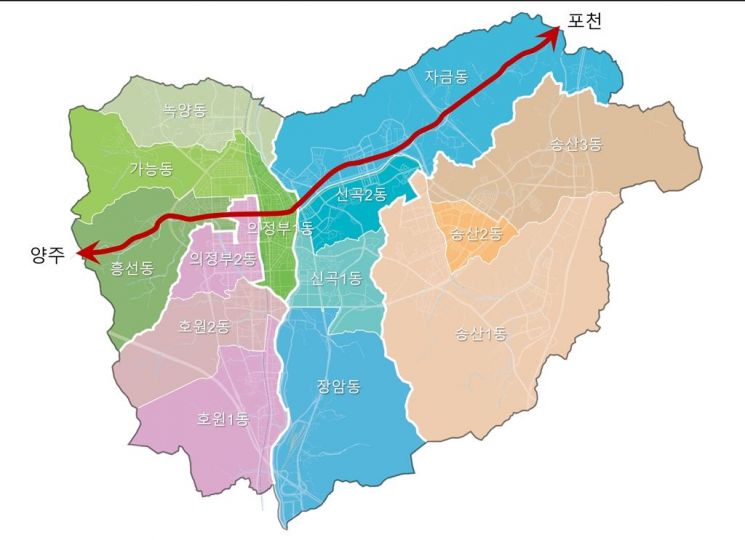
The ‘Traffic Signal System Optimization Project’ focused on analyzing the causes of congestion due to changes in traffic volume, adjusting signal cycles and timings, and facilitating smooth communication between pedestrians and vehicles to reduce unnecessary waiting times.
This method, which can be implemented in a short period and offers high cost-effectiveness, was actively pursued since May last year, reducing travel time by 20% around the Minrak-dong area in the first phase. Following the success of the first phase, the second phase improved the signal system throughout the Hoguk-ro area.
Hoguk-ro is an 8.78 km section connecting Uldae Hill in Yangju City to Chukseok Checkpoint in Pocheon City, corresponding to National Routes 39 and 43. It is an important road that crosses through downtown Uijeongbu, providing access to major facilities such as Kyungmin University, Uijeongbu Police Station, Budae Jjigae Street, Jeil Market, the Bus Terminal, and St. Mary’s Hospital.
However, as it approaches the city center, severe congestion occurs during rush hours and weekends due to narrow road widths of 2 to 3 lanes one way, poor visibility caused by the light rail viaduct, numerous intersections spaced 30 to 80 meters apart, and the concentration of vehicles and pedestrians. This has led to ongoing traffic problems such as road congestion, traffic accidents, noise, and exhaust emissions, resulting in continuous related complaints.
The city collaborated with an advisory group composed of the police and traffic experts to conduct road status and intersection traffic volume surveys, preliminary driving surveys, and drone filming. Based on this, the signal system was restructured according to traffic conditions by day, time, and direction, and pedestrian crossing times were extended, transforming the road into a smoothly flowing route within about three months.
According to the effect analysis, the average travel speed increased by 4.2 km/h (22.6%) from 18.4 km/h to 22.5 km/h, and the section travel time was reduced by an impressive 4 minutes and 37 seconds (18.9%) from an average of 24 minutes and 26 seconds to 19 minutes and 49 seconds, greatly enhancing citizens’ traffic convenience. Moreover, it generated an economic effect of approximately 7.6 billion KRW annually and contributed to reducing carbon emissions and air pollution.
Mayor Kim Dong-geun said, “Hoguk-ro is an important road that greatly affects the daily lives and quality of life of Uijeongbu citizens,” adding, “I hope citizens will feel the practical changes of reduced travel time and improved traffic convenience through this traffic signal system optimization. We will also strive to select and improve the third phase section to further enhance the quality of life for our citizens.”
© The Asia Business Daily(www.asiae.co.kr). All rights reserved.

















