Forest restoration activities in the Latin American region are set to accelerate. Latin America is recognized as a region with high potential for carbon reduction. Korea plans to promote forest restoration in Latin America through Official Development Assistance (ODA) cooperation projects, aiming to speed up national greenhouse gas reduction efforts.
The Korea Forest Service announced on the 24th that it will implement ODA cooperation projects utilizing Korea's advanced forest restoration technology in Latin American countries such as Honduras, El Salvador, Guatemala, and Guyana.
ODA refers to aid projects provided by donor countries in the form of financial resources for the public purpose of promoting economic development or welfare improvement in developing countries.
So far, the Korea Forest Service has contributed to generating income for local residents by restoring degraded forests and establishing sustainable agroforestry in Honduras, El Salvador, and Guatemala, which are part of the Dry Corridor region in Central America.
The first Central American country where the Korea Forest Service initiated an ODA cooperation project was Honduras, where agroforestry and forest landscape restoration projects have been underway since 2023. Starting this year, the service plans to actively promote the REDD+ (Reducing Emissions from Deforestation and forest Degradation Plus) project to prevent forest degradation in developing countries for national greenhouse gas reduction.
REDD+ is an activity that reduces greenhouse gas emissions by preventing deforestation and forest degradation in developing countries. The greenhouse gas reduction achievements secured through REDD+ can be transferred between countries, allowing donor countries to use them to meet their Nationally Determined Contributions (NDC) for greenhouse gas reduction. This means that carbon reduction outcomes in the Latin American region can be reflected in Korea's national greenhouse gas reduction targets.
In El Salvador, the Korea Forest Service is establishing firebreak forest belts to prevent wildfires and forest degradation around the Lempa River area and is promoting agroforestry.
In Guatemala, where forests are a major livelihood source for indigenous peoples, the service is building sustainable production systems such as forest restoration and nursery establishment, and is focusing on strengthening public and private sector capacity through education to support efficient forest management.
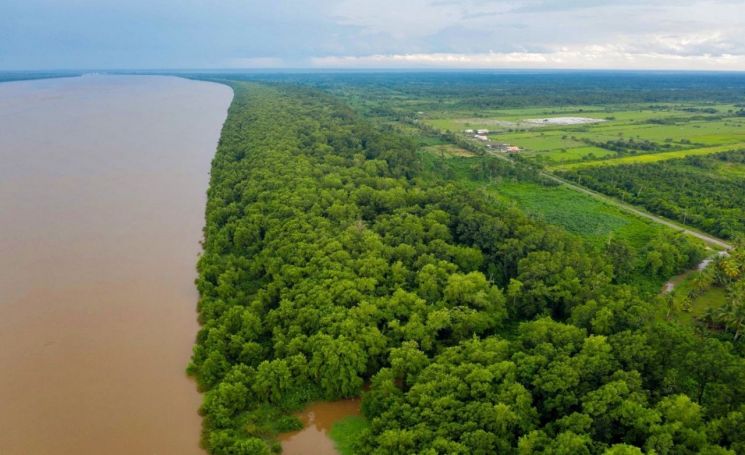
In Guyana, a South American country, a mangrove forest ecological restoration project covering 120 hectares is being promoted in cooperation with the Global Green Growth Institute (GGGI) to respond to the climate crisis and prevent coastal erosion.
In particular, the Mahaica Beach mangrove forest is expected to play a key role in reducing the size of tsunamis, enhancing biodiversity, and improving the livelihoods of local residents in the fisheries and agriculture sectors.
The mangrove forest has the potential to reduce 1.12 million tons of carbon dioxide over the next 25 years, contributing to Korea's overseas carbon reduction and emission rights acquisition.
Nam Song-hee, Director of International Forest Cooperation at the Korea Forest Service, said, “Forests are an effective asset in responding to the climate crisis and a field attracting international attention. The Korea Forest Service will strengthen cooperation with Latin American countries based on Korea's advanced forest technology to contribute to overcoming the climate crisis and accelerate the achievement of national greenhouse gas reduction targets.”
© The Asia Business Daily(www.asiae.co.kr). All rights reserved.

















