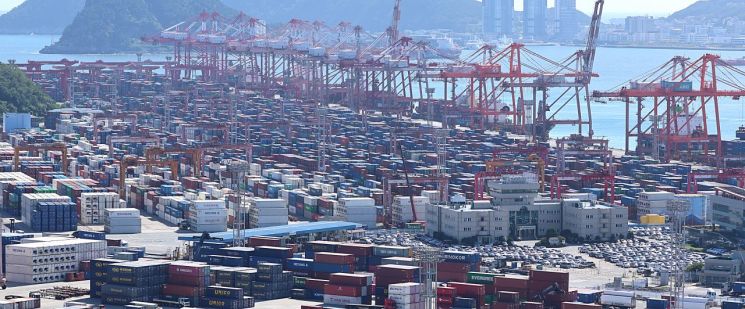
On the 23rd, the Ministry of Oceans and Fisheries announced that 31.73 million TEUs of cargo volume were handled at national trade ports last year. This is a 5.3% (1.58 million TEUs) increase compared to the previous year, marking an all-time high.
The export-import cargo volume reached 17.68 million TEUs, an increase of 440,000 TEUs (2.6%) from the previous year, and the transshipment cargo volume was 13.89 million TEUs, up 1.15 million TEUs (9%) from the previous year, both recording historic highs.
Busan Port handled a record-high cargo volume of 24.4 million TEUs (a 5.4% increase from the previous year). In particular, the transshipment cargo volume increased by 1.09 million TEUs from the previous year to 13.5 million TEUs, driving the increase in domestic port cargo volume.
Incheon Port recorded an all-time high cargo volume of 3.56 million TEUs, up 90,000 TEUs (2.7%) from the previous year. Gwangyang Port handled 2.01 million TEUs (a 7.8% increase from the previous year), recovering the 2 million TEU mark for the first time in three years.
The record-breaking performance of our ports last year is attributed to the expansion of cargo volume with major trading countries, such as the revitalization of trade with the United States due to the recovery of the U.S. consumer market and the increase in transshipment volume from China. In particular, Busan Port’s achievement of the highest cargo volume is analyzed to have been contributed by the opening of the country’s first fully automated port in April last year, which enhanced cargo handling capacity.
Kang Do-hyung, Minister of Oceans and Fisheries, stated, "Considering changes in external conditions such as the intensification of protectionism this year, we will steadily implement the 'Global Hub Port Establishment Strategy' established last year, including the groundbreaking of Busan Port Jinhae New Port."
© The Asia Business Daily(www.asiae.co.kr). All rights reserved.

















