Definition of Heatwave Work Standards and Introduction of Penalties
Strengthening Measures to Prevent Heat-Related Illnesses Among Workers
Rest Required for Work Over 33°C for Two Hours
20 Billion KRW Budget to Support SMEs
The government has specified a bill requiring employers to take health measures related to heat-related illnesses when workers perform tasks indoors or outdoors with a perceived temperature of 31℃ or higher for more than two hours. Starting in June, employers must measure and manage the perceived temperature at the worksite and adjust work hours or provide appropriate rest periods according to the work environment. Violations will result in imprisonment for up to five years or a fine of up to 50 million KRW.
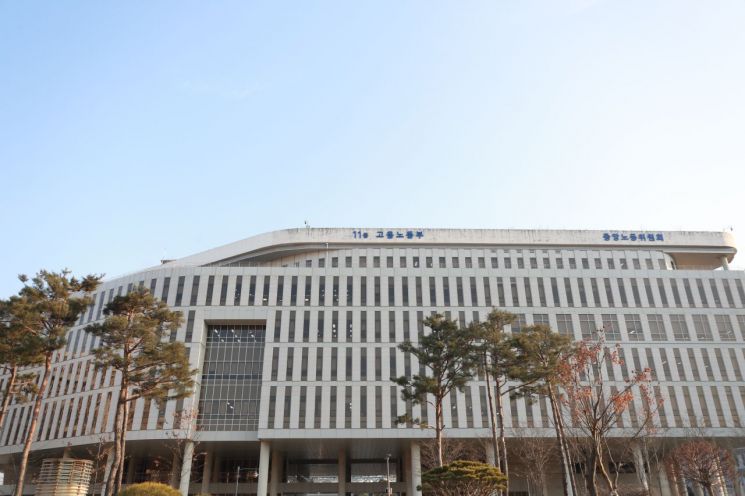
The Ministry of Employment and Labor announced that from the 23rd to March 4th, it will publicly notify a partial amendment to the "Regulations on Industrial Safety and Health Standards" to specify employer health measures to prevent worker health hazards that may occur during long hours of work in heatwave conditions. The related Industrial Safety and Health Act was amended last October and is set to be enforced in June, prompting the start of full-scale preparations to support it.
The amendment includes ▲the establishment of definitions for heatwaves and heatwave work ▲measures for prevention and occurrence of heat-related illnesses ▲heat-related illness prevention measures during heatwave work ▲provision of rest periods during heatwave work. The Ministry of Employment and Labor prepared the amendment, including perceived temperature standards for heatwave work and penalties for legal violations, based on the previously advisory "Heat-Related Illness Prevention Guide," after gathering opinions through expert forums, industry-specific meetings, and labor-management organizations.
The Ministry expects that the implementation of this amendment will strengthen employers' efforts to prevent heat-related illnesses among workers. Kim Jong-yoon, Director of the Industrial Safety and Health Headquarters at the Ministry, said, "The industry from which we received the most feedback during the preparation of the amendment was construction," adding, "Since there is outdoor work, we paid close attention." He further explained, "Logistics centers, aviation ground handling companies, and shipbuilding are also sectors of concern," and "We gathered opinions centered on industries through communication and consultation processes."
Employers Violating Health Measures Face 'Up to 5 Years Imprisonment'
The Ministry introduced definitions for heatwaves and heatwave work in this amendment. Heatwave work subject to employer health measure obligations is defined as long-hour work at a worksite where the perceived temperature is 31℃ or higher. This perceived temperature corresponds to the "interest" stage of the Korea Meteorological Administration's (KMA) Heatwave Impact Forecast. It considered that 72.7% of workers approved for industrial accidents due to heat-related illnesses occurred at 31℃ or above.
According to the KMA, over the past three years on average, there were 43 days per year with a perceived temperature of 31℃ or higher. Last year, with a pronounced heatwave, the number of days with 31℃ or higher from June to September reached 58.5 days. Consequently, the number of workers approved for industrial accidents due to heat-related illnesses was 58 last year, a relatively large scale similar to the severe heatwave year of 2018 (65 workers).
Going forward, employers must place thermometers and hygrometers at the main work locations where heatwave work of 31℃ or higher is expected, measure and record the perceived temperature, and keep these records until the end of the year. However, if measuring perceived temperature is difficult due to the nature of the work environment, such as outdoor mobile work, the perceived temperature announced by the KMA under Article 11 of the Meteorological Act can be used.
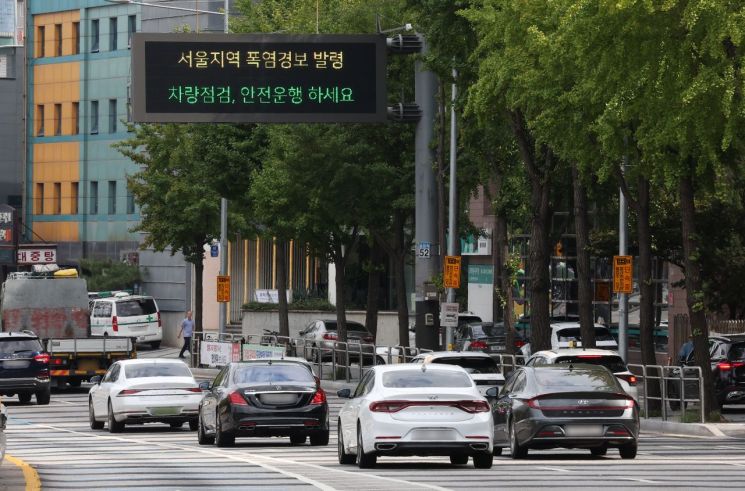
Clean beverages and the like must be sufficiently provided at locations where workers sweat heavily during work. Workers performing heatwave work must be informed about symptoms, prevention methods, and emergency response procedures for heat-related illnesses. If a worker performing heatwave work is suspected of having heatstroke or other heat-related illnesses, immediate reporting to the fire department (119) and other measures are necessary.
Employers must also take appropriate heat-related illness prevention measures when workers perform heatwave work indoors or outdoors. For indoor heatwave work, employers must take at least one of the following measures: ▲install temperature and humidity control devices for cooling or ventilation ▲adjust work hours or take equivalent measures ▲provide appropriate rest periods. However, if heatwave conditions persist despite other measures, providing appropriate rest periods is mandatory.
For outdoor heatwave work, employers must take at least one of the following measures: ▲adjust work hours or take equivalent measures ▲provide appropriate rest periods. However, if heatwave conditions continue despite measures such as adjusting work hours, appropriate rest periods must be provided.
When workers perform heatwave work with a perceived temperature of 31℃ or higher, appropriate rest must be guaranteed both indoors and outdoors. If the perceived temperature at the main work location reaches 33℃ or higher, which corresponds to the KMA heatwave warning standard, workers must take a rest of at least 20 minutes every two hours. However, if providing rest is difficult due to the nature of continuous processes, such as disruptions to subsequent work or product quality degradation, employers should take measures to reduce workers' body temperature rise by using personal cooling or ventilation devices or cooling equipment instead.
If an employer violates the legally stipulated health measures, they face "imprisonment for up to five years or a fine of up to 50 million KRW." If a worker dies due to violation of health measures, "imprisonment for up to seven years or a fine of up to 100 million KRW" applies.
The Ministry plans to prepare alternatives for issues raised during the public notification period and encourage compliance at worksites through local offices and related corporations. At the headquarters level, efforts will be made to communicate with related associations and organizations. Lee Min-jae, Director of Industrial Safety and Health Policy at the Ministry, said, "In practice, labor and management at the site must prepare," adding, "We plan to conduct large-scale prevention activities with industry stakeholders such as the Construction Association."
Minister of Employment and Labor Kim Moon-soo said, "This amendment is significant in that it specifically presents employer health measures to prevent workers' heat-related illnesses." He added, "We will prepare supplementary measures based on opinions presented during the public notification period," and "for small and medium-sized enterprises with fewer than 50 employees, we will strengthen financial support using a 20 billion KRW budget this year to ensure smooth implementation of the amendment at worksites."
© The Asia Business Daily(www.asiae.co.kr). All rights reserved.
![Clutching a Stolen Dior Bag, Saying "I Hate Being Poor but Real"... The Grotesque Con of a "Human Knockoff" [Slate]](https://cwcontent.asiae.co.kr/asiaresize/183/2026021902243444107_1771435474.jpg)

















