Essential Battery Costs for Electric Assistive Devices... Higher Than Other Items, Increasing Economic Burden
Up to 110,000 KRW Additional Support Beyond Government Subsidy for Low-Income Disabled Individuals
Leading Improvements in Sidewalk Environments, Accident Insurance, and Rapid Charger Expansion for a 'Mobility Paradise for the Disabled'
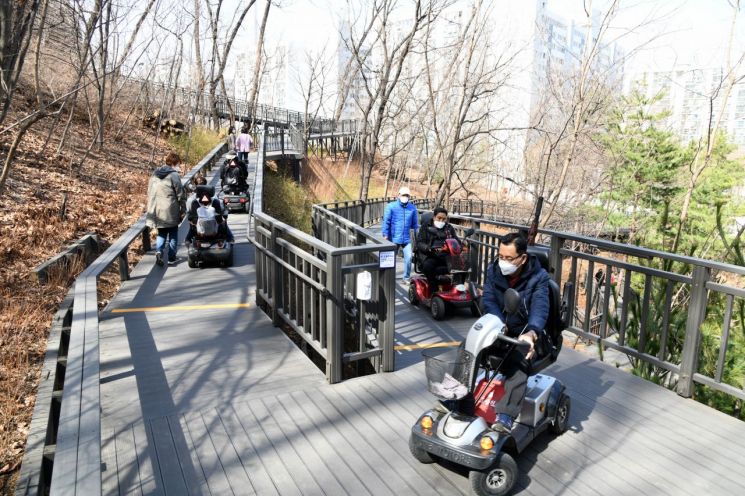
Nowon-gu, Seoul (Mayor Oh Seung-rok) announced that it will expand support for 'repair (replacement) costs of mobility devices for the disabled' to improve the quality of life and guarantee the rights of low-income disabled individuals.
Electric assistive devices for the disabled are electric equipment that help the activities of people with mobility difficulties, including electric wheelchairs and electric scooters. With the aging trend and the increase in the disabled population, the use of electric assistive devices has been steadily increasing.
The problem is that the economic burden on low-income disabled individuals is also increasing due to the expiration of the durability period. Regular battery replacement is essential for using electric assistive devices, but the typical battery replacement cost averages 300,000 KRW, which is considerably higher compared to other items.
For electric assistive devices past the battery replacement period (1 year and 6 months), the government currently supports replacement costs of 190,000 KRW for medical aid recipients and 171,000 KRW for general households. However, even the partial self-payment cost is burdensome for low-income disabled individuals.
Recognizing this issue through a policy meeting with the local branch of the Association of Persons with Physical Disabilities last year, the district office began preparing support measures. After consultations with mobility device repair companies, starting this year, for basic livelihood security recipients and near-poverty groups, an additional support of up to 110,000 KRW can be provided beyond the government subsidy (190,000 KRW) for devices past the battery replacement period. Through this, the district expects to improve the quality of life for low-income disabled individuals.
In addition, the district is making efforts to improve the operating environment of electric assistive devices to guarantee the mobility rights of the disabled. Recently, the district removed about 1,200 unnecessarily installed bollards on sidewalks and lowered the curbs at crosswalks in about 450 locations. Also, to prepare for emergencies such as electric assistive devices running out of power, 64 rapid chargers have been installed mainly in parks and along rivers.
Since 2022, the district became the first autonomous district in Seoul to subscribe to insurance for electric assistive devices. Last year, the self-payment amount was reduced from 50,000 KRW to 30,000 KRW, and the compensation limit was raised to a maximum of 50 million KRW, alleviating the economic burden on accident victims. In case of mobility device breakdowns, seven companies contracted with the district provide prompt repairs, and the district supports the repair costs.
Oh Seung-rok, Mayor of Nowon-gu, said, “Mobility devices for the disabled are not just simple equipment but an important part of the body that changes the lives of disabled people for the better.” He added, “Through this expanded support, I hope low-income disabled individuals can safely manage and use their mobility devices.”
© The Asia Business Daily(www.asiae.co.kr). All rights reserved.
![Clutching a Stolen Dior Bag, Saying "I Hate Being Poor but Real"... The Grotesque Con of a "Human Knockoff" [Slate]](https://cwcontent.asiae.co.kr/asiaresize/183/2026021902243444107_1771435474.jpg)
















