Trump Withdraws from Paris Agreement and Dismantles Eco-Friendly Policies Immediately After Inauguration
Major North American Banks Also Exit Green Alliances
Concerns Rise Over Regression in Domestic Banks' Climate Response Policies
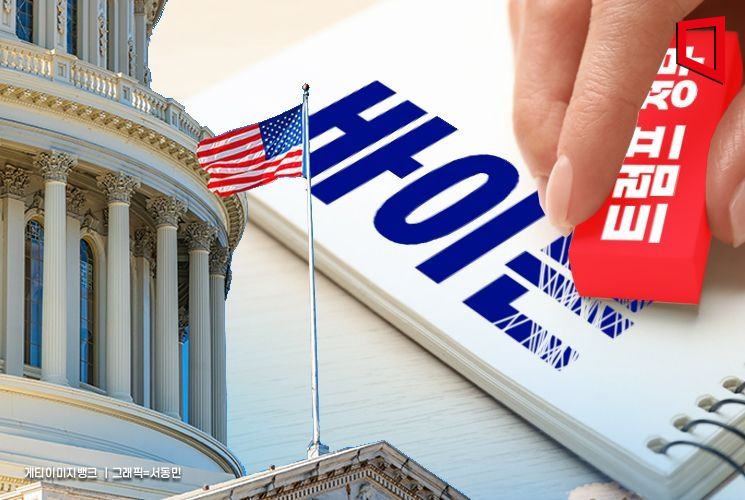
After U.S. President Donald Trump withdrew from the Paris Climate Agreement immediately after his inauguration and moved to dismantle eco-friendly policies such as expanding oil drilling and abolishing electric vehicle subsidies, concerns have arisen about a regression in carbon neutrality policies among global financial firms. Domestic financial companies have also implemented various carbon neutrality policies, but there are calls for reconsideration of the sustainability of these policies amid the changed atmosphere in the United States.
On the 20th (local time), President Trump signed an executive order withdrawing from the Paris Climate Agreement at his inauguration event held in Washington, D.C. The Paris Agreement focuses on preventing global warming and reducing greenhouse gas emissions. Even before his inauguration, Trump had warned of withdrawing from the agreement, claiming it was unfair to the United States. On the same day, he also announced the termination of the Biden administration's eco-friendly industrial policy, the "Green New Deal," which included preferential policies for electric vehicles, as well as the expansion of oil drilling.
As President Trump declared the end of various eco-friendly policies, the financial sector has also been significantly affected. According to the International Financial Center, following Trump's election victory at the end of last year, the six major U.S. investment banks (IBs) sequentially withdrew from the Net-Zero Banking Alliance (NZBA). The NZBA is a United Nations (UN) climate organization aimed at aligning banks' lending, investment, and capital market activities with net-zero carbon emissions by 2050. Around 2022, all major domestic banks also joined the NZBA.
However, starting with Goldman Sachs, major U.S. banks such as Wells Fargo, Citigroup, Bank of America, Morgan Stanley, and JPMorgan Chase have sequentially left the NZBA over the past month. Not only in the U.S., but in Canada as well, four banks including TD Bank, Bank of Montreal, National Bank of Canada, and Canadian Imperial Bank of Commerce declared their withdrawal from the NZBA this month.
North American major banks are stepping back from eco-friendly policies to avoid attacks from President Trump and the Republican Party. The Republican Party has warned that banks actively pursuing ESG (Environmental, Social, and Governance) enhancement policies could face disadvantages such as restrictions on bond issuance and bans on pension fund investments. According to Hana Financial Management Research Institute, the U.S. Republican Party has argued that financial firms joining the NZBA may violate antitrust laws and harm American consumers. Centered in Texas, they have raised issues with financial firms' ESG strategies and have warned of policy reviews and penalties related to banks' involvement in the oil and gas industries. Following Trump's election, this atmosphere has spread, leading banks to proactively withdraw from eco-friendly policies.
However, unlike the U.S., there appears to be no retreat from eco-friendly policies in the Korean financial sector yet. Major domestic banks have declared carbon neutrality and strengthened management of financial emissions by voluntarily disclosing reduction strategies. Carbon neutrality policies are expected to continue this year as well. A financial sector official said, "Although the atmosphere in the U.S. has changed significantly since President Trump's election, domestic banks still plan to continue their ESG policies," adding, "The possibility of rapid changes to eco-friendly policies such as carbon neutrality in Korea, like in the U.S., is low."
Bang Seung-yeon, senior researcher at Hana Financial Management Research Institute, explained, "Unlike the U.S., major European banks are likely to continue their eco-friendly policies," and added, "Domestic banks also need to monitor global banks' climate change responses and respond flexibly."
© The Asia Business Daily(www.asiae.co.kr). All rights reserved.
![Clutching a Stolen Dior Bag, Saying "I Hate Being Poor but Real"... The Grotesque Con of a "Human Knockoff" [Slate]](https://cwcontent.asiae.co.kr/asiaresize/183/2026021902243444107_1771435474.jpg)
















