Opposition Parties Protest...
"We Will Use Injunctions and All Available Means"
Acting President Choi Sang-mok exercised a veto against the bill that downgraded AI digital textbooks to 'educational materials.' The Ministry of Education stated that it would prepare alternatives to address concerns about AI digital textbooks. Opposition parties and educational organizations opposing the adoption of AI digital textbooks have even warned of 'legal action.'
On the 21st, at the Cabinet meeting, when the government requested a reconsideration from the National Assembly regarding the amendment to the Elementary and Secondary Education Act that defined AI digital textbooks as educational materials, the Ministry of Education said, "The government is aware of the concerns from the National Assembly and the field regarding AI digital textbooks and will do its best to prepare policy alternatives to resolve these issues."
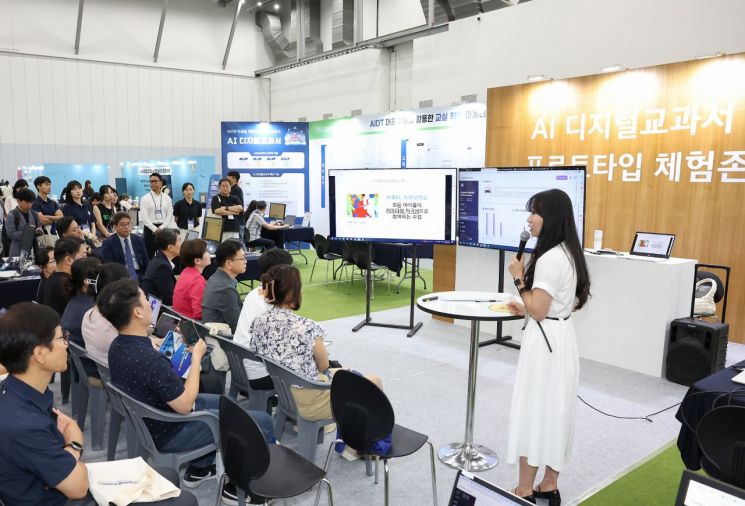
The Ministry of Education pointed out the problems that would arise if the legal status of AI digital textbooks were defined as educational materials. According to the amendment, not only AI digital textbooks but any form of textbooks utilizing intelligent information technology could not be developed or used, which could infringe on students' right to learn based on digital technology and teachers' right to teach.
Next, it mentioned that if AI digital textbooks become educational materials, they would be excluded from free education, potentially transferring the cost burden to students and parents. It also noted that considering AI digital textbooks that passed certification last year as educational materials could violate the 'principle of protection of legitimate expectations' under the Constitution. The Ministry emphasized that these concerns raised by some parties have been reflected in policy. For example, the subjects and schedules for introduction have been adjusted, and to prevent digital overdependence, cloud security certification (CSAP) of 'medium' grade or higher has been made mandatory.
The Ministry of Education stated, "Over the past two years, the Ministry, metropolitan and provincial offices of education, and the private sector have made extensive preparations for field application this March. Sudden changes in legal status could cause social confusion in schools and elsewhere, so we are requesting the National Assembly to reconsider once again."
The bill returned to the National Assembly must undergo a re-vote. Although the opposition parties are pushing for the bill's passage, the government and ruling party have reached a consensus on AI textbooks, so it is likely to be rejected due to not meeting the required quorum for reconsideration (more than half of all members present and two-thirds of those present voting in favor). If the bill is discarded, AI digital textbooks will regain their status as 'textbooks.'
Opposition parties and educational organizations hinted at legal action. Members of the National Assembly's Education Committee from the Democratic Party and the Innovation Party issued a statement on the day, criticizing the veto as "an unconstitutional veto that condones the Ministry of Education's 'illegal administration' during the AI digital textbook certification process and undermines the rule of law." They added, "We will use all means and methods, including injunctions and constitutional complaints, to prevent confusion in the educational field caused by AI textbooks."
The Korean Teachers and Education Workers Union also issued a statement calling for Acting President Choi's resignation, stating, "We will block the reckless promotion of AI textbooks through various methods, including injunction applications and constitutional complaints."
© The Asia Business Daily(www.asiae.co.kr). All rights reserved.

















