Supreme Court Sentencing Commission:
"Will Be Discussed at the Plenary Meeting"
Reply to Strict Punishment Petition from Anti-Fraud Civic Group
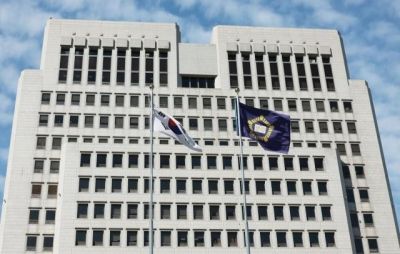
On the 21st, it was confirmed that the Supreme Court Sentencing Commission responded with an official letter on the 16th to the citizen group Korea Fraud Prevention National Association (Hansaguk), stating that “we will discuss the sentencing guidelines and strengthening the penalties for fraud.” In the document, the Sentencing Commission replied, “Regarding the request to set victim restitution as an important sentencing criterion, we will report it to the full meeting of the Sentencing Commission or the full meeting of expert members.”
In the response to the petition, the Sentencing Commission prefaced by saying, “It is difficult to respond regarding legislation, investigation, applicable laws, or punishment,” but explained, “Regarding your proposal for sentencing guidelines on organized fraud crimes, strengthening penalties for fraud, and the request to set victim restitution as an important sentencing criterion, we will report it to the full meeting of the Sentencing Commission or the full meeting of expert members so that it can be discussed in the future.”
Earlier, on the 13th, Hansaguk submitted 17,169 petitions to the Supreme Court Sentencing Commission calling for strict punishment of organized fraud. In the petition, Hansaguk urged that in applying the Act on the Aggravated Punishment, etc. of Specific Economic Crimes to organized fraud such as multi-level marketing, the standard for fraud proceeds should be based on the “total damage amount” rather than the “individual damage amount.” They argue that because the fraud proceeds are based on individual damage amounts, large-scale public frauds in the form of multi-level marketing and Ponzi schemes have avoided heavier penalties. Even if tens of thousands of victims have been defrauded, many cases do not exceed 500 million KRW per individual victim. For example, in the Ado International coin fraud case, 36,000 people were defrauded of approximately 440 billion KRW in a similar deposit fraud, but since the individual damage amount did not exceed 500 million KRW, heavier penalties were not applied. According to the Act on the Aggravated Punishment, etc. of Specific Economic Crimes, if the “individual proceeds” from the criminal act are between 500 million KRW and less than 5 billion KRW, a heavier penalty of at least three years’ imprisonment can be imposed.
Meanwhile, on the 13th, the Sentencing Commission held its 136th meeting and approved a draft sentencing guideline that allows for life imprisonment if the damage caused by organized fraud crimes exceeds 30 billion KRW. The draft will undergo public hearings and consultations with related agencies before being finalized at the plenary meeting on March 24.
© The Asia Business Daily(www.asiae.co.kr). All rights reserved.

















