Producer Price Index Rises for Two Consecutive Months
Driven by Increases in Agricultural Products and Energy Prices
Domestic Supply Prices Surge Due to High Exchange Rate
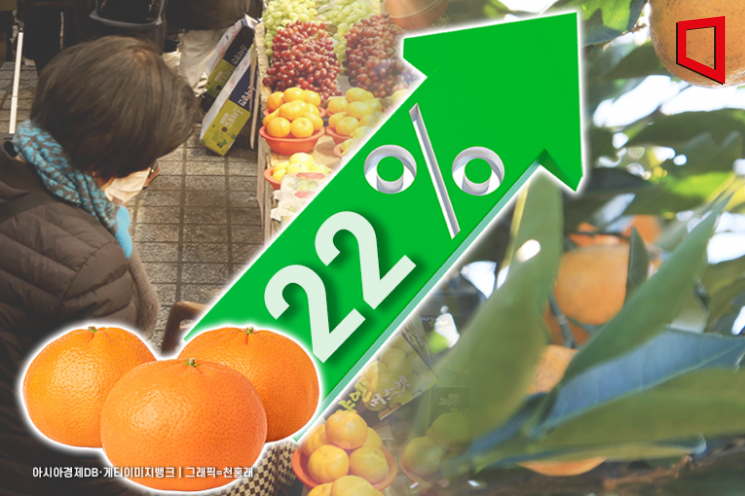
As prices of agricultural products such as gamgyul (tangerines) and mu (radish) rise, the producer price index has increased for two consecutive months. Gasoline and industrial city gas prices also rose, widening the increase. Domestic supply prices, including imported goods, surged significantly for two consecutive months due to the high exchange rate.
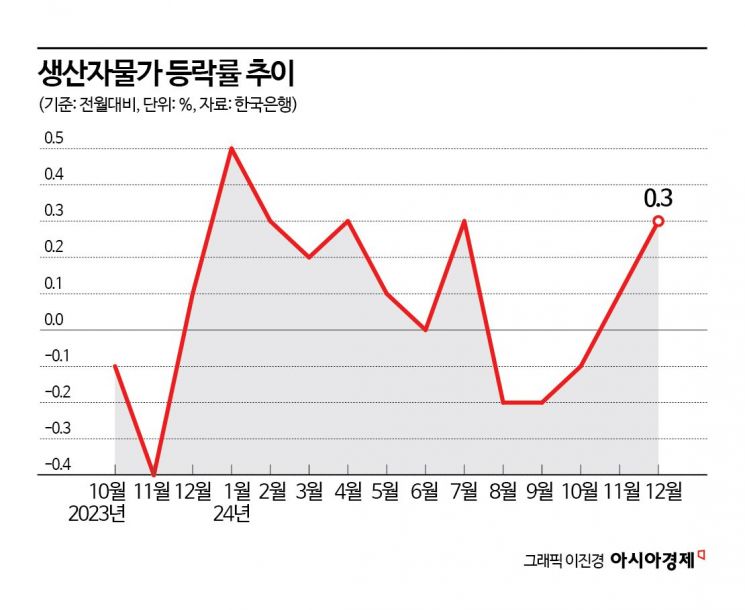
According to the 'Producer Price Index for December 2024 (provisional)' released by the Bank of Korea on the 21st, the producer price index in December last year rose by 0.3% compared to the previous month. The producer price index had turned upward by 0.1% in November last year after four months of decline and increased for two consecutive months. Compared to a year ago, it was 1.7% higher.
In December last year, producer prices rose due to an increase in industrial product prices caused by rising international oil prices and a rebound in agricultural, forestry, and fishery products after three months. Agricultural, forestry, and fishery products increased by 2.8% month-on-month as supplies of agricultural and livestock products decreased. By item, prices of agricultural and livestock products such as gamgyul (22.6%), mu (22%), and chicken (14.3%) rose sharply compared to the previous month. On the other hand, fishery product prices fell by 0.2% month-on-month due to price drops in items like squid (-28.1%).
Industrial products rose by 0.3% month-on-month. The rise in international oil prices led to a 4.8% increase in gasoline prices compared to the previous month, driving up coal and petroleum products (2.2%). Electricity, gas, water, and waste services rose by 0.4% month-on-month, led by a 4.9% increase in industrial city gas. The service sector also increased by 0.1%, with restaurant and accommodation services (0.3%) and transportation services (0.3%) rising.
For the entire last year, producer prices rose by 1.7% year-on-year across all sectors, including agricultural, forestry, and fishery products and industrial products.
Lee Moon-hee, head of the Price Statistics Team at the Bank of Korea’s Economic Statistics Bureau, explained, "Prices of agricultural products rose due to poor crop yields and increased year-end demand for livestock products amid supply shortages, leading to an overall rise in agricultural, forestry, and fishery product prices. Prices of coal and petroleum products, chemical products, and industrial city gas also increased due to rising international oil prices and the won-dollar exchange rate."
Regarding the outlook for January, he said, "There are upward pressures as international oil prices and the won-dollar exchange rate continue to rise so far, but some items such as agricultural products and industrial city gas, which are public utility charges, are expected to decrease, so the overall direction needs to be monitored."
Meanwhile, the domestic supply price index, which measures price changes including imported goods, rose by 0.6% in one month. It increased by 0.6% for two consecutive months, rising sharply compared to the producer price index. The sharp rise in the won-dollar exchange rate caused import prices to jump 1.5%. Lee said, "Prices of domestic shipments are also rising significantly for two consecutive months as agricultural, forestry, and fishery product prices increase," adding, "When domestic supply prices rise, it can lead to production cost burdens with a time lag and eventually be reflected in consumer price burdens."
The total output price index, which adds export goods to domestic shipments, rose by 0.8% month-on-month as both agricultural, forestry, and fishery products and industrial products increased.
© The Asia Business Daily(www.asiae.co.kr). All rights reserved.


















