Resident Foreign Currency Deposits Rose by $2.87 Billion in December Last Year
Uncertainties Outweigh Persistent Rise in Won-Dollar Exchange Rate
Export-Import Companies Secure Reserve Funds... Growth Led by Corporate Deposits
Resident foreign currency deposits increased for the first time in three months. Despite the continuous rise in the won-dollar exchange rate, the weight of domestic and international uncertainties led export-import companies to secure reserve dollar funds, which had a significant impact.
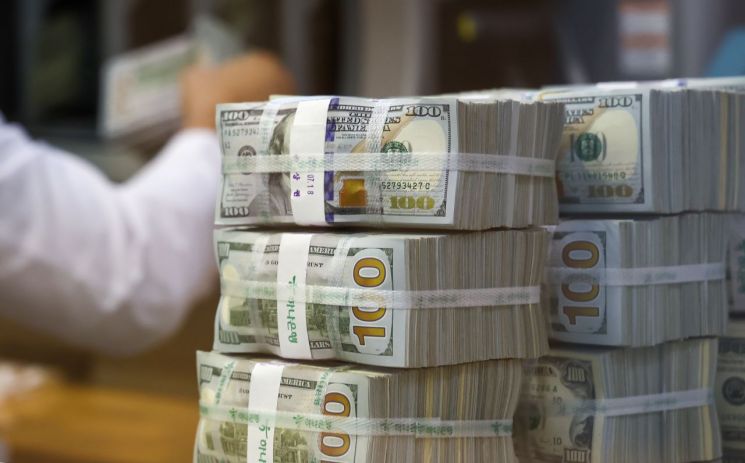
According to the "Resident Foreign Currency Deposit Trends for December 2024" announced by the Bank of Korea on the 20th, as of the end of December last year, resident foreign currency deposits at foreign exchange banks amounted to $101.3 billion, an increase of $2.87 billion compared to the end of the previous month.
Resident foreign currency deposits include foreign currency deposits held domestically by nationals, domestic companies, foreigners residing in Korea for more than six months, and foreign companies operating in Korea.
Resident foreign currency deposits had increased for four consecutive months until September last year but decreased for two consecutive months starting in October as the won-dollar exchange rate rose sharply. Although the won-dollar exchange rate rose to the high 1400 won range in December, the expansion of domestic and international uncertainties led export-import companies to increase dollar deposits to secure reserve funds, turning the trend to an increase.
By currency, dollar deposits and euro deposits increased by $3.8 billion and $230 million respectively compared to the end of the previous month. A Bank of Korea official said, "Dollar deposits increased due to export-import companies securing reserve funds," and "Euro deposits increased due to temporary deposits of sales proceeds by some companies."
Yen deposits decreased by $1.19 billion. Factors contributing to the decrease included non-transaction factors such as the reduction in the yen deposit balance when converted to dollar terms due to the strong dollar, as well as profit-taking by residents due to the rise in the won-yen exchange rate. The yen-dollar exchange rate rose by 5.5 yen from 151.5 yen at the end of November last year to 157.0 yen at the end of December. The won per 100 yen exchange rate also rose by 15.6 won from 920.9 won to 936.5 won during the same period.
By entity, corporate deposits increased by $3.17 billion to $87.12 billion, while individual deposits decreased by $300 million to $14.18 billion. By bank type, domestic banks increased by $2.89 billion, while foreign bank branches decreased by $20 million.
© The Asia Business Daily(www.asiae.co.kr). All rights reserved.

















