Scott Bessent, the nominee for Secretary of the Treasury appointed as the 'economic commander' of Donald Trump's second administration, argued the necessity of tariffs for three reasons: correcting unfair trade practices, expanding imports, and negotiation purposes. Regarding the monetary policy decisions of the central bank, the Federal Reserve (Fed), he emphasized political independence and drew a line against concerns of interference by President-elect Trump.
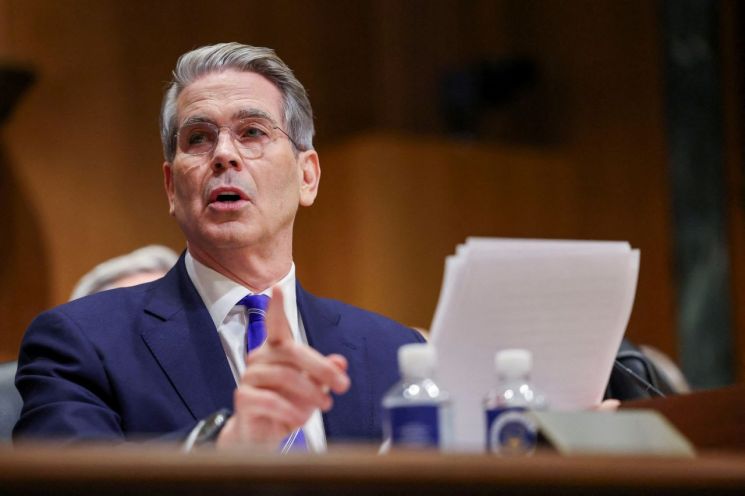
On the 16th (local time), Bessent appeared before the Senate Finance Committee confirmation hearing and stated, "Trump's economic policy is an opportunity to open a new economic golden age that will create more jobs, wealth, and prosperity for all Americans."
Coming from Wall Street, he said that the so-called 'Trump tariffs' could be used for three purposes. First, "to correct unfair trade practices of a country or industry." This includes tariffs imposed on China and steel tariffs during Trump's first term. The second is "more generalized tariffs to increase federal budget revenue." This is explained as securing the necessary funds to fulfill President-elect Trump's promises, such as the permanent extension of the 2017 tax cuts.
Additionally, Bessent said, "Skilled negotiator President Trump added a third use for tariffs," emphasizing that tariffs are used as a card to gain an advantage at the negotiation table with foreign countries. He said, "President Trump thinks that if we impose too many sanctions, other countries might move away from using the dollar," hinting that due to concerns about the potential weakening of the dollar's status as the global reserve currency, tariffs might be used as a diplomatic tool instead of sanctions.
He also confirmed that such tariff threats could be used for non-trade purposes. A recent example is President-elect Trump's warning to Canada and Mexico, which share borders with the U.S., that if they do not resolve illegal immigration and fentanyl drug issues, a 25% tariff would be imposed. Regarding concerns that universal tariffs of up to 20% could fuel inflation in the U.S., he argued that "the cost will not be fully passed on to consumers."
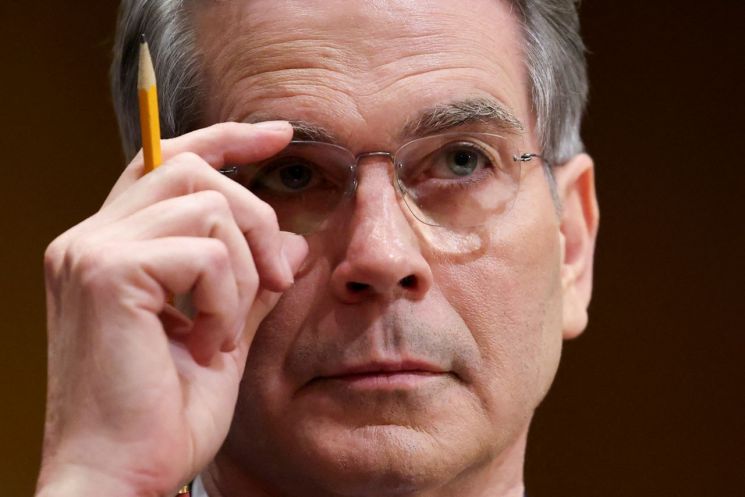
In particular, Bessent suggested that the Trump second administration, launching next week, will take a more hostile approach toward China. He defined China as "the most unbalanced economy in world history" and said he would urge the fulfillment of U.S. agricultural purchases agreed upon during Trump's first administration. In this process, he plans to demand even the amounts to cover the past four years. He also warned that if China and others export carbon-intensive products, a so-called 'carbon tax' could be imposed. This is an area that not only China but also South Korea should closely watch. Furthermore, he confirmed that foreign investment reviews related to advanced technologies such as artificial intelligence (AI) and semiconductors will be conducted more strictly.
As the Treasury Secretary who will hold a broad range of economic sanction tools, Bessent also expressed readiness to impose stronger sanctions on Russia. He evaluated the current Biden administration's sanctions as too weak and said, "If President Trump wants strong sanctions as part of ending the Ukraine war, I will fully support that." He also showed a hardline stance that sanctions on Iran should be strengthened.
He also emphasized that the Fed must maintain independence in monetary policy decisions. This statement came amid growing concerns that President-elect Trump, who has argued that the president should have a say in interest rate decisions, might shake the Fed after taking office. Bessent said that while President-elect Trump can express his opinions on interest rate decisions, "the Federal Open Market Committee (FOMC) must be independent regarding monetary policy decisions," drawing a line against infringement concerns. Additionally, he argued that the tax cuts implemented during Trump's first administration, which are set to expire this year, should be made permanent, warning that "if Congress does not act, Americans will face the largest tax increase in history."
© The Asia Business Daily(www.asiae.co.kr). All rights reserved.
![Clutching a Stolen Dior Bag, Saying "I Hate Being Poor but Real"... The Grotesque Con of a "Human Knockoff" [Slate]](https://cwcontent.asiae.co.kr/asiaresize/183/2026021902243444107_1771435474.jpg)











