December CPI Up 2.9% Year-on-Year
Core CPI Rises 3.2%, Falls Short of Expectations
Inflation Concerns Ease, Treasury Yields Plunge
Major Banks Like JPMorgan Report "Surprise Earnings"
The three major indices of the U.S. New York Stock Exchange all rose in early trading on the 15th (local time). The core Consumer Price Index (CPI) inflation rate unexpectedly slowed last month, and major U.S. banks posted "surprise earnings," boosting investor sentiment. Inflation concerns eased, causing U.S. Treasury yields to plunge, with the 10-year yield falling to the 4.6% range.
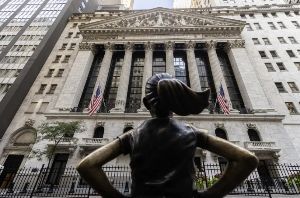
As of 11:15 a.m. in the New York stock market that day, the Dow Jones Industrial Average (Dow), which focuses on blue-chip stocks, was up 1.54% from the previous day at 43,173.93. The S&P 500, centered on large-cap stocks, rose 1.6% to 5,936.61, and the Nasdaq, focused on tech stocks, surged 2.16% to 19,454.95.
Following the Producer Price Index (PPI) released the previous day, the core CPI inflation rate released that morning also slowed unexpectedly, spreading relief across the market.
According to the U.S. Department of Labor, the CPI in December last year rose 0.4% month-over-month and 2.9% year-over-year. Although these figures were higher than the November increases (0.3% and 2.7%, respectively), they met expectations. The core CPI, which excludes volatile energy and food prices to show the underlying inflation trend, rose 0.2% month-over-month and 3.2% year-over-year. Both figures were below the October increases and market expectations (0.3% and 3.3%, respectively). Notably, the month-over-month increase slowed for the first time in five months after maintaining 0.3% for four consecutive months since August last year. Since the Fed places more emphasis on core CPI than CPI, last month's retail price inflation can be seen as lower than expected. The PPI, a wholesale price index released the previous day, also rose 0.2% month-over-month in December, falling short of both the previous month and expert forecasts (0.4%).
John Cushner, Head of U.S. Securities Products and Portfolio Manager at Janus Henderson, said, "Following yesterday's PPI, today's CPI inflation indicators slightly missed expectations, allowing the market to breathe a sigh of relief," adding, "Perhaps the most important point is that today's CPI figures rule out additional rate hikes that some market participants hastily anticipated."
With recent inflationary pressures easing, U.S. Treasury yields have plunged. The U.S. 10-year Treasury yield, a global bond yield benchmark, fell 12 basis points (1 bp = 0.01 percentage points) from the previous trading day to 4.66%, while the 2-year Treasury yield, sensitive to monetary policy, dropped 8 basis points to 4.27%.
However, concerns about "Trumflation" (inflation caused by Trump's policies) are growing, and inflation rates remain above the Fed's 2% target, making it likely that the benchmark interest rate will remain unchanged for the time being. According to the Chicago Mercantile Exchange (CME) FedWatch, the federal funds futures market on that day priced in a 97.3% chance that the Fed will keep rates steady at the Federal Open Market Committee (FOMC) meeting scheduled for the 28th-29th. The probabilities of rate holds in March and May are also high at 74% and 57.5%, respectively.
Sal Guatieri, Senior Economist at BMO Capital Markets, said, "The Fed still has work to do in the fight against inflation and has changed its plan to slow the pace of rate cuts, keeping rates restrictive for longer," adding, "Rates will likely be maintained at the end of this month, and the Fed may not resume rate cuts until there is clarity on the inflation impact of tariffs that could be implemented next week."
Surprise earnings from major banks also stimulated investor sentiment. JPMorgan Chase's net profit in the fourth quarter of last year increased by 50% compared to the same period the previous year. Goldman Sachs posted earnings per share (EPS) of $11.95, and Citigroup reported $1.34 in the fourth quarter, both significantly exceeding analyst expectations ($8.22 and $1.22, respectively).
Larry Tentarelli, Chief Technical Strategist at Blue Chip Daily Trends Report, said, "The earnings season started smoothly today," adding, "Bank earnings are important because the financial sector is closely linked to the general economy, and strong results from major banks can be seen as a positive sign."
By stock, bank shares are all rising. JPMorgan is up 1.23%. Goldman Sachs and Citigroup are surging 5.35% and 5.29%, respectively. Nvidia is up 2.04%, while Apple and Microsoft (MS) are rising 2.02% and 2.39%, respectively. Meta, Facebook's parent company, is up 3.47%.
International oil prices are rising amid supply concerns due to additional U.S. sanctions on Russian crude oil. West Texas Intermediate (WTI) crude oil rose $1.14 (1.47%) from the previous day to $78.64 per barrel, and Brent crude, the global oil price benchmark, increased $0.80 (1%) to $80.72 per barrel.
© The Asia Business Daily(www.asiae.co.kr). All rights reserved.

















