Lowest Level Since 1919
Impact of Changing Values and Economic Insecurity
Last year, France's total fertility rate dropped to 1.62, marking the lowest level since 1919, the year following the end of World War I.
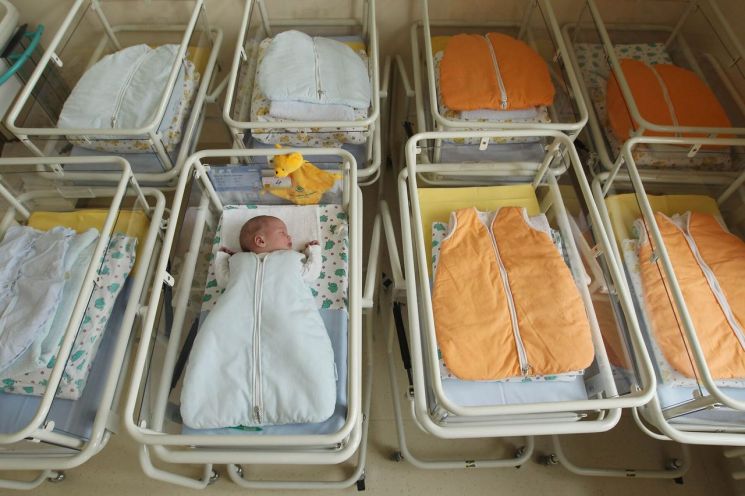
According to the "2024 Population Statistics" released on the 14th (local time) by the French National Institute of Statistics and Economic Studies (INSEE), a total of 663,000 babies were born in France last year. This is 2.2% lower than in 2023 and 21.5% lower than the peak in 2010. Although the total fertility rate (the expected number of children a woman will have in her lifetime) was higher than the ultra-low fertility threshold of 1.4 set by the United Nations, it was estimated at 1.62, down from 1.66 the previous year.
Even in France, where fertility rates have been relatively high within Europe, there is a growing reluctance to have children. Economic insecurity and changing values among the younger generation are cited as the main causes of the decline in fertility rates.
Life expectancy at birth remained stable at historically high levels, with women expected to live 85.6 years and men 80.0 years.
As of January 1 this year, the total population of France (including mainland and overseas territories) was 68.6 million, an increase of 169,000 (0.25%) compared to one year earlier. Natural increase was only 17,000, but immigration rose by 152,000.
© The Asia Business Daily(www.asiae.co.kr). All rights reserved.

















