Trump Adviser Bannon:
"Should Be Placed Under the Treasury Department"
'Tariff Man' Donald Trump, the President-elect of the United States, announced that he will establish an 'External Revenue Service (ERS)' to collect tariffs from foreign companies on his inauguration day, the 20th.
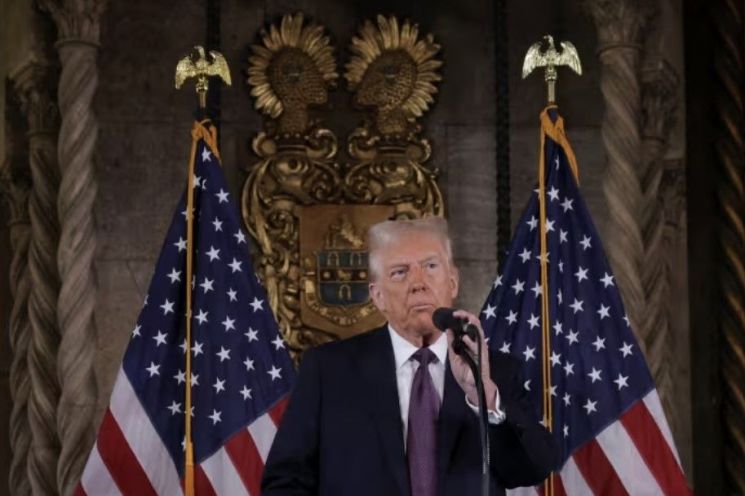
On the 14th (local time), Trump announced through his social networking service (SNS) 'Truth Social' that he created, "The U.S. economy has brought growth and prosperity to the world through moderate and pitifully weak trade agreements, but it has imposed taxes on ourselves."
He said, "Now is the time to change," and added, "I will establish the External Revenue Service to collect tariffs, taxes, and all revenues coming from abroad." He further stated, "We will start taxing those who make money through trade with us, and they will finally begin to pay their fair share."
Currently, tariffs are collected by the Customs and Border Protection (CBP), an agency under the Department of Homeland Security. Trump's intention is to create a separate agency to collect tariffs, similar to how the Internal Revenue Service (IRS) collects taxpayers' taxes.
The External Revenue Service is expected to be newly established under the Department of the Treasury. Stephen Bannon, who served as White House Chief Strategist during Trump's first term, stated at a Politico event that the new agency to collect tariffs should be under the Treasury Department.
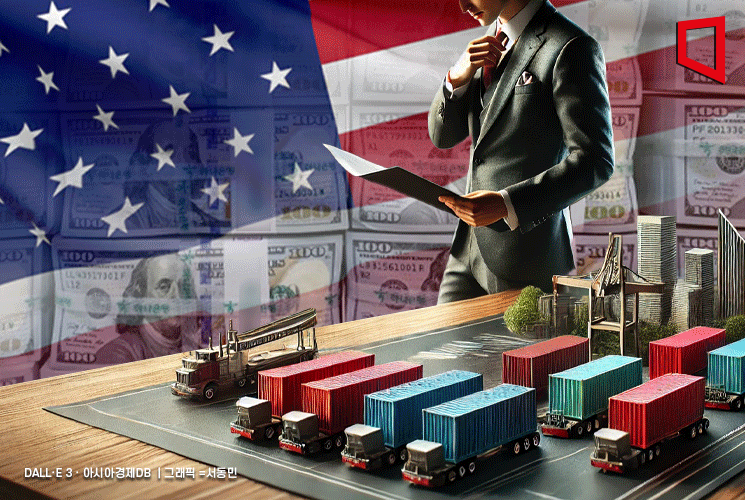
Previously, Trump announced plans to raise tariffs to reduce the U.S. trade deficit. He indicated a universal tariff of 10-20% on all imported goods worldwide and an ultra-high tariff of 60% on imports from China. Considering that the current average U.S. tariff rate is 3%, this represents a significant increase. At the end of November last year, he also threatened to impose a 25% tariff on Mexico and Canada if they did not resolve issues related to illegal immigration and drugs. Critics argue that tariffs are being used as a means to achieve policy goals beyond just addressing the trade deficit.
Amid growing concerns that Trump's second-term tariff policy could drive up inflation, Trump's economic team is reportedly considering a plan to gradually increase tariffs by 2-5% each month to minimize the shock of rising prices.
© The Asia Business Daily(www.asiae.co.kr). All rights reserved.
!["The Woman Who Threw Herself into the Water Clutching a Stolen Dior Bag"...A Grotesque Success Story That Shakes the Korean Psyche [Slate]](https://cwcontent.asiae.co.kr/asiaresize/183/2026021902243444107_1771435474.jpg)

















