The government is expanding the 'Ministerial Meeting to Strengthen Industrial Competitiveness,' which has been centered on government ministries, into a public-private joint meeting that includes private sector participation. The roles of deputy ministers attending the meeting will be expanded, and private entities such as economic organizations, industry-specific associations, and specialized research institutes will be newly invited to participate. This aims to enhance the execution power of industry-specific policies and response measures in preparation for uncertainties following the inauguration of the second Trump administration.
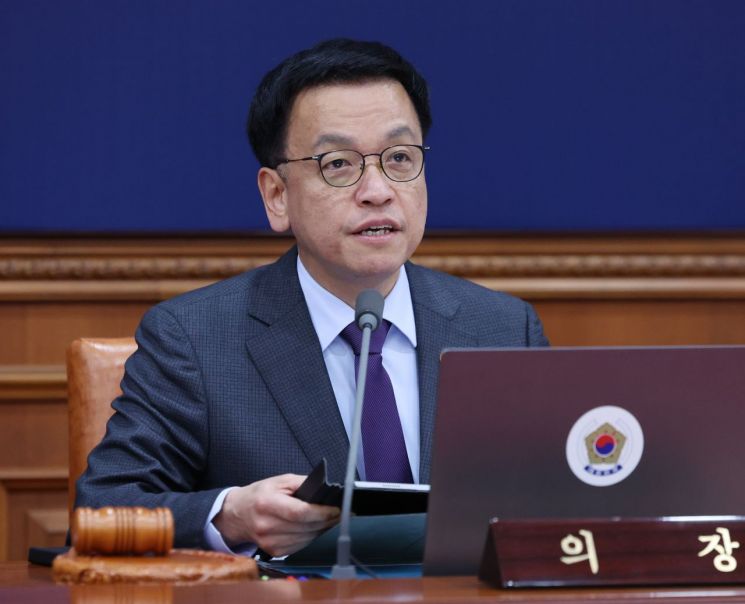
On the 15th, the government held the 'Ministerial Meeting on National Issues and Economic Affairs / Ministerial Meeting to Strengthen Industrial Competitiveness (Sangyeongjang)' at the Government Seoul Office and disclosed the operational plan for the meeting. This meeting was held three weeks after the meeting on the 23rd of last month, which discussed revitalization measures for the petrochemical industry facing an existential crisis due to oversupply.
Going forward, Sangyeongjang will transform into a 'public-private joint meeting.' Until now, mainly heads of institutions attended, and private sector participation was exceptional, but from now on, economic organizations, industry-specific associations, and specialized research institutes will participate flexibly. This is to effectively discuss policies considering the characteristics of each industry and support measures. Attending organizations include the Korea Chamber of Commerce and Industry, Korea Employers Federation, Korea Economic Association, Korea Federation of Small and Medium Business, Korea Federation of Mid-sized Enterprises, Korea International Trade Association, Korea Institute for Industrial Economics and Trade, Korea Automotive Technology Institute, Korea Semiconductor Association, Korea Automobile Manufacturers Association, and Korea Shipbuilders' Association.
Each subcommittee will identify tasks at least once a month and reflect them in future meeting agendas. To obtain vivid market trends and difficulties, field visits will be linked. There are six subcommittees in total: the general subcommittee is chaired by the 1st Vice Minister of the Ministry of Economy and Finance and deputy ministers of related ministries; the other subcommittees on technology, industry, innovation, and infrastructure are also chaired by deputy ministers of respective ministries. The corporate restructuring subcommittee is chaired by the Vice Chairman of the Financial Services Commission.
Regarding future plans, the government stated, "From next month, meetings will be held as needed to continuously discuss support measures for industry competitiveness enhancement and urgent issues faced by the industry following the inauguration of the new U.S. administration."
At the meeting chaired by Choi Sang-mok, Acting Prime Minister and Minister of Economy and Finance, focused discussions were held on risk factors in the automobile industry affected by U.S. tariff measures. To strengthen competitiveness in the electric vehicle and secondary battery sectors, subsidies for youth and multi-child families will be expanded. In the pharmaceutical and bio sectors, plans to commercialize promising technologies, expand venture capital supply, and activate open innovation were also discussed.
© The Asia Business Daily(www.asiae.co.kr). All rights reserved.

















