Donald Trump, the President-elect of the United States, and his economic team are discussing a plan to gradually increase tariffs by 2-5% each month. The strategy aims to use tariffs as leverage to strengthen negotiating power with trade partners while avoiding a rebound in inflation caused by the tariffs.
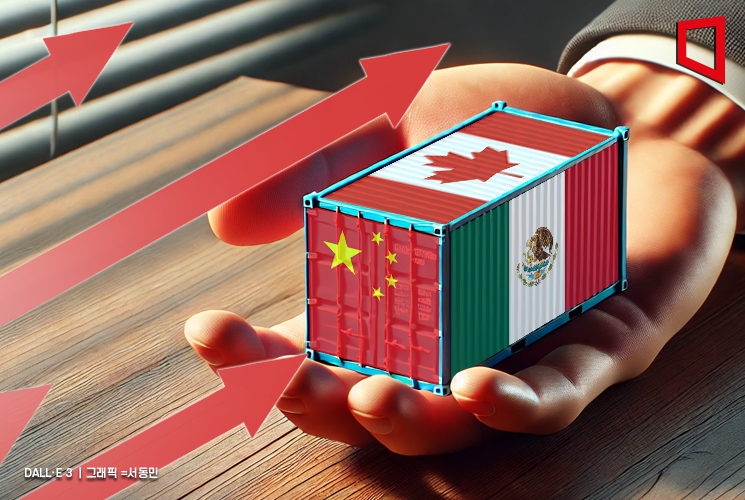
Bloomberg News reported on the 13th (local time), citing sources, that Scott Bessent, the nominee for Treasury Secretary, Kevin Hassett, the nominee for Chairman of the White House Council of Economic Advisers (CEA), and Steve Mnuchin, the nominee for Chairman of the President's Economic Advisory Council, who are part of Trump’s second-term economic team, are reviewing this gradual tariff increase plan.
Specifically, the plan involves raising tariff rates by 2-5% per month based on the International Emergency Economic Powers Act (IEEPA). Enacted in 1977, the IEEPA grants the President broad authority to impose economic sanctions and trade restrictions when national emergencies such as security, diplomatic threats, or economic crises occur in the United States.
However, sources confirmed that this plan is still in the early stages of discussion and has not been officially proposed to President-elect Trump. Bloomberg News requested comments from Bessent and other members of the second-term economic team on the same day but did not receive any response.
The gradual tariff plan reported on this day aligns with the context of comments made by Mnuchin, who was selected as the CEA chairman for Trump’s second administration, in a recent foreign media interview. He emphasized the need to minimize the economic impact. This measure takes into account concerns that the so-called ‘Trump tariffs’ could stimulate inflation within the U.S. and cause headwinds for the stock market and the overall economy. Bessent, the ‘economic commander’ of Trump’s second term, is also known to support tariff policies but advocates for a gradual increase due to inflation concerns.
Bloomberg News noted, "Trump’s tariff threats are considered a risk to growth prospects," pointing out that retaliatory tariffs from other countries could lead to a rebound in inflation within the U.S., complicating future interest rate decisions by the Federal Reserve (Fed). Recently, amid concerns over ‘Trumflation’ (inflation caused by Trump’s policies), expectations for further interest rate cuts have diminished, causing government bond yields to soar. Kristalina Georgieva, Managing Director of the International Monetary Fund (IMF), also remarked to reporters in Washington D.C. on the 10th that "Trump’s tariff threats alone have already caused long-term borrowing costs worldwide to surge."
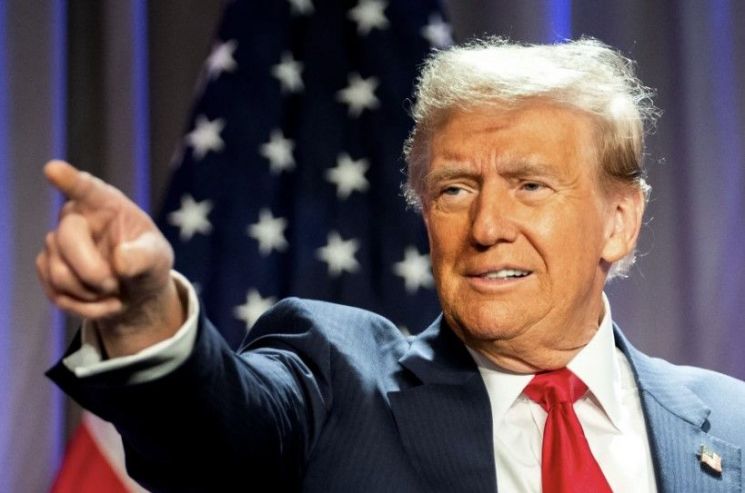
President-elect Trump, who will be inaugurated on the 20th, has announced plans to impose a universal tariff of up to 20% on all imports from day one and a high tariff rate of up to 60% on imports from China. Axios pointed out that if Trump applies the IEEPA, tariffs could be imposed more quickly, but this would also intensify retaliatory measures from major countries and economic backlash. Since there has been no precedent for using the IEEPA as a basis for tariffs, legal uncertainties also exist.
Earlier, The Washington Post (WP) reported that Trump’s second-term administration is considering imposing universal tariffs only on items related to specific sectors deemed critical to national and economic security. However, President-elect Trump dismissed this report as "fake news."
© The Asia Business Daily(www.asiae.co.kr). All rights reserved.


















