Focusing All Capabilities on Expanding the Dynamic Growth Foundation of Ulsan, the Industrial Capital
Ulsan City will focus its efforts throughout this year on expanding the dynamic growth foundation of the industrial capital Ulsan to overcome uncertain domestic and international conditions and realize a "dynamic Ulsan economy."
To this end, it has prepared a budget of 212.3 billion KRW, an increase of 43.6 billion KRW from last year, and will promote 19 core projects across five major economic and industrial sectors.
The five sectors are ▲ Strengthening the foundation for economic growth ▲ Supporting global competitiveness of key industries ▲ Promoting a leading city in new growth energy industries ▲ Fostering advanced new industries ▲ Creating a competitive smart agriculture and marine fisheries environment.
1. Strengthening the foundation for economic growth
With the launch of the "Trump administration's second term," the industrial and trade policy direction of the United States, Ulsan's largest export market (accounting for 26% of total exports), has significantly changed. In response, Ulsan will fully activate a regional response system to prepare for economic uncertainties and global supply chain crises.
To this end, Ulsan plans to strengthen its economic position by turning "crisis" into "opportunity" through the "Integrated Governance Public-Private Joint Meeting," which directly addresses corporate difficulties on-site, and a "dedicated task force (TF)-type regional economic promotion team."
Additionally, for the petrochemical industry, a permanent petrochemical industry consultative body involving industry, academia, and research institutes will be established to develop competitiveness enhancement measures such as business restructuring and eco-friendly, high value-added transitions. Proactive measures will also be taken to respond to the designation of industrial crisis response areas due to industrial recession.
An additional 11.2 billion KRW will be invested to expand "customized jobs for companies and consumers." Projects to improve the dual structure of the labor market and enhance worker welfare through mutual aid programs will be promoted, and support for training local overseas personnel will be provided to resolve labor shortages in the shipbuilding industry and ensure stable workforce supply.
As a new project, incentives will be provided to about 100 workers who serve as substitutes during parental leave to establish work-family balance.
The "Ulsan Industrial Festival," which was attended by one million people in 2024, plans to expand attractions, food, and entertainment, and address previously identified shortcomings to become a representative festival showcasing Ulsan's dreams and future. It will be held from October 16 to 19 around the Taehwagang National Garden area.
2. Supporting global competitiveness of key industries
Ulsan will implement various policies to strengthen the global capabilities of its three major industries: automobile, shipbuilding, and petrochemicals. Utilizing the Hyundai Motor Ulsan plant and the base of over 900 automobile parts companies, a hub for urban air mobility (UAM) development will be established.
In the shipbuilding industry, to enhance decarbonization competitiveness, a future advanced shipbuilding technology innovation hub will be created to support research on eco-friendly ship manufacturing technologies. Ulsan is also pursuing designation as a regulatory free zone to establish the world's first commercial ammonia-powered medium-to-large ship bunkering industry.
For the petrochemical industry, support for technology development and commercialization tailored to corporate demand will be strengthened to promote high value-added and eco-friendly transitions.
3. Promoting a leading city in new growth energy industries
Ulsan, home to various power generation facilities including nuclear power plants and industrial complexes such as Mipo and Onsan National Industrial Complexes, achieves a "local production for local consumption" balance in electricity demand and supply.
Especially, following the nationwide first launch of the Distributed Energy Support Center last year and the establishment of legal and administrative foundations such as ordinances, Ulsan plans to promote the "No. 1 Distributed Energy Specialized Area designation" and "differentiated electricity rates by region," creating an optimal environment for business.
Ulsan, ranked first nationwide in hydrogen production with 982,000 tons and 188 km of hydrogen pipelines, aims to become a global hydrogen industry hub by designating a "hydrogen specialized complex" centered on the Energy Convergence General Industrial Complex. Additionally, it will accelerate technology development for clean hydrogen production through projects such as the "1 MW-class anion exchange membrane water electrolysis stack development and demonstration linked with solar power."
Building on its achievement as the first city nationwide to be simultaneously selected as a hydrogen pilot city and hydrogen city, Ulsan will officially start the "hydrogen city creation" project worth 29.5 billion KRW this year through the expansion of the hydrogen pilot city project. It will continue to expand the hydrogen infrastructure in daily life by extending hydrogen pipelines by 11.9 km and demonstrating the country's first hydrogen tractor.
To respond to the global common challenge of carbon neutrality and secure new growth engines, Ulsan will leverage its favorable natural environment and accumulated shipbuilding and marine technology and workforce to continuously develop a 6.2 GW-scale "floating offshore wind farm" near 58 km east of Ulsan Port in cooperation with five private investors including Equinor.
4. Fostering advanced new industries
An advanced secondary battery integrated support center for operating a secondary battery specialized complex and providing full-cycle corporate support will be built in Duwang-dong Techno Industrial Complex by 2028. This center will provide research and demonstration equipment and shared research spaces with a project budget of 21 billion KRW.
To address structural challenges such as workforce shortages and productivity decline in the local industry, the "AI autonomous manufacturing leading project," which innovates the entire manufacturing system with artificial intelligence (AI) and digital technologies, will be expanded beyond the existing automobile and shipbuilding industries to include the petrochemical industry.
To reduce carbon dioxide emissions in the industrial sector, Ulsan will collaborate with major emitting companies in the area to establish a "carbon capture, utilization, and storage (CCUS) cluster." This project involves capturing approximately 1 to 1.5 million tons of carbon dioxide annually within the Mipo National Industrial Complex and storing and transporting it to Ulsan New Port. The nurturing plan will be finalized in the first half of the year, and the cluster application will be submitted in the second half.
5. Creating a competitive intelligent (smart) agriculture and marine fisheries environment
To establish a virtuous cycle system for local agricultural products and foster urban young farmers, a "youth startup urban intelligent farm (smart farm)" will be created. Support will be provided for agricultural modernization such as vertical farms and automatic growth environment control equipment, and 16 sales spaces for young farmers will be secured within the agricultural and marine products distribution center. Additionally, a "vacant house maintenance project" will be implemented to efficiently manage abandoned rural houses and create a pleasant residential environment.
In the areas of Ilsan Port in Dong-gu and Pyeongdong Port in Ulju-gun, 10.5 billion KRW will be invested to maintain piers and breakwaters to prevent disasters in advance and promote fisheries village revitalization projects such as installing joint storage facilities. Furthermore, the country's first fishway landmark project will be promoted around Seonbawi in Taehwagang to revitalize the local economy through ecological and tourism resources.
An official from Ulsan City stated, "The year 2025 will be a year to focus all capabilities on stabilizing the regional economy through bold and swift measures while strengthening industrial competitiveness so that Ulsan becomes a hub of the global industrial ecosystem."
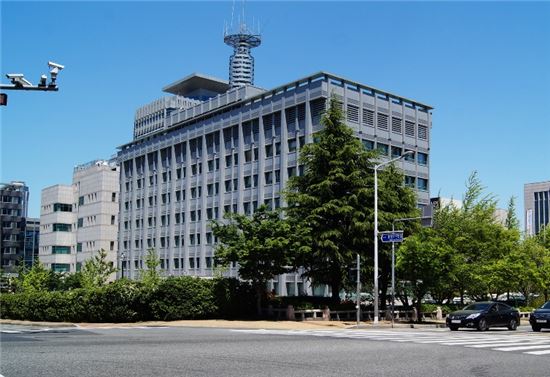 Ulsan City Hall.
© The Asia Business Daily(www.asiae.co.kr). All rights reserved.
















