All-solid-state Battery Technology
Featured Consecutively in International Journals
SK On is accelerating its efforts to strengthen technology by consecutively announcing research and development achievements in all-solid-state batteries. The strategy is to lead manufacturing process and material innovation and enhance next-generation battery competitiveness through challenging technology exploration and various partnerships.
On the 13th, SK On announced that the results of the all-solid-state battery research and development project conducted in collaboration with leading domestic universities and institutions have been published consecutively in international academic journals. Some research results have also been filed for domestic and international patents.
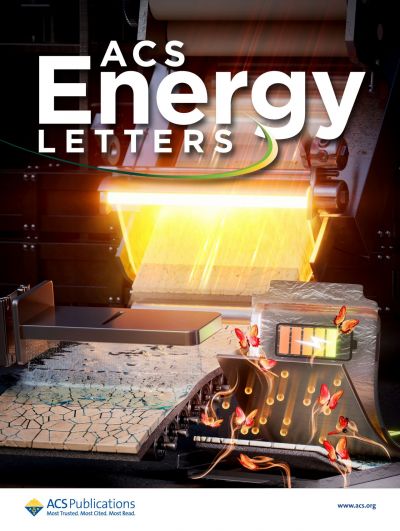
The research conducted by SK On together with Dr. Jin-ho Kim’s research team at the Korea Institute of Ceramic Engineering & Technology focuses on the advancement of the manufacturing process of polymer-oxide composite all-solid-state batteries applying ultra-fast photonic sintering technology. It is regarded as a groundbreaking study that applied photonic sintering technology, mainly used in printed circuit board processes, to battery manufacturing. Photonic sintering is a process that applies intense light energy instantaneously to promote bonding of powder particles, creating solid masses with improved strength and durability.
The paper covering this research was featured as a cover article in 'ACS Energy Letters,' a prestigious journal in the energy and chemistry fields. Among the nine authors, six are SK On members.
All-solid-state batteries replace the liquid electrolyte used in current lithium-ion batteries with a solid electrolyte, earning the nickname "dream battery." Solid electrolytes are broadly categorized into sulfide-based, oxide-based, and polymer-based types.
Oxide-based electrolyte materials generally require high-temperature heat treatment processes above 1000 degrees Celsius for more than 10 hours to enhance lithium-ion migration pathways and mechanical strength. However, challenges such as manufacturing cost burdens and material brittleness have emerged, making large-area scaling a significant issue. Brittle fracture refers to the phenomenon where materials suddenly break without deformation when fractured.
SK On proposed photonic sintering technology, characterized by fast speed and low-temperature heat treatment, as a solution. The research team first discovered colored inorganic pigments that minimize light energy loss and applied them to oxide electrolyte materials. Additionally, by utilizing ultra-fast photonic sintering technology that enables selective heat treatment within seconds, they succeeded in creating porous structures with optimal uniformity.
Furthermore, the research team successfully implemented polymer-oxide composite electrolytes containing polymer electrolytes inside oxides manufactured by ultra-fast photonic sintering technology. Experimental results showed that batteries using this electrolyte exhibited excellent lifespan characteristics.
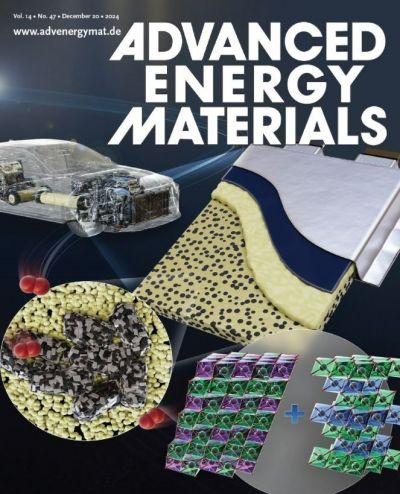
SK On also disclosed research results analyzing the applicability of manganese-rich (Li- and Mn-rich layered oxides, LMRO) cathode materials to sulfide-based all-solid-state batteries.
This study, conducted with Professor Kyu-tae Lee’s research team at Seoul National University, was published last month as a cover article in 'Advanced Energy Materials,' a leading international journal in the energy materials field. It is recognized for its detailed elucidation of the degradation mechanisms of LMRO active materials, differentiating it from previous studies that focused mainly on performance.
LMRO cathode materials have a cost advantage as manganese, which is cheaper than nickel and cobalt, forms their base. However, when applied to conventional lithium-ion batteries, challenges such as gas generation due to side reactions with liquid electrolytes, voltage drop, and capacity reduction have led the industry to explore their applicability in all-solid-state batteries.
SK On identified through various analyses that under high-temperature and high-voltage conditions during charge and discharge, oxygen (O₂) generated from LMRO active materials oxidizes sulfide-based solid electrolytes, causing degradation. To address this, they developed a method to improve battery lifespan by applying a special coating material that reduces oxygen generation.
Park Ki-soo, head of SK On’s R&D division, said, "This achievement was made possible by the synergy created between SK On’s proactive research and outstanding technological capabilities and experts from academia and institutions. SK On will further devote itself to research and development to lead the next-generation battery field."
Meanwhile, SK On is developing two types of all-solid-state batteries: polymer-oxide composites and sulfide-based. The goal is to produce commercial prototype products by 2027 and 2029, respectively. The next-generation battery pilot plant under construction at the Daejeon Battery Research Institute is scheduled for completion in the second half of this year.
© The Asia Business Daily(www.asiae.co.kr). All rights reserved.
![Clutching a Stolen Dior Bag, Saying "I Hate Being Poor but Real"... The Grotesque Con of a "Human Knockoff" [Slate]](https://cwcontent.asiae.co.kr/asiaresize/183/2026021902243444107_1771435474.jpg)

















