"Microplastics Can Penetrate the Human Body More Easily"
Recently, there has been a sharp increase in cancer incidence among young people, with 'microplastics' being identified as a potential cause.
The British Daily Mail recently reported that researchers at the University of California, San Francisco (UCSF) studied the correlation between microplastics and cancers such as colorectal and lung cancer. In a report published in the renowned journal Environmental Science & Technology, the researchers concluded that there is a potential link between microplastics and infertility, colorectal cancer, reduced lung function, and chronic lung inflammation.
 Amid a sharp increase in cancer incidence among young people, 'microplastics' are being identified as the cause. Photo by Getty Images
After reviewing more than 3,000 studies on microplastics, the researchers found strong evidence that microplastics harm sperm quality and testicular health and weaken the immune system. They also identified moderate evidence that microplastics negatively affect ovarian follicles, reproductive hormones, the colon and small intestine, and lung function.
Tracy J. Woodruff, Professor of Obstetrics, Gynecology, and Reproductive Sciences at UCSF, explained, "These microplastics primarily originate from particulate air pollution," adding, "Microplastics are widespread and mobile in the environment, detected in air, surface water, coastal beaches, sediments, and food." There is also analysis suggesting that automobile tires are a major source of airborne microplastics.
The professor further noted, "Microplastics have been found in remote, pristine locations including Antarctica, deep-sea trenches, and Arctic sea ice," and explained, "Because microplastics are small, they can enter the human body more easily than larger particles. They have been measured in the human placenta, breast milk, and liver." In fact, on the 10th, a joint research team led by Professor Min Hyun-jin of the Department of Otorhinolaryngology at Chung-Ang University Hospital and Dr. Jung Jin-young of the Korea Research Institute of Bioscience and Biotechnology discovered that microplastics are present in the nasal mucosal tissue by analyzing human nasal tissue samples.
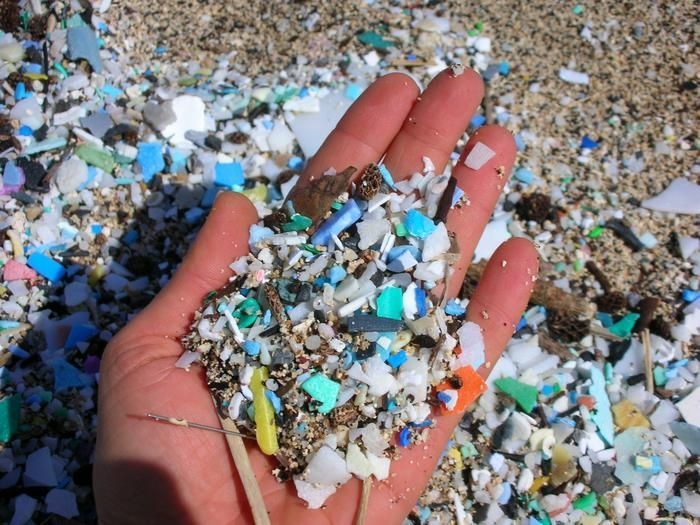 Marine plastic waste washed ashore at Camilo Beach in Hawaii, USA. Provided by 5 Gyres Institute, a US nonprofit environmental organization.
The researchers estimated that companies worldwide produce 460 million tons of plastic annually, with this figure expected to rise to 1.1 billion tons by 2050. It is estimated that Americans ingest an average of 39,000 to 52,000 microplastic particles per year. Notably, the amount of microplastics inhaled through breathing is known to be incomparably higher than that ingested through food.
Although most existing studies have been conducted on animals, the researchers believe that applying these conclusions to humans is not unreasonable. Furthermore, the research team emphasized the link between microplastics and colorectal and lung cancers, urging regulatory agencies and policymakers to take the fastest and strongest possible measures to reduce the harm caused by microplastics.
Meanwhile, in June last year, a British daily newspaper highlighted in an article titled "Unexplained Increase in Cancer Among Millennials" that the cancer incidence rate among 20- to 34-year-olds in the Group of Twenty (G20) countries has reached its highest level in 30 years. It is also known that the number of cancer patients under 50 worldwide has increased by 79% over the past 30 years.
© The Asia Business Daily(www.asiae.co.kr). All rights reserved.
![Clutching a Stolen Dior Bag, Saying "I Hate Being Poor but Real"... The Grotesque Con of a "Human Knockoff" [Slate]](https://cwcontent.asiae.co.kr/asiaresize/183/2026021902243444107_1771435474.jpg)

















