Webinar on the Constitutional Court's Ruling on the Alternative Service System Last May
Legal and Academic Evaluations and Directions for Improvement to Be Discussed
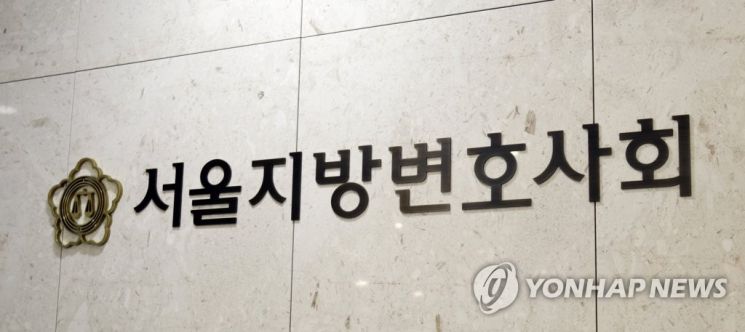
The Seoul Bar Association will hold an online webinar titled "Discussion on the Current Status Diagnosis and Improvement Directions of the Alternative Service System" at 1 p.m. on the 13th. The purpose is to review the issues through legal and academic evaluations of the alternative service system and to discuss improvement directions in depth.
At the discussion, Taekyung Kang, a research fellow at the Korea Institute of Criminology and Justice Policy, will give a lecture titled "From Tolerance to Rights: Diagnosis and Evaluation of the Current Alternative Service System." Following this, Peter Muesni, professor at the Faculty of Law, University of Geneva, Switzerland, will present on "Confirmation of International Trends and Human Rights Standards, Cases of Alternative Service System Operation Abroad and Comparison with Legislation, and Suggestions," and Dongseok Oh, professor at Ajou University School of Law, will present on "Evaluation and Suggestions on Conscientious Objection to Military Service and Related Alternative Service System Judgments."
Subsequently, lawyer Sujeong Kim (former non-standing member of the National Human Rights Commission), Hyung Hyukgyu, legislative researcher at the National Assembly Research Service, and activist Eunsook Ryu (former member of the Alternative Service Review Committee) will participate in the discussion. The moderator will be lawyer Jooyoung Cho (Vice Chair of the Human Rights Committee of the Seoul Bar Association).
Previously, in May last year, the Constitutional Court ruled the current alternative service system constitutional, which requires conscientious objectors to serve 36 months?longer than regular soldiers?in prisons or similar facilities. This decision confirmed the validity of the alternative service system from a constitutional perspective and suggested the need to create an environment where conscientious objectors do not face unreasonable discrimination or disadvantages.
A representative of the Seoul Bar Association said, "We hope that through this discussion, the alternative service system will be deeply rooted in our society and become a system that everyone can agree upon."
© The Asia Business Daily(www.asiae.co.kr). All rights reserved.