‘Economic Trends January Issue’
Slowing Growth in Production and Exports Excluding Semiconductors
Weak Domestic Demand
Amid growing uncertainties inside and outside the Korean economy, the Korea Development Institute (KDI), a government-funded research institute, has diagnosed that economic sentiment is deteriorating due to domestic political conditions, increasing downside risks to the economy. KDI mentioned that political risks are constraining the economic sentiment of households and businesses.
On the 8th, KDI made its first mention of political uncertainty in Korea in the January issue of its Economic Trends report. While the December issue last year noted increasing uncertainties surrounding the Korean economy, it did not separately mention political risks caused by events such as the failed vote on the impeachment motion against President Yoon last month.
KDI analyzed, “Despite recent political instability, fluctuations in financial market indicators such as exchange rates and stock prices have remained limited, but the sentiment indices of households and businesses have fallen sharply.” Compared to the impeachment crisis of former President Park Geun-hye in 2016-2017, KDI viewed financial market indicators as stable.
KDI stated, “During past political instability periods (after October 24, 2016), financial markets were somewhat unstable, but now they maintain a more stable appearance compared to then.” The rise in the won-dollar exchange rate has been limited compared to the past, and the credit default swap (CDS) premium, which reflects sovereign default risk, has only slightly increased at a low level.
On the other hand, it analyzed that the sentiment of households and businesses has contracted more significantly than before. KDI said, “The consumer sentiment index fell by 9.4 points over three months in the past, but recently it dropped by 12.3 points in just one month, and the business sentiment index also declined relatively sharply compared to the past.” Due to political instability, the consumer sentiment index in December recorded a sharp decline to 88.4 compared to the previous month (100.7).
KDI noted, “Construction production has also continued a sharp decline, showing a weak domestic economy.” It explained that prolonged sluggishness in goods consumption and construction investment is limiting economic improvement. Goods consumption declined further as major items such as passenger cars, home appliances, communication devices and computers, and cosmetics performed poorly. Service consumption also showed low growth in service sectors closely related to consumption, including accommodation and restaurants, arts, sports, leisure-related services, and education services. KDI’s diagnosis of weak domestic demand has continued since December last year.
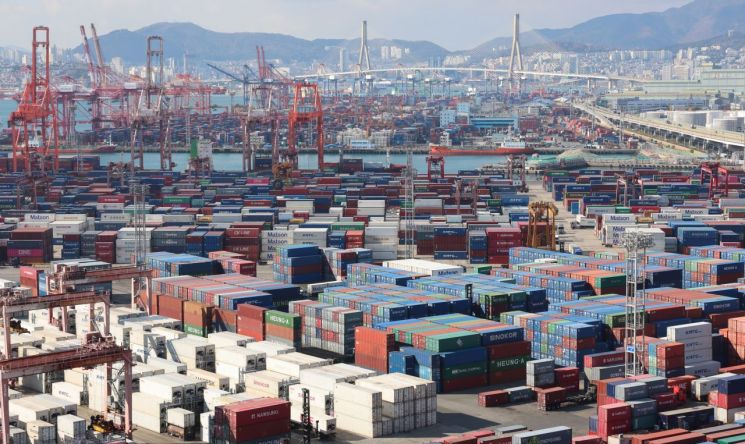
KDI diagnosed that production and export growth, excluding semiconductors, are slowing down. KDI said, “Semiconductor production continued a strong growth trend, and related facility investment and exports also maintained a favorable flow.” However, it analyzed that growth in other items excluding ICT products is adjusting. Although facility investment showed a gradual recovery due to improvements in semiconductor-related investment, conditions for facility investment in other industries have not improved.
© The Asia Business Daily(www.asiae.co.kr). All rights reserved.

















